
Brazil
Brazil Recording Laws: One-Party Consent, STF Precedents, and Penalties (2026)
Independently fact-checked against primary sources (last audited June 19, 2026). · Law checked current as of August 9, 2026. · 19 primary sources cited on this page. How we verify our legal content

Quick Answer: What Is Brazil's Recording Consent Standard?
Brazil applies a one-party consent standard to the recording of conversations. Any person who is genuinely participating in a conversation, whether by phone, video call, messaging audio, or in person, may record that conversation without informing or obtaining agreement from the other parties. No automated disclosure tone is legally required. No verbal announcement is necessary. The person recording simply needs to be an actual participant in the exchange.
The rule is grounded in constitutional analysis, codified in statute through the Pacote Anticrime of 2019-2020, and confirmed by binding precedent from the Supreme Federal Court (Supremo Tribunal Federal, STF) in Recurso Extraordinário 583.937 (Tema 237). What Brazil prohibits with criminal force is a distinct act: third-party interception, in which someone who is not part of the conversation captures it covertly.
This article covers the constitutional foundations in Article 5, Incisos X and XII; the criminal provisions in Código Penal Articles 153 and 154; the wiretapping statute, Lei 9.296/1996; the leading STF cases RE 583.937 and HC 75.338-RJ; the press-freedom ruling in ADPF 130; the data protection framework under the LGPD and ANPD; criminal and civil penalties; phone and in-person scenarios; recording police; workplace rules; non-consensual intimate image distribution under Lei 13.718/2018; deepfake and AI regulation; and cross-border considerations for US-Brazil calls.
Jurisdiction scope: This article addresses Brazilian federal law. It does not address the recording laws of any other country. For US state-by-state consent rules, see the US recording laws hub. For other countries, see the world recording laws index.
Information last verified on 2026-05-15. This article has not yet been reviewed by a licensed Brazilian advogado.

The Constitutional Foundations: Article 5, Incisos X and XII
Brazil's 1988 Federal Constitution sets privacy protection in Article 5, which enumerates the fundamental rights of Brazilians and foreign nationals residing in Brazil. Two separate incisos are directly relevant to recording law.
Inciso X declares that the intimacy (intimidade), private life (vida privada), honor (honra), and image (imagem) of persons are inviolable (invioláveis), and guarantees the right to compensation for material or moral damages arising from any violation. The STF treats these four values as a cluster of personality rights enforceable both as constitutional guarantees and, through Articles 11-21 of the Brazilian Civil Code, as civil law rights. A recording that exposes someone's intimate life or damages their reputation can give rise to both constitutional and civil claims, regardless of whether the recording itself was lawfully made.
Inciso XII declares the secrecy of correspondence, telegraphic communications, data communications, and telephone communications to be inviolable. The provision then carves out a single exception: telephone interceptions may be authorized by a court order, in the manner established by law, for the purposes of criminal investigation or criminal proceedings.
Courts have consistently held that Inciso XII's protection runs against third-party surveillance, not against a participant's own records. The rationale is straightforward. If you are a party to a telephone conversation, you already possess all the information exchanged in that call. Recording it does not expose any secret you did not already hear. The constitutional right protects the secrecy of your communications from outsiders, not from yourself.
Lei 9.296/1996 gives statutory form to the Inciso XII exception, defining the conditions under which a court may authorize interception and the criminal consequences for unauthorized interception. The Pacote Anticrime (Lei 13.964/2019) later added Article 10-A to Lei 9.296/1996, which expressly excludes participant recording from the criminal prohibition.
The interaction between Inciso X (intimacy and image) and Inciso XII (communications secrecy) requires courts to balance competing rights in edge cases. A recording that is technically lawful as a participant recording may still implicate Inciso X if its public disclosure damages the subject's honor or reveals intimate facts about their private life. Brazilian courts, following the STJ's 2024 Fifth Panel decision, apply a proportionality analysis: the weight of the right being protected by the recording is assessed against the privacy cost to the subject.
Código Penal Articles 153 and 154: Privacy Crimes and Professional Secrecy
The Código Penal (Decree-Law 2.848/1940, as amended) addresses privacy violations in Articles 153 and 154, which fall under the title "Crimes Against the Inviolability of Secrets."
Article 153: Disclosure of Private Documents or Confidential Correspondence
Article 153 prohibits, without just cause, divulging the content of a private document or confidential correspondence of which the person is the recipient or holder, when that disclosure could cause damage to another. The penalty is detention (detenção) from one to six months, or a fine.
The word "divulging" is key. Article 153 does not prohibit possessing or reading a private document. It criminalizes the act of publishing, sharing, broadcasting, or otherwise making its contents known to third parties when the person has no just cause for doing so and potential harm exists. A person who lawfully records a private conversation is not automatically violating Article 153. However, if that person later publishes the contents of the recording on social media, sends it to third parties, or circulates it to cause damage, Article 153 may be engaged.
The phrase "without just cause" introduces a necessity-and-proportionality defense. A person who discloses a recording to law enforcement as evidence of a crime, or to an employer as evidence of workplace harassment, is acting with just cause and is not criminally liable under this article.
Article 154: Violation of Professional Secrecy
Article 154 criminalizes the disclosure, without just cause, of a secret that a person learned by reason of their function, ministry, office, or profession, when that disclosure could cause damage to another. The penalty is detention from three months to one year, or a fine.
Article 154 applies to professionals whose work involves access to confidential information: lawyers, doctors, psychologists, priests, accountants, and others who receive confidential disclosures in the exercise of their professional role. If a doctor records a consultation and later shares identifiable patient information, Article 154 is the relevant provision, compounding any LGPD violation.
The professional secrecy defense also runs in the other direction. A patient, client, or parishioner who records a professional interaction is exercising the one-party consent right and is not violating Article 154. Article 154 regulates what professionals do with secrets entrusted to them, not what the person seeking advice may record.
Article 154-A: Computer Device Invasion
Although not originally part of the recording law framework, Article 154-A (inserted by Lei 12.737/2012 and significantly strengthened by Lei 14.155/2021) is increasingly relevant in the digital-recording context. The article criminalizes the unauthorized access to another person's computer device to obtain, alter, or destroy data or information, or to install vulnerabilities. The penalty is imprisonment from 1 to 4 years and a fine. If the invasion results in obtaining the contents of private electronic communications, the penalty rises to 2 to 5 years.
Accessing another person's phone, tablet, or computer to listen to or copy recordings without that person's permission falls squarely within Article 154-A. An employer who remotely accesses an employee's personal device to retrieve a recording made by the employee, or a person who breaks into a phone to obtain recorded conversations, faces criminal exposure under this provision independently of the wiretapping statute.

Lei 9.296/1996: Brazil's Wiretapping Statute
Lei 9.296, signed on July 24, 1996, implements the Inciso XII exception and defines the criminal framework for unauthorized interception. It remains the primary statute governing the interception of telephone, telematic, and computer communications in Brazil.
Judicial Authorization Requirements
A judge with jurisdiction over the underlying criminal matter may authorize interception only when all three of the following conditions are satisfied:
- Reasonable grounds indicate the target is involved in a criminal offense.
- The alleged offense carries a penalty of imprisonment (not merely a fine or administrative detention).
- The evidence sought cannot be obtained through any other available means.
Each authorization is valid for up to 15 days and may be renewed for successive 15-day periods as the investigation requires. The authorizing judge monitors the operation throughout and may revoke it if circumstances change.
Article 10: Core Criminal Prohibition
Article 10 makes it a crime to intercept telephone, computer, or telematic communications without judicial authorization, or to conduct an authorized interception for purposes outside the scope of the authorization, or to breach the secrecy (sigilo) of a lawfully authorized interception. The penalty is imprisonment (reclusão) from 2 to 4 years plus a fine.
This provision covers any person, public or private, who conducts surveillance on someone else's communications without the required court order. The article imposes liability on both the person who physically carries out the interception and those who order or fund it.
Article 10-A and the Pacote Anticrime Carve-Out
Lei 13.964/2019 (the Pacote Anticrime, effective January 2020) inserted Article 10-A into Lei 9.296/1996. Article 10-A criminalizes the unauthorized capture of electromagnetic, optical, or acoustic signals for purposes of criminal investigation or evidentiary collection, when judicial authorization was required but not obtained. The penalty matches Article 10: imprisonment from 2 to 4 years plus a fine.
Paragraph 1 of Article 10-A states: "Não há crime se a captação é realizada por um dos interlocutores." Translation: there is no crime when the capture is made by one of the interlocutors.
Before the Pacote Anticrime, the lawfulness of participant recording rested entirely on constitutional interpretation and judicial precedent. After January 2020, it is black-letter statutory text. A person recording their own conversation commits no crime under Lei 9.296/1996.
Paragraph 2 of Article 10-A doubles the penalty for a public official who breaches confidentiality requirements applicable to environmental recording operations, or who discloses the contents of recordings while a judicial secrecy order remains in force.
Article 8-A: Integrity Requirements for Environmental Recordings
Also inserted by the Pacote Anticrime, Article 8-A requires that parties submitting environmental recordings as evidence be prepared to demonstrate their integrity. Metadata analysis, chain-of-custody documentation, and forensic examination may all be used to assess whether a recording has been altered. Submitting a manipulated recording as genuine evidence may itself constitute a criminal offense.
STF HC 75.338-RJ (1998): The First Binding Precedent
The Supreme Federal Court first directly addressed participant recording in Habeas Corpus 75.338-RJ, decided in 1997 and published on September 25, 1998. The case involved a telephone call recorded by one of the participants, later offered as evidence. The question was whether this constituted an unlawful violation of Article 5, Inciso XII.
The Court held: it is lawful evidence when the recording of a telephone call is made by one of the participants, or with their authorization, without the other party's knowledge, particularly when the party being recorded was engaged in criminal conduct. The Court's reasoning was pointed: "É inconsistente e fere o senso comum falar-se em violação do direito à privacidade quando interlocutor grava diálogo com sequestradores, estelionatários ou qualquer tipo de chantagista." (It is inconsistent with common sense to speak of a violation of the right to privacy when one interlocutor records a dialogue with kidnappers, swindlers, or any type of blackmailer.)
HC 75.338-RJ established the foundational doctrinal position: the constitutional guarantee of communication secrecy in Inciso XII is directed at third-party interception, not at a participant's self-protective recording. This case set the intellectual framework that the STF later confirmed with binding general-repercussion effect in RE 583.937.
STF RE 583.937 (Tema 237): The Binding General-Repercussion Ruling
Recurso Extraordinário 583.937 is the most consequential recording-law ruling in Brazilian jurisprudence. Decided on November 19, 2009, with general repercussion (repercussão geral) recognized, the STF issued a binding thesis applicable to all courts in Brazil.
The tese (binding thesis): "É lícita a prova consistente em gravação ambiental realizada por um dos interlocutores sem conhecimento do outro." Evidence consisting of an environmental recording made by one of the interlocutors without the knowledge of the other is lawful.
The court's reasoning rests on three observations. First, if a person can testify orally about what was said in a conversation they attended, there is no principled basis for excluding a recording of that same conversation. The recording creates a more accurate and complete record than memory, but it captures nothing the participant did not already possess. Second, the constitutional prohibition in Article 5, Inciso XII targets interception by a third party who is not present in the exchange, not self-documentation by a participant. Third, a blanket rule excluding all covert participant recordings would deny justice to many victims, particularly in cases of extortion, harassment, domestic abuse, and corruption, where the recording is often the only available evidence.
Tema 237 applies across all Brazilian court systems: criminal (Justiça Federal and Justiça Estadual), labor (Justiça do Trabalho), civil, and administrative. It is binding on all lower court judges by force of the repercussão geral mechanism.
The only limitation recognized is professional privilege. Where a conversation is protected by attorney-client privilege, medical confidentiality, or the seal of religious confession, different considerations may apply. The STF has not issued a general ruling categorically excluding participant recordings from these settings, but lower courts have in some cases applied a more restrictive analysis.
STJ Fifth Panel Reaffirmation (August 2024)
The Superior Court of Justice's Fifth Panel (Quinta Turma do STJ) issued a significant reaffirmation in August 2024. The court held that a participant's secret recording constitutes valid evidence when the right being protected by the recording carries greater weight than the privacy interest of the person recorded. The panel applied a balancing test derived from the constitutional principle of proportionality, and it emphasized that covert recordings by victims of criminal conduct are especially appropriate when they are the only practical means of gathering evidence.
The court also noted the intersection with the excludente de ilicitude (justification defense) doctrine in Brazilian criminal law. A person who records to defend themselves against unjust ongoing aggression is not acting unlawfully; they are exercising a recognized legal right.
ADPF 130: Press Freedom, Privacy, and Recordings of Public Interest
Arguição de Descumprimento de Preceito Fundamental 130, decided on April 30, 2009, is primarily a press-freedom case. The STF held, by a majority, that the 1967 Press Law (Lei de Imprensa, Lei 5.250/1967) was incompatible with the 1988 Constitution and therefore not received by the new constitutional order. Brazil's press operates under full constitutional freedom of expression, not under the restrictive 1967 regime.
ADPF 130 is relevant to recording law for two reasons. First, the STF confirmed that freedom of expression, including journalistic reporting, is not subordinate to privacy interests but must be balanced against them through proportionality. A journalist who records a public official engaging in misconduct does not automatically violate that official's right to privacy under Article 5, Inciso X; the public interest in accountability may outweigh the privacy claim. Second, the STF confirmed that any restriction on expression can be challenged post-publication, through the right of reply and damages, rather than through prior censorship. Pre-emptive injunctions against publishing or broadcasting a lawfully obtained recording face a high constitutional bar after ADPF 130.
The practical implication for recording law: a participant recording made for journalistic purposes and concerning a matter of public interest is protected by freedom of expression principles, in addition to being lawful as a participant recording under Lei 9.296/1996. Courts will apply a proportionality analysis between the subject's rights under Inciso X and the public interest in the information disclosed.
Penalties Summary
| Violation | Legal Basis | Penalty |
|---|---|---|
| Unauthorized third-party telephone or telematic interception | Lei 9.296/1996, Art. 10 | 2 to 4 years prison (reclusão) + fine |
| Unauthorized environmental recording requiring court order | Lei 9.296/1996, Art. 10-A | 2 to 4 years prison + fine |
| Public official breaching recording confidentiality | Lei 9.296/1996, Art. 10-A, Para. 2 | 4 to 8 years (doubled penalty) |
| Disclosure of private document / correspondence causing harm | Código Penal, Art. 153 | 1 to 6 months detention or fine |
| Violation of professional secrecy causing harm | Código Penal, Art. 154 | 3 months to 1 year detention or fine |
| Unauthorized access to device obtaining private communications | Código Penal, Art. 154-A | 2 to 5 years prison + fine |
| Non-consensual distribution of intimate images | Código Penal, Art. 218-C (Lei 13.718/2018) | 1 to 5 years prison (aggravated: +1/3 to 2/3) |
| Processing voice data without valid LGPD legal basis | LGPD, Art. 52 | Fine up to R$50 million per violation |
| Sharing recording causing harm to honor or image | Civil Code Arts. 20, 186, 927 | Civil liability: moral and material damages |
Civil Liability: Código Civil Articles 186, 927, and 20
Criminal prohibition is one layer. Civil liability for recordings runs on a separate track.
Article 186 of the Civil Code (Lei 10.406/2002) defines the general civil wrong (ato ilícito): anyone who, through voluntary action or omission, negligence, or recklessness, violates the rights of another and causes harm is obligated to repair the damage.
Article 927 provides the obligation to repair: a person who causes damage to another by an unlawful act is obligated to compensate.
Article 20 specifically addresses the right to voice and image: the unauthorized disclosure of writings, transmission of a person's words, publication, exhibition, or use of a person's image is prohibited when it dishonors that person, is for commercial purposes, or exposes the person to public contempt, unless authorized, or unless demanded by public administration or justice requirements, or by the permitted maintenance of public order or the common good.
These provisions interact with the one-party consent rule as follows. The act of recording is lawful. The act of disclosing, publishing, or sharing the recording may generate civil liability if it causes harm to the subject's honor, reputation, or image, even if the original recording was permissible. Brazilian courts routinely award moral damages (danos morais) in cases where a lawfully obtained recording is later weaponized for public humiliation or reputational harm without legitimate justification.
A recording shared to law enforcement, used in a labor arbitration, or submitted as court evidence does not create civil liability. A recording posted on social media to embarrass a former partner, circulated in a workplace group chat to harass a colleague, or broadcast on a YouTube channel to attract views at a private individual's expense creates significant exposure under Articles 20, 186, and 927, compounding potential criminal liability under Article 153 of the Código Penal and Article 218-C for intimate-content cases.
Phone Calls and Digital Communications
Brazil's one-party consent principle applies to every communication medium in which the recorder is an active participant.
Telephone calls: A person on a phone call may record it without the other party's knowledge. This covers mobile, landline, and VoIP calls. No disclosure tone is required by law.
WhatsApp, Telegram, and messaging audio: Recording a voice call on WhatsApp, Telegram, Signal, or any similar platform is lawful for any participant. The same analysis applies as for telephone calls.
Video conferencing: A participant in a Zoom, Google Meet, Microsoft Teams, or Webex session may record that session without announcing the recording in advance, under the one-party consent rule. This includes both audio and video capture. Note that many platforms have built-in recording disclosure features; using these features is a best practice but not a legal requirement under Brazilian law.
Text and chat logs: Saving, screenshotting, or exporting a messaging conversation to which you are a party is lawful. Brazilian courts treat written chat logs and voice recordings under the same analytical framework, requiring only that authenticity be demonstrable.
In-Person and Environmental Recording
Face-to-face and environmental recordings follow the same one-party participant rule. If you are physically present and participating in the conversation, you may record it. Hidden microphones, lapel recorders, pocket phones on voice-record mode, and body cameras are all lawful instruments for a participant.
The critical line remains: participant versus third party. Installing recording equipment in a room to capture conversations you are not part of constitutes third-party environmental interception under Article 10-A of Lei 9.296/1996. This applies even if the equipment is placed by the property owner. Ownership of the premises does not convert a non-participant into a participant.
Courts have drawn a consistent distinction between:
- A person who attends a meeting and runs a voice recorder on their phone: lawful participant recording.
- A person who installs a microphone before a meeting they will not attend, then listens to or reviews the recording afterward: unlawful third-party interception.
Recording Police and Public Officials
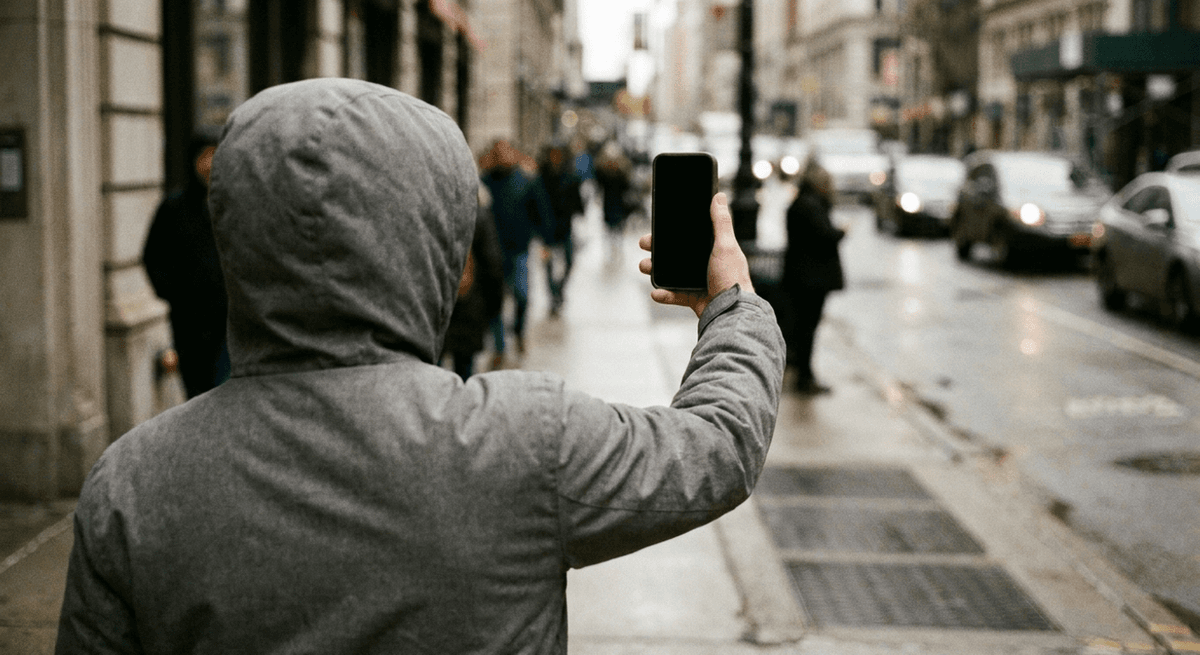
Recording police officers while they perform their duties in public is broadly understood to be lawful in Brazil. The constitutional principles of publicidade (transparency) and cidadania (citizenship) support public monitoring of state power. Brazilian courts and commentators consistently hold that police officers exercising public functions in public spaces have a reduced expectation of privacy regarding those official acts.
Citizen video has played a documented and recurring role in accountability proceedings arising from allegations of police misconduct. Filmed evidence has been used in criminal prosecutions of officers, in civil damages claims, and in disciplinary proceedings before internal affairs bodies.
Two cautions apply. First, simply recording does not confer immunity for other offenses. If you obstruct an officer's lawful duties or enter a restricted area to record, you face separate legal exposure. Second, the electoral exception recognized in RE 1.040.515 (Tema 979) does not apply outside electoral proceedings. Recording a public official in any non-electoral context continues to follow the standard one-party and public-space rules.
ADPF 130's press-freedom principles also support journalists and private citizens recording law enforcement. Any attempt by police to confiscate a recording device or delete footage without a court order faces constitutional challenge.
Workplace Recording
Employees Recording Employers
An employee who records a workplace conversation in which they participate is acting within the one-party consent framework. Brazilian labor courts (Justiça do Trabalho) regularly admit participant recordings as evidence in cases involving moral harassment (assédio moral), sexual harassment, wrongful termination, wage disputes, and discrimination. The employee does not need to disclose the recording at the time it is made, and the recording does not need to be announced to the employer before the conversation.
The Superior Labor Court (Tribunal Superior do Trabalho) and its regional courts have consistently applied RE 583.937 in labor proceedings. A 2024 TST decision reinforced that a worker's covert recording is valid evidence against an employer when it is the most practical means of documenting the violation alleged.
Employer Monitoring of Employees
Employers may implement monitoring programs, subject to constraints from the LGPD and the constitutional privacy guarantees.
Video surveillance through CCTV is permitted in work areas with prior notice to employees. Cameras in restrooms, changing rooms, break rooms, and other privacy-sensitive locations are prohibited. Audio monitoring of employee conversations in which the employer is not a participant raises the same third-party interception issue as any other non-participant recording: the employer faces criminal exposure under Article 10-A if no court order exists.
Email monitoring of company-issued accounts is permitted when the employer has communicated a documented policy that corporate email is for business use and is subject to review.
Call centers that record customer calls do so lawfully under the one-party consent rule, with retention obligations governed by Decreto 11.034/2022 (minimum 90 days for the recording; two years for the service record).
Lei 13.718/2018: Non-Consensual Intimate Image Distribution
Lei 13.718, enacted on September 24, 2018, inserted Article 218-C into the Código Penal (Title VI, Crimes Against Sexual Dignity). The provision is Brazil's primary statutory response to what is commonly called "revenge porn" or, more precisely, non-consensual intimate image (NCII) abuse.
Article 218-C: The Core Offense
Article 218-C criminalizes offering, exchanging, making available, transmitting, selling, exposing for sale, distributing, publishing, or disclosing by any means, including mass media or information technology systems, photographs, videos, or other audiovisual recordings that depict:
- scenes of rape or scenes of rape of a vulnerable person;
- sexual scenes; or
- nudity or pornography,
without the victim's consent. The base penalty is imprisonment from 1 to 5 years.
The aggravated-penalty provision in the single paragraph of Article 218-C increases the penalty by one-third to two-thirds when the offender:
- maintained or had maintained an intimate or affectionate relationship with the victim; or
- acted with the intent to revenge or humiliate.
The aggravated range therefore runs from approximately 1 year and 4 months to approximately 8 years and 4 months.
Exclusion for Journalistic, Scientific, Cultural, and Academic Purposes
Article 218-C expressly excludes from criminal liability the use of such material in journalistic, scientific, cultural, or academic publications, provided that methods preventing the identification of the victim are applied. If the victim is an adult and has previously authorized the use in a public context, no crime is committed.
Interaction with the Recording Consent Framework
Article 218-C operates independently of the recording consent rules. A participant may lawfully record an intimate encounter under the one-party consent framework. If that participant later distributes the recording without the other person's consent, the lawfulness of the original recording is irrelevant: the distribution is a crime under Article 218-C.
This two-step analysis is important: recording lawfully does not create a license to distribute. Consent to the act of recording does not imply consent to any later distribution.
Deepfake Regulation: PL 2338/2023 and TSE Resolução 23.732/2024
Brazil is developing an active legal framework for synthetic media, with distinct regimes for electoral and general contexts.
TSE Resolução 23.732/2024: Electoral Deepfake Ban
The Tribunal Superior Eleitoral (TSE) approved Resolução 23.732 on February 27, 2024, governing the use of artificial intelligence in electoral propaganda for the 2024 Brazilian municipal elections.
The resolution prohibits the use, in electoral propaganda in any form or modality, of synthetic content in audio, video, or combined format that has been generated or digitally manipulated by AI, even with authorization, to create, substitute, or alter the image or voice of any living, deceased, or fictional person (deepfake).
Violation constitutes abuse of political power and improper use of social media under the Electoral Code. Consequences include cancellation of candidacy registration or mandate, and investigation of criminal and electoral responsibilities under Article 323, Paragraph 1 of the Electoral Code.
The resolution also requires that AI-generated content in electoral propaganda carry an explicit disclosure that AI was used in its production. Digital platforms operating in Brazil during the electoral period are subject to solidarity liability if they fail to remove designated categories of disinformation content, including AI deepfakes, promptly upon notification.
In practice, the TSE and the regional electoral courts (TREs) removed substantial volumes of deepfake content during the October 2024 municipal election cycle.
PL 2338/2023: Brazil's Pending AI Bill
PL 2338/2023, submitted to the Senate in May 2023 by Senator Rodrigo Pacheco, is Brazil's comprehensive AI regulation bill. The Senate approved it on December 10, 2024. As of May 2026, it is before the Chamber of Deputies, where amendments are anticipated. The bill has not yet become law.
Key provisions relevant to recording and synthetic media:
- Risk-based classification: AI systems that process personal data, make automated decisions affecting individuals' rights, or generate synthetic media are classified as high-risk and subject to mandatory risk assessment, documentation, and human oversight requirements.
- Transparency obligations: Generative AI outputs, including synthetic audio and video, must be labeled as AI-generated when deployed in public-facing contexts.
- Prohibited applications: Certain uses of AI systems, including mass surveillance of individuals in public spaces using biometric data without authorization, are prohibited outright.
- Deepfake liability: While the bill does not use the word "deepfake," its provisions on deceptive synthetic media impose liability on operators and deployers of AI systems used to create content that deceives individuals about its origin.
- Timing: Core prohibitions and rules on generative AI would take effect 180 days after publication. Most other provisions take effect 730 days after publication.
Until PL 2338 is enacted, deepfakes outside the electoral context are addressed through a patchwork of existing statutes: Lei 13.718/2018 for intimate-image deepfakes; Article 154-A for AI tools that hack devices; the Código Penal for fraud and defamation; the LGPD for biometric data processing; and general civil liability under Articles 186 and 927 for AI-generated content that causes harm.
The LGPD and the ANPD: Data Protection for Voice Recordings
The Lei Geral de Proteção de Dados (LGPD, Lei 13.709/2018) is Brazil's comprehensive data protection statute, modeled on the EU's GDPR. It took full effect in 2020 and is enforced by the Autoridade Nacional de Proteção de Dados (ANPD). Through Provisional Measure 1.317/2025, the ANPD gained expanded enforcement authority, including the power to order operational suspensions and request police assistance when its functions are obstructed.
Voice Recordings as Personal Data
The LGPD defines personal data as any information relating to an identified or identifiable natural person. A voice recording of a recognizable person qualifies as personal data. Voice data processed for biometric identification, such as voiceprint authentication in banking or access control, qualifies as sensitive personal data under Article 5, Inciso II of the LGPD. Sensitive data processing requires a legal basis from the restricted list in Article 11; legitimate interest is not available.
Standard call recordings for customer service, quality assurance, or evidentiary purposes are treated as ordinary personal data. The broader range of legal bases in Article 7, including legitimate interest, contractual necessity, and legal or regulatory obligation, are available.
Legal Bases for Processing Under Article 7
Before collecting, storing, or processing voice recordings, a data controller must identify and document one of the following LGPD Article 7 legal bases:
- Consent: Freely given, informed, specific, and unambiguous. Must be documented and easily revocable.
- Legal or regulatory obligation: Processing required by a statute or regulation, such as the 90-day retention obligation under Decreto 11.034/2022 for SAC call centers.
- Contractual necessity: Processing necessary to perform or prepare a contract with the data subject.
- Legitimate interest: The controller's legitimate interest, subject to a balancing test against the data subject's fundamental rights. Not available for sensitive data.
- Exercise of rights in judicial, administrative, or arbitration proceedings: Applicable when recordings are maintained as potential legal evidence.
ANPD Enforcement
The ANPD has applied increasing enforcement pressure since 2023. Notable actions include:
- Imposing over R$98 million in total fines across healthcare, technology, and financial services sectors through 2025.
- A 2024 preventive measure ordering Meta to suspend AI training on Brazilian user data, backed by daily fines of R$50,000 for non-compliance.
- A 2025 enforcement dashboard launched to increase transparency over ongoing investigations and proceedings.
LGPD penalties under Article 52 include:
- Fines up to 2% of the company's revenue in Brazil from the preceding year, capped at R$50 million per violation.
- Daily fines to compel compliance with ANPD orders.
- Public disclosure of the violation.
- Blocking or deletion of personal data involved in the violation.
- Suspension of the relevant database or processing activity for up to six months, renewable.
Data Subject Rights
Individuals whose voices are recorded may exercise their LGPD rights: access (right to a copy), correction, deletion, and portability. A company retaining call recordings indefinitely without a documented retention policy and documented legal basis is exposed to ANPD enforcement. The LGPD's purpose-limitation and data-minimization principles require that recordings be deleted or anonymized when the purpose for which they were collected has been fulfilled.
The Electoral Exception: STF RE 1.040.515 (Tema 979)
The STF issued a second binding recording-law ruling in RE 1.040.515 (Tema 979), decided in 2024. This ruling departs from the general one-party consent framework and applies specifically to electoral proceedings.
The binding thesis has two parts:
First: In electoral proceedings, evidence obtained through clandestine environmental recording conducted without judicial authorization is inadmissible, even when made by a participant, if the recording was captured in a private environment or an access-controlled public space and violates the privacy and intimacy of those involved.
Second: The inadmissibility exception does not apply to recordings made in genuinely open public spaces with no access control, because in such spaces no reasonable expectation of privacy exists.
The concern is democratic integrity. The STF reasoned that permitting covert recordings of private political meetings, candidate strategy sessions, or internal party deliberations would suppress the free political dialogue that democracy requires. Electoral courts and candidates facing electoral proceedings must assess whether recordings offered as evidence were made in open public space or in a protected private or access-controlled setting.
This exception is strict: it applies only to electoral proceedings before the TSE and TREs. It does not modify the rules for criminal, civil, labor, or administrative proceedings.
Cross-Border Considerations: US-Brazil Calls
Cross-border calls between Brazil and the United States create a layered legal analysis. Both countries apply a one-party consent standard at the federal level: Brazil under Lei 9.296/1996 and STF Tema 237; the US under the Electronic Communications Privacy Act (ECPA), 18 U.S.C. § 2511(2)(d). A participant recording a US-Brazil call does not violate the law of either country at the federal level.
The complication arises on the US side. About a dozen US states require two-party (all-party) consent for call recording. These states include California (Cal. Penal Code § 632), Florida (Fla. Stat. § 934.03), Illinois (720 ILCS 5/14-2), Pennsylvania, Maryland, New Hampshire, Washington, Connecticut, and Nevada (for phone calls, under Lane v. Allstate); Oregon requires that every participant be informed before an in-person conversation or a video call is recorded, though a participant may record a phone call (ORS 165.535 and 165.540), and Michigan lets a participant record. Where a party to the call is located in one of these states, that state's two-party consent rule may apply to the entire call, regardless of where the other parties are located.
US courts have not uniformly resolved which state's law governs a multi-state call when one party is in a two-party consent state and the other is in a one-party state. The predominant approach in civil cases treats the law of the state where the recording was made (typically the state where the recording device is physically located) as controlling. Federal criminal cases under ECPA apply federal law, which requires only one-party consent.
Practical guidance for US-Brazil calls:
| US caller's state | Brazil party may record? | US party may record? |
|---|---|---|
| One-party consent state (e.g., New York, Texas) | Yes, under both laws | Yes, under both laws |
| Two-party consent state (e.g., California, Florida) | Yes, under Brazilian law | Only if the call is clearly not subject to that state's law; best practice is to disclose |
| Ambiguous or unclear | Yes, under Brazilian law | Disclose to be safe |
The safest cross-border compliance posture is the one Brazilian call centers already apply under DECRETO 11.034/2022: disclose that the call is being recorded at the outset. This satisfies the two-party consent requirements of every US state simultaneously, complies with the LGPD's transparency principle, and protects against any jurisdictional dispute.
For international businesses handling significant US-Brazil call volume, legal counsel in both jurisdictions should review the recording policy, particularly if calls are routed through or recorded on servers located in California or another two-party consent state.
Disclaimer
This article presents general legal information about Brazilian recording laws. It is not legal advice and does not substitute for consultation with a licensed advogado (lawyer) registered with the Ordem dos Advogados do Brasil (OAB) in your state. The law described reflects Brazilian federal statutes and Supreme Federal Court and Superior Court of Justice decisions in force as of May 15, 2026. Recording law and data protection law in Brazil continue to evolve through new legislation, ANPD guidance, and court decisions. Readers with specific recording, evidence, or data protection questions should seek individualized legal advice.
About the Author
[PLACEHOLDER: author roster pending]
Last updated: 2026-05-15. Statutes cited reflect their in-force version as of 2026-05-15.
Frequently Asked Questions
Is Brazil a one-party or two-party consent country for recording?
Brazil is a one-party consent country. Any participant in a conversation may record it without notifying or obtaining permission from the other parties. This principle was confirmed by the Supreme Federal Court in RE 583.937 (Tema 237, 2009) and codified into statute through Article 10-A, Paragraph 1 of Lei 9.296/1996, inserted by the Pacote Anticrime (Lei 13.964/2019), which expressly states there is no crime when a recording is made by one of the interlocutors.
Can I legally record my boss or a coworker in Brazil without telling them?
Yes, provided you are a participant in the conversation. An employee who records a discussion with a supervisor, HR representative, or colleague during a meeting they attend is acting within the one-party consent framework. Brazilian labor courts (Justiça do Trabalho) regularly accept such recordings as evidence in wrongful termination, harassment, and wage disputes under STF Tema 237. The recording does not need to be disclosed at the time it is made, but it must not be altered before submission as evidence under Article 8-A of Lei 9.296/1996.
What are the criminal penalties for illegal wiretapping in Brazil?
Unauthorized third-party interception of telephone, computer, or telematic communications is punishable by 2 to 4 years of imprisonment plus a fine under Article 10 of Lei 9.296/1996. The same penalty applies under Article 10-A for unauthorized environmental recording that required judicial authorization. Public officials who breach confidentiality obligations related to authorized recording operations face double the base penalty: 4 to 8 years under Article 10-A, Paragraph 2.
Does Brazil's LGPD require consent before recording a phone call?
Not necessarily. The LGPD requires a valid legal basis for processing personal data, but consent is only one of several options listed in Article 7. Call centers governed by Decreto 11.034/2022 have a direct regulatory obligation to record and retain calls for at least 90 days, which constitutes a legal-obligation basis. Businesses may also rely on legitimate interest (for ordinary voice data) or contractual necessity. Regardless of legal basis, the LGPD's transparency principle requires notice to data subjects about how their voice data is collected and used.
Are covert participant recordings admissible as evidence in Brazilian courts?
In most proceedings, yes. The STF's binding Tema 237 holds that participant recordings are lawful evidence in criminal, civil, labor, and administrative cases. The STJ's Fifth Panel reinforced this in August 2024, particularly for victim recordings. The one significant exception is electoral proceedings: under Tema 979 (RE 1.040.515, 2024), clandestine recordings made in private or access-controlled spaces are inadmissible in electoral court, even when made by a participant.
Is it a crime to share intimate images recorded without consent in Brazil?
Yes. Article 218-C of the Código Penal, inserted by Lei 13.718/2018, criminalizes offering, distributing, transmitting, or publishing photographs, videos, or other audiovisual recordings depicting sexual scenes or nudity without the victim's consent. The base penalty is 1 to 5 years imprisonment. The penalty is increased by one-third to two-thirds if the offender had an intimate relationship with the victim or acted with intent to revenge or humiliate. The lawfulness of the original recording is irrelevant: distribution without consent is a separate crime.
Are deepfakes illegal in Brazil?
In electoral contexts, yes. TSE Resolução 23.732/2024 prohibits the use of AI-generated or digitally manipulated audio or video (deepfakes) in electoral propaganda, with sanctions including cancellation of candidacy or mandate. Outside elections, no statute specifically bans deepfakes, though they can engage existing laws: Lei 13.718/2018 for intimate-image deepfakes, the Código Penal for fraud and defamation, the LGPD for biometric data used in their creation, and civil liability under Articles 186 and 927 of the Civil Code. PL 2338/2023 (the AI Bill), passed by the Senate in December 2024 and pending in the Chamber of Deputies as of May 2026, would impose broader obligations on generative AI systems.
Can I record a phone call between Brazil and the United States?
At the federal level in both countries, yes. Brazil applies one-party consent under Lei 9.296/1996 and STF Tema 237. The US applies one-party consent federally under 18 U.S.C. § 2511(2)(d). However, if the US party is located in a two-party consent state such as California, Florida, or Illinois, that state's stricter standard may apply to the call. The safest practice for cross-border calls is to disclose the recording at the start of the call, which satisfies every US state's requirement and the LGPD's transparency obligation simultaneously.
What does Article 5, Inciso X of Brazil's Constitution protect?
Article 5, Inciso X of the 1988 Federal Constitution declares the intimacy (intimidade), private life (vida privada), honor (honra), and image (imagem) of persons to be inviolable, and guarantees the right to compensation for material or moral damages caused by any violation. A recording that is lawfully made under the one-party consent rule may still give rise to civil liability under this provision and under Civil Code Articles 20, 186, and 927 if it is later disclosed publicly in a way that damages the subject's reputation or exposes intimate facts.
What is the difference between Lei 9.296/1996 and the Pacote Anticrime changes?
Lei 9.296/1996 was enacted to implement the constitutional exception in Article 5, Inciso XII, establishing judicial-authorization requirements for lawful telephone interception and setting criminal penalties for unauthorized interception. The Pacote Anticrime (Lei 13.964/2019, effective January 2020) added three new articles: Article 8-A (integrity requirements for environmental recordings used as evidence), Article 10 (enhanced criminal prohibition, unchanged in substance), and Article 10-A (criminalizing unauthorized environmental recording while expressly excluding participant recording in Paragraph 1). The 2020 changes converted what had been judicial interpretation into black-letter statutory text.
Updates
Corrected the description of Oregon recording law: every participant must be informed before an in-person conversation or video call is recorded, while a participant may record a phone call.
Governing law re-checked for recent changes
Independently fact-checked against the cited primary sources
The Law Behind This Article
This article rests on the statutory provisions below, held in our own legal record and retrieved from the official source. Tap a section to read the operative text.
Florida Statutes
§ 934.03Interception and disclosure of wire, oral, or electronic communications prohibited.In forcecited in 53 of our articles
(1) Except as otherwise specifically provided in this chapter, any person who:(a) Intentionally intercepts, endeavors to intercept, or procures any other person to intercept or endeavor to intercept any wire, oral, or electronic communication; (b) Intentionally uses, endeavors to use, or procures any other person to use or endeavor to use any electronic, mechanical, or other device to intercept any oral communication when:1. Such device is affixed to, or otherwise transmits a signal through, a wire, cable, or other like connection used in wire communication; or 2.
Official text (excerpt) · last checked 2026-09-23 · Read the full text in our law library · Verify at leg.state.fl.us
Cited in 74 court opinions in our collectionLatest citing opinion in our collection: 2026
In the courts (editorial summary, independently checked):State v. Walls (1978) held that recording an in-home oral communication without the consent of all parties violated section 934.03 and required suppression, and State v. Inciarrano (1985) held the statute protects only communications uttered with a reasonable expectation of privacy.
Opinions citing this section in our collection:
- State v. Walls (Supreme Court of Florida 1978, 356 So. 2d 294)✓An extortion victim secretly recorded threats made to him in his own home; the court held that was a protected oral communication, that recording it without every party's consent violated Section 934.03, and that Section 934.06 barred using the tape as evidence.
- SHARRON TASHA FORD v. CITY OF BOYNTON BEACH (District Court of Appeal of Florida 2021)“…ng oral communications in violation of the wiretap statute, section 934.03, Florida Statutes (2009), and for obstructing without vio…”
- State v. Calhoun (Circuit Court for the Judicial Circuits of Florida 1984, 7 Fla. Supp. 2d 3)“…hall not be violated” . . . (emphasis mine) Furthermore, section 934.03, Florida Statutes, makes it unlawful for *6 any person (…”
Identified automatically from the court opinions citing this section — not a ranking of which case controls.
Also relied on in: Can an Employer Record Conversations Without Consent? (2026), Can You Record ICE Agents? Know Your Rights by State (2026), Federal Wiretap Act and ECPA: The Complete Guide (2026)
Illinois Compiled Statutes Chapter 720, Act 5 (Criminal Code of 2012)
§ 14-2Elements of the offense; affirmative defenseIn forcecited in 63 of our articles
(a) A person commits eavesdropping when he or she knowingly and intentionally: (1) Uses an eavesdropping device, in a surreptitious manner, for the purpose of overhearing, transmitting, or recording all or any part of any private conversation to which he or she is not a party unless he or she does so with the consent of all of the parties to the private conversation; (2) Uses an eavesdropping device, in a surreptitious manner, for the purpose of transmitting or recording all or any part of any private conversation to which he or she is a party unless he or she does so with the consent of all other parties to the private conversation; (3) Intercepts, records, or transcribes, in a surreptitious manner, any private electronic communication to which he or she is not a party unless he or she does so with the consent of all parties to the private electronic communication; (4) Manufactures, assembles, distributes, or possesses any electronic, mechanical, eavesdropping, or other device knowing that or having reason to know that the design of the device renders it primarily useful for the purpose of the surreptitious overhearing, transmitting, or recording of private conversations or the…
Official text (excerpt) · last checked 2026-09-23 · Read the full text in our law library · Verify at ilga.gov
Cited in 92 court opinions in our collectionLatest citing opinion in our collection: 2026
Opinions citing this section in our collection:
- People v. Melongo (Illinois Supreme Court 2014, 2014 IL 114852)“…ations of section 14-2 of the Criminal Code of 1961 (720 ILCS 5/14-2 (West 2008)), which defines the offense…”
- People v. Smith (Appellate Court of Illinois 2025, 2025 IL App (1st) 220116)“…ropping violated section 14-2 of the Criminal Code of 2012 (720 ILCS 5/14-2 (West 2014)) and that then State’s Att…”
- Cook Au Vin, LLC v. Mid-Century Insurance Co. (Appellate Court of Illinois 2023, 226 N.E.3d 694)“…onversation by one who is not a party to the conversation. 720 ILCS 5/14-2(a)(1) (West 2020). In enacting the stat…”
Identified automatically from the court opinions citing this section — not a ranking of which case controls.
Also relied on in: Illinois Recording Laws (2026): All-Party Consent Rules, Illinois Audio Recording Laws: All-Party Consent Rules and Penalties (2026), Illinois Dashcam Laws: Audio Rules, Placement, and Legal Use (2026)
United States Code Title 18
§ 2511Interception and disclosure of wire, oral, or electronic communications prohibitedIn forcecited in 441 of our articles
Except as otherwise specifically provided in this chapter any person who— intentionally intercepts, endeavors to intercept, or procures any other person to intercept or endeavor to intercept, any wire, oral, or electronic communication; intentionally uses, endeavors to use, or procures any other person to use or endeavor to use any electronic, mechanical, or other device to intercept any oral communication when— such device is affixed to, or otherwise transmits a signal through, a wire, cable, or other like connection used in wire communication; or such device transmits communications by radio, or interferes with the transmission of such communication; or such person knows, or has reason to know, that such device or any component thereof has been sent through the mail or transported in interstate or foreign commerce; or such use or endeavor to use (A) takes place on the premises of any business or other commercial establishment the operations of which affect interstate or foreign commerce; or (B) obtains or is for the purpose of obtaining information relating to the operations of any business or other commercial establishment the operations of which affect interstate or foreign…
Official text (excerpt) · last checked 2026-09-17 · Read the full text in our law library · Verify at uscode.house.gov
Cited in 2,045 court opinions in our collectionLatest citing opinion in our collection: 2026
In the courts (editorial summary, independently checked):Griggs-Ryan v. Smith (1990) applied the Section 2511(2)(d) prior-consent exception, treating a tenant repeatedly told that all incoming calls were taped as having impliedly consented. United States v. United States District Court (1972) read the then-current Section 2511(3) as conferring no presidential surveillance power.
Opinions citing this section in our collection:
- Mitchell v. Forsyth (Supreme Court of the United States 1985, 472 U.S. 511)✓The Attorney General authorized a warrantless 1970 national security wiretap that caught the plaintiff's calls; the Court held the since-repealed Section 2511(3) disclaimer left the tap lawful under Title III, and that Mitchell had qualified immunity.
- United States v. United States District Court for the Eastern District of Michigan (Supreme Court of the United States 1972, 407 U.S. 297)✓The Attorney General approved warrantless wiretaps on members of a domestic group accused of bombing a CIA office; the Court read Section 2511(3) as a congressional disclaimer conferring no surveillance power, then held the Fourth Amendment required prior judicial approval.
- Forsyth v. Barr (Court of Appeals for the Fifth Circuit 1994, 19 F.3d 1527)✓Dallas police used, in an internal affairs probe of an officer, calls private parties allegedly intercepted illegally; assuming that was unlawful, the Fifth Circuit held Section 2517(1) and (2) allowed the disclosure and use, defeating the Section 2511(1)(c) and (d) claims.
Identified automatically from the court opinions citing this section — not a ranking of which case controls.
Also relied on in: Can I Record My Boss Harassing Me? State-by-State Legal Guide (2026), Can I Sue Someone for Recording Me on Private or Public Property?, How to Detect and Block Listening Devices in Your Home (2026)
Sources and References
- Lei 9.296, de 24 de julho de 1996 -- Regulamenta o inciso XII, parte final, do art. 5o da Constituição Federal (Interceptação de Comunicações Telefônicas)(planalto.gov.br).gov
- Lei 13.964, de 24 de dezembro de 2019 -- Pacote Anticrime (inseriu Art. 8-A, Art. 10, Art. 10-A na Lei 9.296/1996)(planalto.gov.br).gov
- Constituição da República Federativa do Brasil de 1988 -- Art. 5o, Inciso XII (sigilo das comunicações)(planalto.gov.br).gov
- Lei 13.709, de 14 de agosto de 2018 -- Lei Geral de Proteção de Dados Pessoais (LGPD)(planalto.gov.br).gov
- Decreto 11.034, de 5 de abril de 2022 -- Regulamenta o Serviço de Atendimento ao Consumidor (SAC), Art. 12(planalto.gov.br).gov
- STF -- Tema 237: Gravação ambiental realizada por um dos interlocutores sem conhecimento do outro (RE 583.937, 2009)(portal.stf.jus.br).gov
- STF -- Tema 979: Gravação clandestina em ambiente privado em processo eleitoral (RE 1.040.515, 2024)(portal.stf.jus.br).gov
- STF -- Gravação clandestina em ambiente privado não pode ser usada como prova em processo eleitoral(portal.stf.jus.br).gov
- STJ -- Gravação ambiental clandestina é válida se direito protegido tem valor superior à privacidade do autor do crime (Quinta Turma, agosto 2024)(stj.jus.br).gov
- ANPD -- Autoridade Nacional de Proteção de Dados (Agenda Regulatória e Fiscalização)(gov.br).gov
- Decreto-Lei 2.848, de 7 de dezembro de 1940: Código Penal (Arts. 153, 154, 154-A, 154-B, 218-C)(planalto.gov.br).gov
- Lei 13.718, de 24 de setembro de 2018: Criminaliza divulgação de cena de estupro ou de sexo sem consentimento (Art. 218-C do Código Penal)(planalto.gov.br).gov
- Lei 10.406, de 10 de janeiro de 2002: Código Civil (Arts. 11-21, 186, 927, 20: direito à imagem e responsabilidade civil)(planalto.gov.br).gov
- STF: HC 75.338-RJ (1997/1998): Gravação telefônica por interlocutor: licitude como prova(stf.jusbrasil.com.br).gov
- STF: ADPF 130 (julgada em 30/04/2009): Não recepção da Lei de Imprensa pela Constituição Federal de 1988; liberdade de expressão(stf.jus.br).gov
- TSE: Resolução 23.732, de 27 de fevereiro de 2024: Regras de propaganda eleitoral; proibição de deepfakes e uso de IA nas Eleições 2024(tse.jus.br).gov
- TSE: Notícia: TSE proíbe uso de inteligência artificial para criar e propagar conteúdos falsos nas eleições (fevereiro 2024)(tse.jus.br).gov
- Senado Federal: PL 2338/2023: Projeto de Lei sobre Inteligência Artificial (aprovado pelo Senado em 10/12/2024; em tramitação na Câmara)(senado.leg.br).gov
- Electronic Communications Privacy Act, 18 U.S.C. § 2511(2)(d): US federal one-party consent rule for interstate and international calls(law.cornell.edu)
- Oregon Revised Statutes Chapter 165 (ORS 165.535, 165.540)(oregonlegislature.gov).gov