
North Carolina
North Carolina Recording Laws (2026): One-Party Consent Rules
Independently fact-checked against primary sources (last audited August 15, 2026). · Reviewed by the RecordingLaw editorial team. · Law checked current as of August 15, 2026. · 28 primary sources cited on this page. How we verify our legal content
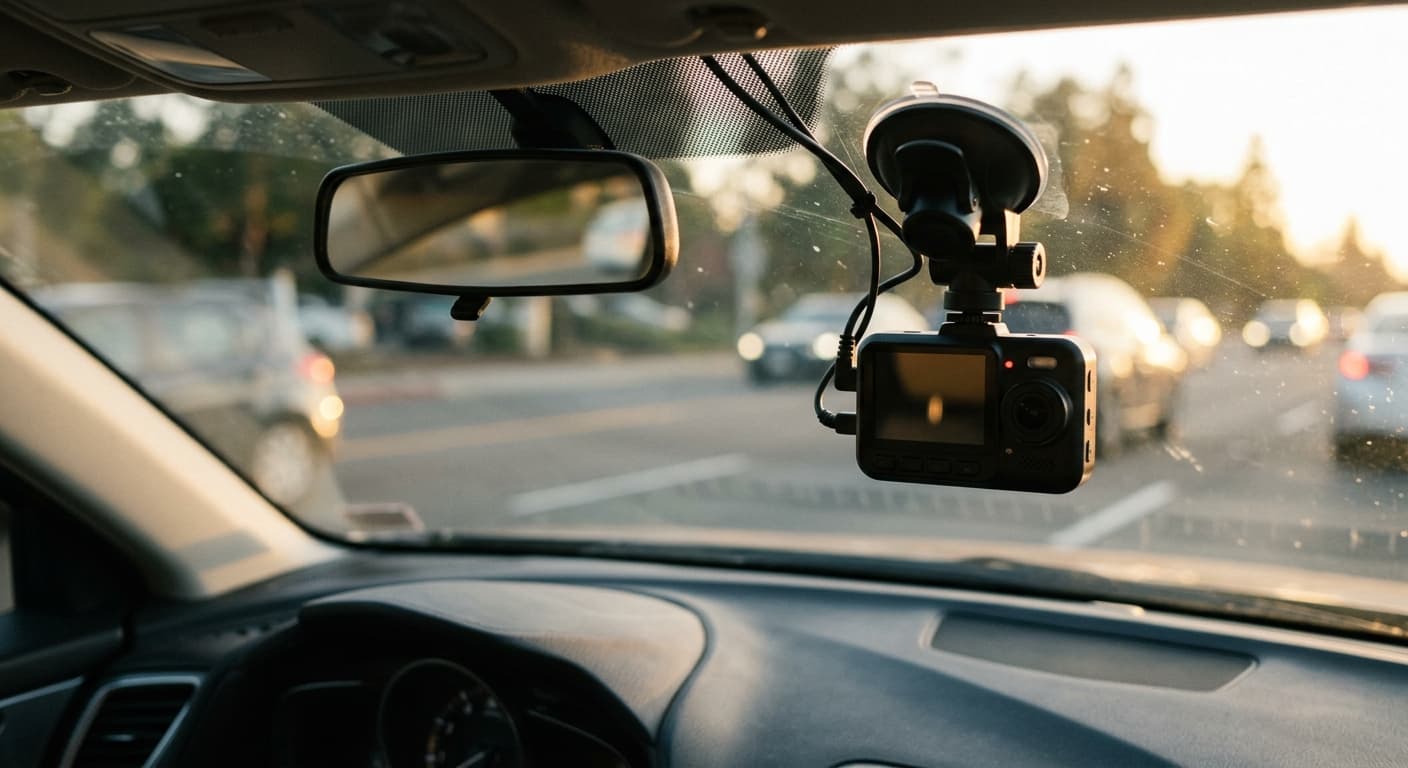
North Carolina is a one-party consent state under N.C. Gen. Stat. § 15A-287. Any participant in a phone call or in-person conversation can record it without notifying anyone else. Recording a conversation you are not part of, without the consent of at least one party to it, is a Class H felony, and the victim can sue under § 15A-296 for the greater of actual damages, $100 per day, or $1,000, plus punitive damages and mandatory attorney fees.
North Carolina recording law at a glance
| Question | Answer |
|---|---|
| Consent type | One-party |
| Controlling statute | N.C. Gen. Stat. § 15A-287 |
| Can you record your own calls? | Yes, without notice |
| Criminal penalty | Class H felony, 4-25 month minimum (up to 39-month maximum), full PRL grid |
| Civil damages | Greater of actual, $100/day, or $1,000 floor, plus punitives and attorney fees (§ 15A-296) |
| Hidden cameras | Class I felony for installation in private spaces for sexual gratification; Class H for dissemination (§ 14-202) |
| Recording police | First Amendment right confirmed by the Fourth Circuit in Sharpe (2023) |
| Public officer violation | Removal from office and permanent ineligibility (§ 15A-287(g)) |
For the full breakdown, jump to the North Carolina recording laws in depth section below.
Recording in-person conversations in North Carolina
Under § 15A-287, "oral communication" means words uttered by a person who exhibits an expectation that the communication is not subject to interception, under circumstances justifying that expectation. The key phrase is "at least one party": a participant who consents to the recording satisfies the statute, and in a two-person conversation, the recorder is that party.
The reasonable-expectation-of-privacy filter matters for in-person conversations. A loud exchange on a public sidewalk, remarks through an open window, or a shouted comment at a crowded counter generally lack that expectation and fall outside § 15A-287's protection. A closed-door meeting in a private office, a conversation inside a home, or a quiet exchange at a private table typically does fall within it.
The statute covers interception, disclosure, and use as three separate prohibited acts. Recording a conversation you are not part of is interception. Sharing that recording is disclosure. Playing it in court is use. Each is independently chargeable if the underlying recording was unlawful.
Recording phone calls in North Carolina
The one-party rule applies equally to landlines, cell phones, VoIP platforms (Zoom, Teams, Google Meet, Webex), and the audio component of video calls. If you are on the call, you can record it. Text messages and voicemails you receive are also covered, because you are a party to that communication.
You must be an active participant. Attaching a recorder to a line you are not on, or leaving a hidden device to capture calls between household members when you are not participating, is interception and, where no party to the call has consented, a Class H felony. The North Carolina Court of Appeals confirmed this line in Kroh v. Kroh, 152 N.C. App. 347, 567 S.E.2d 760 (2002): a spouse who installed a recording device to capture the other spouse's calls with third parties committed a § 15A-287 violation and exposed himself to a § 15A-296 civil claim. North Carolina rejects the interspousal exception that some federal courts have read into the federal Wiretap Act.
For interstate calls, the location of the other party matters. Most courts apply the law of the place where the recorded person had a reasonable expectation of privacy. If the other party is in a two-party state such as California, Florida, Maryland, Massachusetts, or Pennsylvania, that stricter rule typically controls. The safest practice for any call you may want to use as evidence is to announce the recording at the start and keep that announcement on file. For more detail, see the North Carolina phone call recording laws sub-page.

Hidden cameras, doorbells, and nanny cams
Video and photographic recording in private spaces is governed by N.C. Gen. Stat. § 14-202, a graduated peeping-and-voyeurism statute separate from the audio interception law. Session Law 2025-70 amended the subsection structure effective December 1, 2025.
| Subsection | Conduct | Class |
|---|---|---|
| (a) | Simple secret peeping into an occupied room | Class 1 misdemeanor |
| (a1) | Secretly peeping underneath or through another person's clothing, using a mirror or other device, to view their body or undergarments | Class 1 misdemeanor |
| (c) | Peeping while in possession of an imaging device with intent to capture | Class A1 misdemeanor |
| (d) | Using a device while secretly peeping to photograph another person for sexual gratification | Class I felony |
| (e1) | Capturing images of a person's private area without consent in circumstances where the person has a reasonable expectation of privacy | Class I felony |
| (f) | Secretly or surreptitiously using or installing in a room any device to capture images for sexual gratification | Class I felony |
| (g) | Knowingly possessing photographic images obtained in violation of this section | Class I felony |
| (h) | Disseminating images obtained in violation of § 14-202 without the depicted person's consent | Class H felony |
Sex-offender registration is a possible additional consequence, not an automatic one. Under § 14-202(l), when a person violates subsection (d), (e1), (f), (g), or (h), the sentencing court must consider whether that person is a danger to the community and whether registration would further the purposes of the sex-offender registry; an order to register is entered only if the court so rules. On your own property, filming common exterior areas (driveway, porch, yard) is generally lawful. Cameras aimed into spaces where individuals have a reasonable expectation of privacy (a neighbor's bedroom window, a bathroom, a changing room) cross into criminal territory under § 14-202. An audio-enabled security camera recording conversations when no participant has consented is also a § 15A-287 violation.
Recording that is otherwise lawful under § 15A-287 does not shield the recorder from separate trespass or breach-of-duty-of-loyalty liability tied to how the recording was obtained. In Food Lion, Inc. v. Capital Cities/ABC, Inc., 194 F.3d 505 (4th Cir. 1999), the Fourth Circuit affirmed nominal-damages verdicts against two ABC PrimeTime Live producers who used false resumes to get hired at Food Lion stores, including one in North Carolina, and wore concealed cameras and microphones to film nonpublic areas; applying North Carolina law, the court held their consent to be on the premises was nullified once their secret filming exceeded the scope of their employment, making them trespassers independent of whether the recordings themselves were legal.
For audio consent rules on home cameras, Ring doorbells, and employer-installed surveillance, see the North Carolina security camera laws and voyeurism sub-pages.
Penalties for illegal recording in North Carolina
Criminal penalty
A § 15A-287 violation is a Class H felony sentenced under the structured-sentencing grid in N.C. Gen. Stat. § 15A-1340.17. The minimum sentence depends on the defendant's Prior Record Level (PRL I through VI) and sentencing zone (mitigated, presumptive, or aggravated).
| Prior Record Level | Mitigated min | Presumptive min | Aggravated min |
|---|---|---|---|
| I (no prior record) | 4-5 mo | 5-6 mo | 6-8 mo |
| II | 4-6 mo | 6-8 mo | 8-10 mo |
| III | 6-8 mo | 8-10 mo | 10-12 mo |
| IV | 7-9 mo | 9-11 mo | 11-14 mo |
| V | 9-12 mo | 12-15 mo | 15-19 mo |
| VI | 12-16 mo | 16-20 mo | 20-25 mo |
A first-time offender at PRL I is typically eligible for community or intermediate (probation) punishment under structured-sentencing rules, absent aggravating factors. The minimum-sentence range across the entire grid runs from 4 months (PRL I, mitigated) to 25 months (PRL VI, aggravated); under § 15A-1340.17(d), each minimum sentence maps to a corresponding maximum term, and the 25-month minimum at PRL VI aggravated carries a maximum of 39 months, so total exposure for a Class H conviction can run as high as 39 months. A separate Class G escalation applies if a public officer or law enforcement officer discloses lawfully intercepted information to obstruct or thwart a criminal investigation.
Civil remedy
N.C. Gen. Stat. § 15A-296 creates a parallel civil cause of action. The plaintiff recovers: actual damages (but not less than liquidated damages computed at $100 per day for each day of violation, or $1,000, whichever is higher), plus punitive damages, plus reasonable attorney fees and litigation costs. The federal civil remedy under 18 U.S.C. § 2520 (greater of actual damages or $10,000 / $100 per day) can be pleaded alongside the state claim, though courts reduce duplicative recoveries.
The § 15A-287(g) public-officer disqualification
Section 15A-287(g) adds a consequence unique to North Carolina: any public officer who violates subsection (a) or (d), or knowingly violates subsection (e), is automatically removed from office and permanently barred from holding any public office, elective or appointed. The disqualification is a statutory consequence of conviction, not a separate proceeding. It is triggered only by violations of those three specified subsections.

Recording the police in North Carolina
The Fourth Circuit settled the citizen-recording question for North Carolina in Sharpe v. Winterville Police Department, 59 F.4th 674 (4th Cir. 2023). Dijon Sharpe was a passenger in a 2018 Winterville traffic stop and attempted to livestream the encounter on Facebook Live. An officer invoked Town policy to threaten device seizure if he continued. Sharpe sued under 42 U.S.C. § 1983.
The Fourth Circuit held that the First Amendment plausibly protects a vehicle passenger's right to record and livestream a traffic stop in which he participates, and allowed the claim that the Town's alleged no-livestreaming policy violates the First Amendment to proceed under Monell, vacating its dismissal and remanding for further proceedings. The individual officers received qualified immunity because the right to livestream a traffic stop was not "clearly established" at the time of the 2018 stop. For any incident going forward, that right is now clearly established in the Fourth Circuit, removing the qualified-immunity shield for future violations.
In practice, North Carolina officers may not constitutionally arrest, threaten, or seize devices from citizens recording police activity in public, subject to reasonable time, place, and manner restrictions that do not suppress the recording itself. Citizens may be directed to a reasonable distance and cannot obstruct an arrest or scene. For body-camera access rights, see the separate body-cam release regime below. See also the North Carolina recording police laws sub-page.
Special topics in North Carolina
Body-worn cameras and public records
Under N.C. Gen. Stat. § 132-1.4A, body-worn and dashboard-camera recordings by law enforcement are NOT public records. Disclosure (letting a depicted person view the footage) can be granted by the agency head under narrow conditions. Release of a copy generally requires a superior-court order. Section 132-1.4A(g) directs the court to consider eight listed standards, along with any other standards it deems relevant: whether release is necessary to advance a compelling public interest; whether the recording contains information otherwise confidential or exempt from disclosure under state or federal law; whether the requestor seeks evidence to determine legal issues in a current or potential court proceeding; whether release would reveal information about a person that is of a highly sensitive personal nature; whether release may harm a person's reputation or jeopardize their safety; whether release would create a serious threat to the fair, impartial, and orderly administration of justice; whether confidentiality is necessary to protect an internal or criminal investigation; and whether there is good cause shown to release all portions of the recording. Subsection (h) is a separate provision, not part of that test: it lets an agency disclose or release recordings for law-enforcement purposes, including to a district attorney. Sharpe governs citizen-side recording; § 132-1.4A governs accessing police-made recordings.
Public meetings and court proceedings
Under N.C. Gen. Stat. § 143-318.14(a), any person may photograph, film, or record any part of an open public meeting, including city council, county commissioner, school board, and public-hearing proceedings. A public body may regulate equipment placement to prevent undue interference but cannot ban recording outright. Court proceedings are governed by Rule 15 of the General Rules of Practice for the Superior and District Courts, which gives the presiding judge broad discretion over media coverage, a default two-camera limit, and authority to exclude cameras from sensitive proceedings such as juvenile, domestic-relations, or certain witness testimony.
Workplace recording
A North Carolina employee can record any conversation they participate in at work, including conversations with supervisors, HR, and coworkers. An employer handbook can prohibit workplace recording even where state law permits it; violating that policy is grounds for discipline even if the recording is lawful. Under Stericycle, Inc., 372 NLRB No. 113 (Aug. 2, 2023), a blanket no-recording rule is presumptively unlawful if it could chill Section 7 activity, though current enforcement guidance follows the more permissive Boeing-era framework after NLRB GC 25-05 (Feb. 14, 2025). NLRB GC 25-07 (June 26, 2025) treats secretly recording collective-bargaining sessions as a per se NLRA violation for both employers and unions, regardless of state recording law. See the North Carolina workplace recording laws sub-page.
Deepfake and AI-generated intimate imagery
Session Law 2024-37 (H.B. 591), effective December 1, 2024, amended N.C. Gen. Stat. § 14-190.5A to cover AI-generated and deepfake intimate imagery where a reasonable person would believe the image depicts a real identifiable individual. An offense by a person 18 or older is a Class H felony regardless of prior offenses; a first offense by a person under 18 is a Class 1 misdemeanor, escalating to a Class H felony for a second or subsequent offense. The same session law created N.C. Gen. Stat. § 14-190.17C, criminalizing AI-generated CSAM even where no actual minor is depicted. The federal TAKE IT DOWN Act (signed May 19, 2025) adds a 48-hour platform takedown duty for nonconsensual intimate imagery, with full implementation by May 19, 2026.
Federal overlay
ECPA, 18 U.S.C. §§ 2510-2522, provides the federal one-party floor that mirrors § 15A-287, plus a parallel federal civil remedy under 18 U.S.C. § 2520. FCC 24-17 (Feb. 8, 2024) confirms that AI-generated voices are "artificial" under the TCPA, requiring prior express consent before AI-voice robocalls. The companion FCC 24-24 "One-to-One Consent Rule" was vacated by the Eleventh Circuit in Insurance Marketing Coalition Ltd. v. FCC, No. 24-10277 (decided Jan. 24, 2025, mandate issued Apr. 30, 2025), and has no operative effect. 47 C.F.R. § 64.501 (the historic beep-tone carrier rule) was removed in 2017 and is no longer active federal law.

Recent legal developments
- December 1, 2024: S.L. 2024-37 (H.B. 591) extended § 14-190.5A to AI-generated and deepfake intimate imagery and created § 14-190.17C for AI-generated CSAM.
- May 19, 2025: Federal TAKE IT DOWN Act signed; 48-hour platform takedown duty for nonconsensual intimate imagery, full implementation by May 19, 2026.
- June 26, 2025: NLRB GC 25-07 treats secret recording of collective-bargaining sessions as a per se NLRA violation, regardless of state one-party consent law.
- December 1, 2025: Session Law 2025-70 amended § 14-202 (secretly peeping), restructuring the subsection labels including replacing old subsection (e) with new (e1) covering non-consensual imaging of private areas.
- April 30, 2025: FCC 24-24 One-to-One Consent Rule mandate issued by the Eleventh Circuit following vacatur; rule has no operative effect nationally.
- Pending (not enacted): H.B. 375 (2025) (AI political ad disclosures) and H.B. 934 (2025) (AI-generated audio/video criminal offense) remain introduced, not passed, as of June 2026.
North Carolina recording laws in depth
By type of recording
- North Carolina Audio Recording Laws: One-Party Consent Rules
- North Carolina Phone Call Recording Laws: What You Need to Know
- North Carolina Video Recording Laws: Public, Private, and Voyeurism Rules
- North Carolina Voyeurism and Hidden Camera Laws: Offenses and Penalties
- North Carolina Dashcam Laws: Mounting, Recording, and Evidence Rules
By place or relationship
- North Carolina Laws on Recording Police: Rights, Body Cameras, and HB 972
- North Carolina Laws on Recording in Public: Rights and Restrictions
- North Carolina Workplace Recording Laws: Employee and Employer Rights
- North Carolina Landlord-Tenant Recording Laws: Cameras and Consent
- North Carolina Medical Recording Laws: Patient Rights and Provider Rules
- North Carolina School Recording Laws: Student, Parent, and Campus Rules
- North Carolina Security Camera Laws: Home, Business, and HOA Rules
More North Carolina laws
- North Carolina At-Will Employment Laws
- North Carolina Child Custody Laws
- North Carolina Data Privacy Laws
- North Carolina Divorce Laws
- North Carolina Landlord-Tenant Laws
This article is general legal information, not legal advice. Recording laws change and apply differently to each situation. For advice about your situation, consult a licensed North Carolina attorney.
More North Carolina Laws
Frequently Asked Questions
Is North Carolina a one-party consent state?
Yes. Under N.C. Gen. Stat. § 15A-287, any participant in a phone call or in-person conversation can record it without notifying the other parties. Interception by someone who is not a participant is a Class H felony only if no party to the communication consented, so a non-participant who records with one party's permission does not violate the statute.
Can I record a phone call without telling the other person?
Yes, if you are a participant in the call. The one-party consent rule under § 15A-287 covers landlines, cell phones, VoIP calls, and voicemails. If the other party is in a two-party state such as California or Florida, that stricter rule may apply instead.
What is the penalty for illegally recording someone in North Carolina?
Illegal interception is a Class H felony with a minimum-sentence range of 4 to 25 months across the full Prior Record Level grid, and corresponding maximum terms of up to 39 months. First-time offenders at PRL I are typically eligible for probation. Civil exposure under § 15A-296 includes the greater of actual damages, $100 per day, or $1,000, plus punitive damages and mandatory attorney fees.
Can I sue someone for recording me without consent?
Yes, if the recording violated § 15A-287. Under § 15A-296, you can recover the greater of actual damages, $100 per day for each day of violation, or $1,000, plus punitive damages and reasonable attorney fees and costs.
Can I record the police in North Carolina?
Yes. Sharpe v. Winterville Police Department, 59 F.4th 674 (4th Cir. 2023), held that the First Amendment protects citizen recording and livestreaming of police activity in public, including during a traffic stop you are a passenger in. Officers may set reasonable time, place, and manner limits but cannot ban recording.
Are Ring doorbells and nanny cams legal in North Carolina?
Cameras pointed at your own property and exterior common areas are generally lawful. Cameras aimed into spaces where people have a reasonable expectation of privacy (bathrooms, bedrooms, changing rooms) violate § 14-202. An audio-enabled camera recording conversations without any participant's consent also violates § 15A-287.
Can I record my boss or an HR meeting at work?
Yes, under § 15A-287, because you are a participant in the conversation. Your employer may have a no-recording policy that creates grounds for discipline or termination even though the recording itself is lawful. A blanket no-recording policy may also conflict with NLRA Section 7 rights under the Stericycle standard.
Does North Carolina have laws against deepfake intimate images?
Yes. Session Law 2024-37, effective December 1, 2024, amended § 14-190.5A so that AI-generated and deepfake intimate imagery of a real person is treated the same as a photograph. An offense by a person 18 or older is a Class H felony regardless of prior offenses; a first offense by a person under 18 is a Class 1 misdemeanor, escalating to a Class H felony for a second or subsequent offense. The federal TAKE IT DOWN Act (signed May 19, 2025) adds a 48-hour platform takedown duty.
Updates
Corrected the consent qualifier on non-participant recording, clarified that sex-offender registration under N.C. Gen. Stat. 14-202(l) is a discretionary decision by the sentencing court rather than automatic, and replaced the body-camera release paraphrase with the eight standards actually listed in N.C. Gen. Stat. 132-1.4A(g).
Corrected the Class H felony sentencing description (the minimum-sentence range is 4 to 25 months across Prior Record Levels, with maximum terms up to 39 months, not a 4-to-39-month minimum range) and rebuilt the sentencing table to match the official chart; fixed the deepfake/nonconsensual-imagery penalty description, which incorrectly claimed a Class G felony tier for repeat offenses (the statute has no such tier -- adults are always Class H, minors face a misdemeanor-then-felony structure); replaced a dead case-law citation with a working link; and corrected a one-day date discrepancy for an NLRB guidance memo.
Independently fact-checked against the cited primary sources; governing law re-checked for recent changes
Corrected the section 14-202 penalty table: the imaging-device peeping offense (Class A1 misdemeanor) is codified at subsection (c), not (a1); added the real subsection (a1) offense (secretly peeping under/through another person's clothing, a Class 1 misdemeanor) that the table had omitted entirely.
Governing law re-checked for recent changes
Governing law re-checked for recent changes
Reviewed and approved by an editor
Restructured page: added AEO lede, condensed core consent and penalty sections into short paragraphs, replaced the old Quick Answer block with a compact at-a-glance table, rebuilt the § 14-202 penalty table to reflect the SL 2025-70 (effective Dec 1, 2025) subsection restructuring (old (e) repealed, new (e1) added), retained all statutes and case citations, condensed special topics (body-cam, workplace, deepfakes, federal overlay) into single paragraphs each, added Recent Legal Developments bullet list, added in-depth sub-page index with By-type and By-place groupings, and refreshed FAQ.
Refreshed for 2026: added Sharpe v. Winterville Police Dep't, 59 F.4th 674 (4th Cir. 2023) controlling record-the-police precedent (arose in Pitt County, NC), corrected Class H PRL grid range to 4 to 39 months across the full grid, added S.L. 2024-37 AI/deepfake coverage of § 14-190.5A and new § 14-190.17C effective December 1, 2024, federal TAKE IT DOWN Act with May 19, 2026 compliance deadline, 11th Circuit vacatur of FCC 24-24 (mandate April 30, 2025), NLRB GC 25-05 / GC 25-07 workplace recording overlay, removed stale 47 CFR § 64.501 references, replaced commercial-codifier URLs with ncleg.gov, nccourts.gov, and uscode.house.gov. Title rewritten to surface 15A-287 statute cite. Meta rewritten to lead with the binary one-party verdict and Class H felony exposure.
Refreshed for 2026: added Sharpe v. Winterville Police Dep't, 59 F.4th 674 (4th Cir. 2023) controlling record-the-police precedent (arose in Pitt County, NC), corrected Class H PRL grid range to 4 to 25 months (minimum sentences) across the full grid, with corresponding maximum terms of up to 39 months, added S.L. 2024-37 AI/deepfake coverage of § 14-190.5A and new § 14-190.17C effective December 1, 2024, federal TAKE IT DOWN Act with May 19, 2026 compliance deadline, 11th Circuit vacatur of FCC 24-24 (mandate April 30, 2025), NLRB GC 25-05 / GC 25-07 workplace recording overlay, removed stale 47 CFR § 64.501 references, replaced commercial-codifier URLs with ncleg.gov, nccourts.gov, and uscode.house.gov. Title rewritten to surface 15A-287 statute cite. Meta rewritten to lead with the binary one-party verdict and Class H felony exposure.
Added wearable recording devices section and 2 new FAQs about AI voice recorders and smart glasses
The Law Behind This Article
This article rests on the statutory provisions below, held in our own legal record and retrieved from the official source. Tap a section to read the operative text.
North Carolina General Statutes, Chapter 15A: Criminal Procedure Act.
§ 15A-287Interception and disclosure of wire, oral, or electronic communications prohibitedIn forcecited in 18 of our articles
(a) Except as otherwise specifically provided in this Article, a person is guilty of a Class H felony if, without the consent of at least one party to the communication, the person: (1) Willfully intercepts, endeavors to intercept, or procures any other person to intercept or endeavor to intercept, any wire, oral, or electronic communication. (2) Willfully uses, endeavors to use, or procures any other person to use or endeavor to use any electronic, mechanical, or other device to intercept any oral communication when: a. The device is affixed to, or otherwise transmits a signal through, a wire, cable, or other like connection used in wire communications; or b. The device transmits communications by radio, or interferes with the transmission of such communications.
Official text (excerpt) · last checked 2026-07-29 · Read the full text in our law library · Verify at ncleg.gov
Cited in 12 court opinions in our collectionLatest citing opinion in our collection: 2026
In the courts (editorial summary, independently checked):North Carolina courts apply Section 15A-287 to private recording. Kroh v. Kroh (2002) held it reaches one spouse's nonconsensual audio recording of the other in the family home, not video without sound, and adopted vicarious consent by a custodial parent. State v. McGriff (2002) held interception is not willful absent a bad purpose.
Opinions citing this section in our collection:
- State v. McGriff (Court of Appeals of North Carolina 2002, 151 N.C. App. 631)✓A neighbor's cordless phone picked up a call in which a girl said McGriff had tried to force oral sex on her, and she listened about an hour; the court held listening out of concern for a minor was not willful interception under Section 15A-287(a)(1), so the evidence came in.
- Wright v. TOWN OF ZEBULON (Court of Appeals of North Carolina 2010, 202 N.C. App. 540)✓A police chief hid a transmitter under a sergeant's patrol car seat to test whether he tipped off drug dealers; the court affirmed summary judgment on his Section 15A-287(a)(1) claim, finding the public safety purpose meant the interception was not willful.
- Kroh v. Kroh (Court of Appeals of North Carolina 2002, 152 N.C. App. 347)“…rs to intercept, . . . any . . . oral . . . communication.” G.S. § 15A-287(a)(l). An “oral communication” includes…”
Identified automatically from the court opinions citing this section — not a ranking of which case controls.
Also relied on in: North Carolina Smart Glasses Recording Laws 2026, North Carolina Video Recording Laws: Public, Private, and Voyeurism Rules, North Carolina Dashcam Laws: Mounting, Recording, and Evidence Rules
§ 15A-296Recovery of civil damages authorizedIn forcecited in 8 of our articles
(a) Any person whose wire, oral, or electronic communication is intercepted, disclosed, or used in violation of this Article, has a civil cause of action against any person who intercepts, discloses, uses, or procures any other person to intercept, disclose, or use such communications, and is entitled to recover from any other person: (1) Actual damages, but not less than liquidated damages, computed at the rate of one hundred dollars ($100.00) a day for each day of violation or one thousand dollars ($1,000), whichever is higher; (2) Punitive damages; and (3) A reasonable attorneys' fee and other litigation costs reasonably incurred. (b) Good faith reliance on a court order or on a representation made by the Attorney General or a district attorney is a complete defense to any civil or criminal action brought under this Article.
Official text (excerpt) · last checked 2026-07-29 · Read the full text in our law library · Verify at ncleg.gov
Cited in 4 court opinions in our collectionLatest citing opinion in our collection: 2026
Opinions citing this section in our collection:
- Kroh v. Kroh (Court of Appeals of North Carolina 2002, 152 N.C. App. 347)“…nce Act and awarded $1,000.00 in compensatory damages under G.S. § 15A-296. Following a bench trial on the remaini…”
- Riddick v. Gates Cnty. (Court of Appeals of North Carolina 2026)“…in the Board of Elections.” Plaintiff sues pursuant to N.C.G.S. § 15A-296, which creates a civil cause of action…”
- Wright v. TOWN OF ZEBULON (Court of Appeals of North Carolina 2010, 202 N.C. App. 540)“…damages, attorney’s fees, and associated litigation costs. N.C. Gen. Stat. § 15A-296(a) (2009); Kroh v. Kroh,…”
Identified automatically from the court opinions citing this section — not a ranking of which case controls.
Also relied on in: North Carolina Audio Recording Laws: One-Party Consent Rules, North Carolina Phone Call Recording Laws: What You Need to Know, North Carolina Workplace Recording Laws: Employee and Employer Rights
§ 15A-288Manufacture, distribution, possession, and advertising of wire, oral, or electronic communication intercepting devices prohibitedIn force
(a) Except as otherwise specifically provided in this Article, a person is guilty of a Class H felony if the person: (1) Manufactures, assembles, possesses, purchases, or sells any electronic, mechanical, or other device, knowing or having reason to know that the design of the device renders it primarily useful for the purpose of the surreptitious interception of wire, oral, or electronic communications; or (2) Places in any newspaper, magazine, handbill, or other publication, any advertisement of: a. Any electronic, mechanical, or other device knowing or having reason to know that the design of the device renders it primarily useful for the purpose of the surreptitious interception of wire, oral, or electronic communications; or b. Any other electronic, mechanical, or other device where the advertisement promotes the use of the device for the purpose of the surreptitious interception of wire, oral, or electronic communications.
Official text (excerpt) · last checked 2026-07-29 · Read the full text in our law library · Verify at ncleg.gov
North Carolina General Statutes, Chapter 14: Criminal Law.
§ 14-202Secretly peeping into room occupied by another personIn forcecited in 12 of our articles
(a) Any person who shall peep secretly into any room occupied by another person shall be guilty of a Class 1 misdemeanor. (a1) Unless covered by another provision of law providing greater punishment, any person who secretly or surreptitiously peeps underneath or through the clothing being worn by another person, through the use of a mirror or other device, for the purpose of viewing the body of, or the undergarments worn by, that other person without their consent shall be guilty of a Class 1 misdemeanor. (b) The following definitions apply in this section: (1) Photographic image. - Any photograph or photographic reproduction, still or moving, or any videotape, motion picture, or live television transmission, or any digital image of any individual. (2) Private area of an individual. - The naked or undergarment clad genitals, pubic area, buttocks, or female breast of that individual. (3) Room. - Includes, but is not limited to, a bedroom, a rest room, a bathroom, a shower, a dressing room, a dressing stall, a cubicle, or other similar area designed to provide privacy. (4) Under circumstances in which that individual has a reasonable expectation of privacy.
Official text (excerpt) · last checked 2026-07-29 · Read the full text in our law library · Verify at ncleg.gov
Cited in 17 court opinions in our collectionLatest citing opinion in our collection: 2026
In the courts (editorial summary, independently checked):In Matter of Banks (1978) the North Carolina Supreme Court upheld G.S. 14-202 against vagueness and overbreadth challenges, reading secret peeping to require spying intended to invade the occupant's privacy. State v. Pell (2011) applied its sex offender registration provision and reversed an order unsupported by evidence.
Opinions citing this section in our collection:
- Matter of Banks (Supreme Court of North Carolina 1978, 295 N.C. 236)✓A trial judge held the secret peeping statute unconstitutional. The court reversed, construing the statute to reach only spying done with the wrongful purpose of invading the occupant's privacy, and held it was neither impermissibly vague nor overbroad on that reading.
- State v. Breathette (Court of Appeals of North Carolina 2010, 202 N.C. App. 697)“…any child of either sex under the age of 16 years. N.C. Gen. Stat. § 14-202 .l(a)(l)-(2). The statute is unambiguou…”
- State v. Pell (Court of Appeals of North Carolina 2011, 211 N.C. App. 376)✓A man pleaded guilty to eight counts of felony secret peeping and was ordered onto the sex-offender registry. The court held the danger-to-the-community standard in this section is not vague, but reversed the registration order because the risk evidence did not support it.
Identified automatically from the court opinions citing this section — not a ranking of which case controls.
Also relied on in: North Carolina Landlord-Tenant Recording Laws: Cameras and Consent, North Carolina School Recording Laws: Student, Parent, and Campus Rules, North Carolina Security Camera Laws: Home, Business, and HOA Rules
North Carolina General Statutes, Chapter 132: Public Records.
§ 132-1.4ALaw enforcement agency recordingsIn forcecited in 5 of our articles
(a) Definitions. - The following definitions apply in this section: (1) Body-worn camera. - An operational video or digital camera or other electronic device, including a microphone or other mechanism for allowing audio capture, affixed to the uniform or person of law enforcement agency personnel and positioned in a way that allows the camera or device to capture interactions the law enforcement agency personnel has with others. (2) Custodial law enforcement agency. - The law enforcement agency that owns or leases or whose personnel operates the equipment that created the recording at the time the recording was made. (3) Dashboard camera. - A device or system installed or used in a law enforcement agency vehicle that electronically records images or audio depicting interaction with others by law enforcement agency personnel. This term does not include body-worn cameras. (4) Disclose or disclosure. - To make a recording available for viewing or listening to by the person requesting disclosure, at a time and location chosen by the custodial law enforcement agency. This term does not include the release of a recording. (5) Personal representative.
Official text (excerpt) · last checked 2026-08-31 · Read the full text in our law library · Verify at ncleg.gov
Also relied on in: North Carolina Laws on Recording Police: Rights, Body Cameras, and HB 972, North Carolina Police Body Camera Laws: Access & Court Petitions, North Carolina Public Records Law and Body-Camera Access (2026)
North Carolina General Statutes, Chapter 143: State Departments, Institutions, and Commissions
§ 143-318.14Broadcasting or recording meetingsIn forcecited in 2 of our articles
(a) Except as herein below provided, any radio or television station is entitled to broadcast all or any part of a meeting required to be open. Any person may photograph, film, tape-record, or otherwise reproduce any part of a meeting required to be open. (b) A public body may regulate the placement and use of equipment necessary for broadcasting, photographing, filming, or recording a meeting, so as to prevent undue interference with the meeting. However, the public body must allow such equipment to be placed within the meeting room in such a way as to permit its intended use, and the ordinary use of such equipment shall not be declared to constitute undue interference; provided, however, that if the public body, in good faith, should determine that the size of the meeting room is such that all the members of the public body, members of the public present, and the equipment and personnel necessary for broadcasting, photographing, filming, and tape-recording the meeting cannot be accommodated in the meeting room without unduly interfering with the meeting and an adequate alternative meeting room is not readily available, then the public body, acting in good faith and consistent…
Official text (excerpt) · last checked 2026-07-29 · Read the full text in our law library · Verify at ncleg.gov
Cited in 1 court opinions in our collectionLatest citing opinion in our collection: 1998
Opinions citing this section in our collection:
- DTH Publishing Corp. v. University of North Carolina at Chapel Hill (Court of Appeals of North Carolina 1998, 128 N.C. App. 534)“…ent part: (a) Except as provided in G.S. 143-318.11, G.S. 143-318.14A, G.S. 143-318.15, and G.S. 143-318.18,…”
Identified automatically from the court opinions citing this section — not a ranking of which case controls.
Also relied on in: North Carolina Laws on Recording in Public: Rights and Restrictions
United States Code Title 18
§ 2520Recovery of civil damages authorizedIn forcecited in 115 of our articles
Except as provided in section 2511(2)(a)(ii), any person whose wire, oral, or electronic communication is intercepted, disclosed, or intentionally used in violation of this chapter may in a civil action recover from the person or entity, other than the United States, which engaged in that violation such relief as may be appropriate. In an action under this section, appropriate relief includes— such preliminary and other equitable or declaratory relief as may be appropriate; damages under subsection (c) and punitive damages in appropriate cases; and a reasonable attorney’s fee and other litigation costs reasonably incurred.
Official text (excerpt) · last checked 2026-07-28 · Read the full text in our law library · Verify at uscode.house.gov
Cited in 860 court opinions in our collectionLatest citing opinion in our collection: 2026
In the courts (editorial summary, independently checked):Walker v. Darby (1990) held a 2520 plaintiff need not prove the contents of intercepted conversations, only interception and a justified expectation against it. Bartnicki v. Vopper (2001) barred 2520 damages against defendants who took no part in the interception, obtained the tape lawfully, and disclosed a matter of public concern.
Opinions citing this section in our collection:
- Jessie Walker v. Thomas E. Darby, Hugh L. Robinson, Jr., and Kenneth Day (Court of Appeals for the Eleventh Circuit 1990, 911 F.2d 1573)✓A postal letter carrier said three supervisors wired an intercom near his workstation to listen in. Reversing summary judgment, the Eleventh Circuit held a section 2520 plaintiff can show interception without proving the contents of specific conversations.
- Gelbard v. United States (Supreme Court of the United States 1972, 408 U.S. 41)“…disclosure, or use is entitled to recover civil damages, 18 U. S. C. § 2520 . Title III also bars the use as eviden…”
- DirecTV, Inc. v. Hoa Huynh (Court of Appeals for the Ninth Circuit 2007, 503 F.3d 847)“…7 U.S.C. § 605 (e)(4), or alternatively, for violations of 18 U.S.C. § 2520 (a), or alternatively, for violations o…”
Identified automatically from the court opinions citing this section — not a ranking of which case controls.
Also relied on in: US Recording Laws by State (2026): All 50 States Explained, One-Party Consent States: Complete 2026 Guide, Alabama Audio Recording Laws: Consent Rules and Penalties
United States Code Title 42
§ 1983Civil action for deprivation of rightsIn forcecited in 50 of our articles
Every person who, under color of any statute, ordinance, regulation, custom, or usage, of any State or Territory or the District of Columbia, subjects, or causes to be subjected, any citizen of the United States or other person within the jurisdiction thereof to the deprivation of any rights, privileges, or immunities secured by the Constitution and laws, shall be liable to the party injured in an action at law, suit in equity, or other proper proceeding for redress, except that in any action brought against a judicial officer for an act or omission taken in such officer’s judicial capacity, injunctive relief shall not be granted unless a declaratory decree was violated or declaratory relief was unavailable. For the purposes of this section, any Act of Congress applicable exclusively to the District of Columbia shall be considered to be a statute of the District of Columbia.
Official text (excerpt) · last checked 2026-07-28 · Read the full text in our law library · Verify at uscode.house.gov
Cited in 282,365 court opinions in our collectionLatest citing opinion in our collection: 2026
Opinions citing this section in our collection:
- Ashcroft v. Iqbal (Supreme Court of the United States 2009, 556 U.S. 662)“…its brought against state officials under Rev. Stat. §1979, 42 U. S. C. §1983.” Hartman, 547 U. S., at 254, n. 2. Cf.…”
- Celotex Corp. v. Catrett, Administratrix of the Estate of Catrett (Supreme Court of the United States 1986, 477 U.S. 317)“…policeman as she left. Petitioner brought an action under 42 U. S. C. § 1983 claiming that the refusal of service a…”
- Monell v. New York City Dept. of Social Servs. (Supreme Court of the United States 1978, 436 U.S. 658)“…decided less than two decades ago. Focusing new light on 42 U. S. C. § 1983 , that decision widened access to the f…”
Identified automatically from the court opinions citing this section — not a ranking of which case controls.
Also relied on in: Alabama Laws on Recording Police: Your Rights and Limits, Alaska Laws on Recording Police: Your Rights and Limits (2026), Arkansas Laws on Recording Police: Your Rights and Limits (2026)
United States Code Title 47
§ 1001DefinitionsIn forcecited in 2 of our articles
For purposes of this subchapter— The terms defined in section 2510 of title 18 have, respectively, the meanings stated in that section. The term “call-identifying information” means dialing or signaling information that identifies the origin, direction, destination, or termination of each communication generated or received by a subscriber by means of any equipment, facility, or service of a telecommunications carrier. The term “Commission” means the Federal Communications Commission. The term “electronic messaging services” means software-based services that enable the sharing of data, images, sound, writing, or other information among computing devices controlled by the senders or recipients of the messages. The term “government” means the government of the United States and any agency or instrumentality thereof, the District of Columbia, any commonwealth, territory, or possession of the United States, and any State or political subdivision thereof authorized by law to conduct electronic surveillance.
Official text (excerpt) · last checked 2026-07-28 · Read the full text in our law library · Verify at uscode.house.gov
Cited in 23 court opinions in our collectionLatest citing opinion in our collection: 2023
Opinions citing this section in our collection:
- In Re US for an Order Aut. Dis. of Prosp. Cell (District Court, E.D. Wisconsin 2006, 412 F. Supp. 2d 947)“…ions Assistance for Law Enforcement Act of 1994 (“CALEA”), 47 U.S.C. § 1001 , et seq. That statute req…”
- American Council on Education v. Federal Communications Commission (Court of Appeals for the D.C. Circuit 2006, 451 F.3d 226)“…ar as they are engaged in providing information services,” 47 U.S.C. § 1001 (8)(C)(i) (2000), • defines “informat…”
- Amer Cncl Educ v. FCC (Court of Appeals for the D.C. Circuit 2006, 451 F.3d 226)“…ally identical to the one included in the 1996 Act. Compare 47 U.S.C. § 1001(6) (CALEA), with id. § 153(20) (Telecom…”
Identified automatically from the court opinions citing this section — not a ranking of which case controls.
Search our full record of US law — 2.1 million sections, every state + federal →
Sources and References
- N.C. Gen. Stat. 15A-287 (Interception and disclosure of wire, oral, or electronic communications prohibited)(ncleg.gov).gov
- N.C. Gen. Stat. 15A-287(g); N.C. Gen. Stat. 15A-1340.17 (Punishment limits for each class of offense and prior record level)(ncleg.gov).gov
- N.C. Gen. Stat. 15A-296(ncleg.gov).gov
- N.C. Gen. Stat. 14-202 (Secretly peeping into room occupied by another person; secretly photographing under or through clothing)(ncleg.gov).gov
- N.C. Gen. Stat. 15A-288(ncleg.gov).gov
- N.C. Gen. Stat. 14-190.5A; N.C. Gen. Stat. 14-190.17C; S.L. 2024-37 (H.B. 591), ratified June 27, 2024, effective December 1, 2024(ncleg.gov).gov
- N.C. Gen. Stat. 15A-287, 15A-288, 15A-296, 14-202, 14-190.5A; structured-sentencing grid published by NC Judicial Branch under 15A-1340.17(nccourts.gov).gov
- Sharpe v. Winterville Police Department, 59 F.4th 674 (4th Cir. 2023), No. 21-1827, decided February 7, 2023(ca4.uscourts.gov).gov
- Kroh v. Kroh, 152 N.C. App. 347, 567 S.E.2d 760 (N.C. Ct. App. 2002) (via CourtListener)(courtlistener.com)
- State v. Price, 170 N.C. App. 57, 611 S.E.2d 891 (N.C. Ct. App. 2005)
- N.C. Gen. Stat. 143-318.14(a); General Rules of Practice for the Superior and District Courts, Rule 15(ncleg.gov).gov
- 18 U.S.C. 2510-2522 (Electronic Communications Privacy Act); 18 U.S.C. 2520 (federal civil remedy)(uscode.house.gov).gov
- FCC 24-17 (Declaratory Ruling, Feb. 8, 2024); 47 U.S.C. 227 (TCPA)(docs.fcc.gov).gov
- FCC 24-24 (vacated); Insurance Marketing Coalition Ltd. v. FCC, No. 24-10277 (11th Cir. Jan. 24, 2025), mandate Apr. 30, 2025; DA 25-621 ministerial removal(media.ca11.uscourts.gov).gov
- 47 C.F.R. 64.501 (REMOVED and reserved 2017, effective Nov. 20, 2017)(ecfr.gov).gov
- DOJ Justice Manual 9-7.302; 18 U.S.C. 2511(2)(c)(justice.gov).gov
- Stericycle, Inc., 372 NLRB No. 113 (Aug. 2, 2023); NLRB GC 25-05 (Feb. 14, 2025)(nlrb.gov).gov
- NLRB GC 25-07 (June 26, 2025)(apps.nlrb.gov).gov
- FTC v. Ring LLC (settled May 2023)(ftc.gov).gov
- N.C. Gen. Stat. 132-1.4A(ncleg.gov).gov
- 45 C.F.R. Part 164 (HIPAA Privacy and Security Rules)(hhs.gov).gov
- 12 C.F.R. Part 1006 (CFPB Regulation F); 12 C.F.R. 1006.100 (record retention)(consumerfinance.gov).gov
- TAKE IT DOWN Act (S. 146, 119th Cong., signed May 19, 2025)(congress.gov).gov
- FCC FNPRM, adopted Oct. 28, 2025 (TCPA / Caller-ID; comments due Jan. 5, 2026)
- 47 U.S.C. 1001-1010 (Communications Assistance for Law Enforcement Act, 1994)(law.cornell.edu)
- NC Department of Justice press, 2025(ncdoj.gov).gov
- ncleg.gov.gov
- ncleg.gov.gov
- ncleg.gov.gov
- ncleg.gov.gov
- nccriminallaw.sog.unc.edu
- H.B. 375 (2025 N.C. Reg. Sess.) (pending)(ncleg.gov).gov
- H.B. 934 (2025 N.C. Reg. Sess.) (pending)(ncleg.gov).gov
- Food Lion, Inc. v. Capital Cities/ABC, Inc., 194 F.3d 505 (4th Cir. 1999)(courtlistener.com)