How to Detect and Block Listening Devices in Your Home (2026)
Independently fact-checked against primary sources (last audited August 5, 2026). · 9 primary sources cited on this page. How we verify our legal content
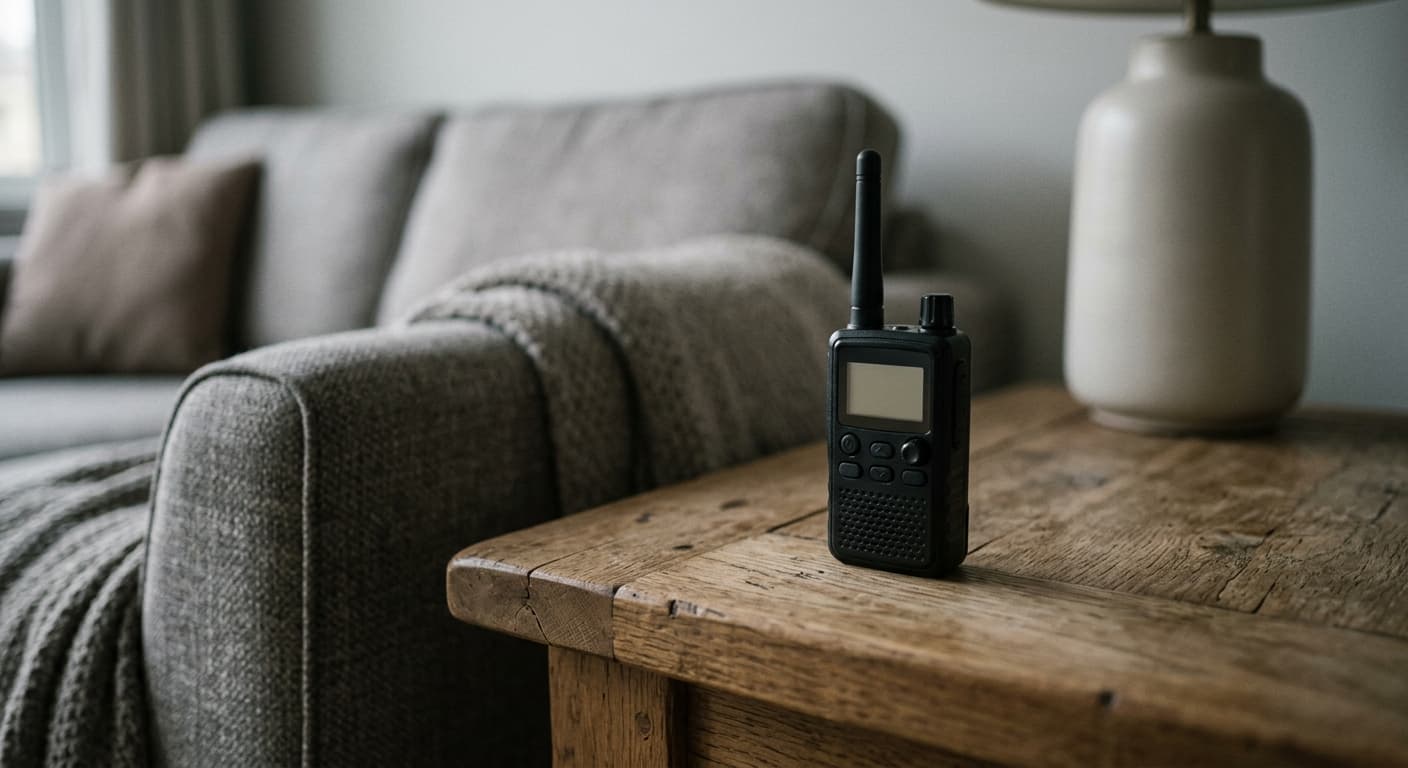
To detect listening devices, sweep the room with an RF detector that picks up radio signals, magnetic fields, and camera lenses, then check power sources, wiring, and your Wi-Fi network for hardware you do not recognize. To block them, use an acoustic white noise generator and shut off unnecessary microphone permissions. Radio frequency jammers are illegal under US federal law, with no exemption for your own home.
Is my phone listening to me? Yes, and there could be other devices in your home that are listening as well. The real questions are how you find them, how you shut them up without breaking the law yourself, and what you can do to the person who put them there.
How to detect and block listening devices, a quick take:
- Sweep with an RF detector, then follow the power and check your network. Most consumer bugs need electricity and most transmit.
- Mask conversations with an acoustic white noise generator, never an RF or cell jammer, which is illegal in the US.
- If you find something, photograph it in place and call the police before you touch it. It is evidence and it may be worth money to you.
- Common sense is your best long-term defense. Do not share more than you need to.
How to detect listening devices in your home
Most people looking for a bug start by taking things apart. That is the slowest and least reliable method, and it usually ends in a broken smoke detector and no answers. Work from signal to object instead.
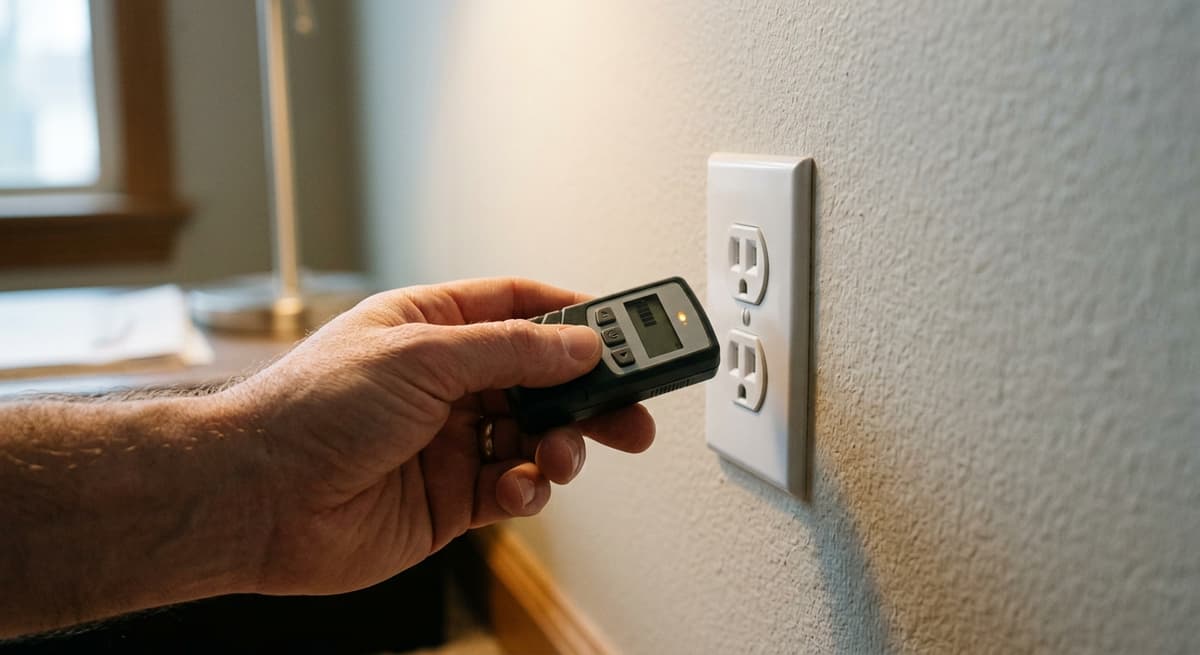
What a listening device detector actually does
Products sold as a "listening device detector" are almost always radio frequency (RF) detectors. They do three things: register nearby radio transmissions, sense magnetic fields from powered electronics, and flash an LED ring that reflects off a camera lens so a hidden lens glints back at you.
That combination catches the common case, because a bug someone plants in your home usually has to send audio somewhere. Transmitting is what makes it useful to them and detectable to you.
It also means an RF detector has a real blind spot. A device that only records to internal storage, to be collected later, transmits nothing. So does a device that is switched off during your sweep. A clean RF scan is meaningful evidence, not a guarantee.
Confirm any detector you buy covers both RF signals and magnetic fields. Cheap single-function models that only chirp near a phone are close to useless.
How to sweep a room, step by step
Turn off everything of your own that transmits first. Phones, tablets, laptops, smart speakers, TVs, and the Wi-Fi router if you can tolerate it. Otherwise your own hardware will light up the detector constantly and you will learn nothing.
Then work the room slowly and methodically:
- Move the detector at a steady walking pace, a few inches from surfaces, along every wall at desk height and again at head height.
- Pay attention to where the reading rises rather than to the absolute number. You are hunting a gradient, not a threshold.
- Sweep furniture, then the objects on it, then the objects inside those objects.
- Repeat the sweep with the lights off using the lens-glint LED. A camera lens returns a distinct bright point that fabric and plastic do not.
Covert audio transmitters broadcast at radio frequencies in the VHF and UHF ranges, measured in megahertz rather than kilohertz, because an antenna small enough to hide has to be short. Cheap analog bugs often sit in or near the commercial FM broadcast band, which is why some of them can be picked up on an ordinary FM radio tuned slowly across the dial.
Check the frequency range a detector claims to cover before you buy, and be skeptical of any wand that does not publish one. Higher-end units sold as spectrum analyzers or FFT devices resolve individual signals more precisely than a basic RF wand.
Follow the power and the cables
A microphone that runs continuously needs electricity. Battery bugs exist, but they die, which means anything installed for long-term listening tends to be wired into something.
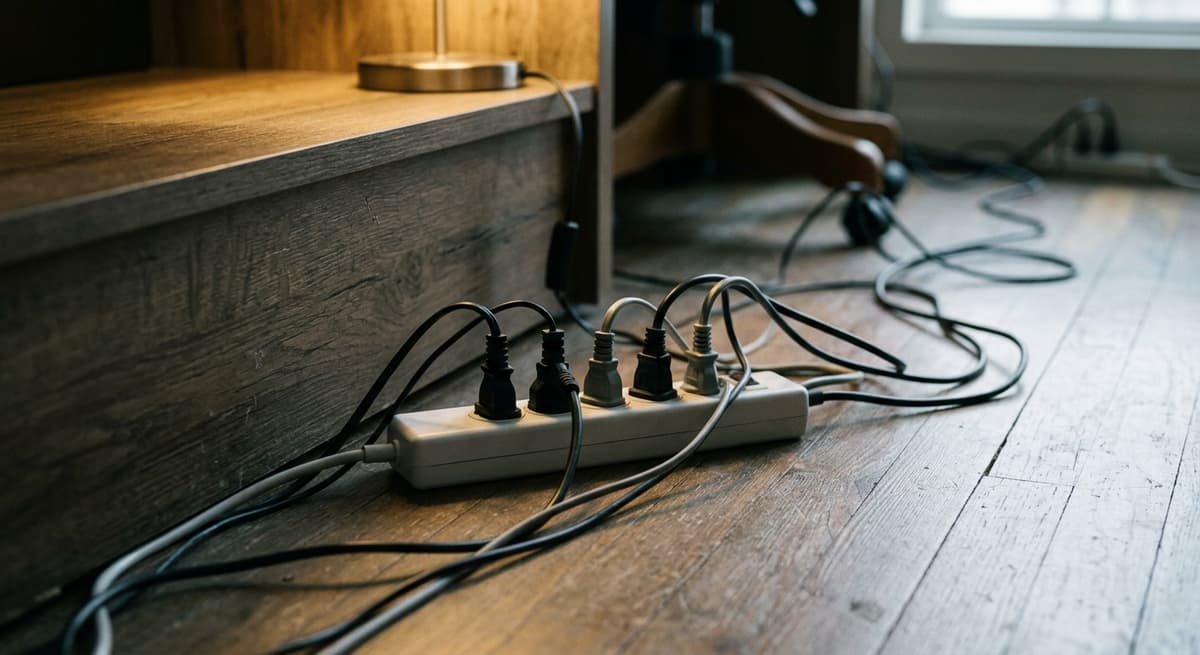
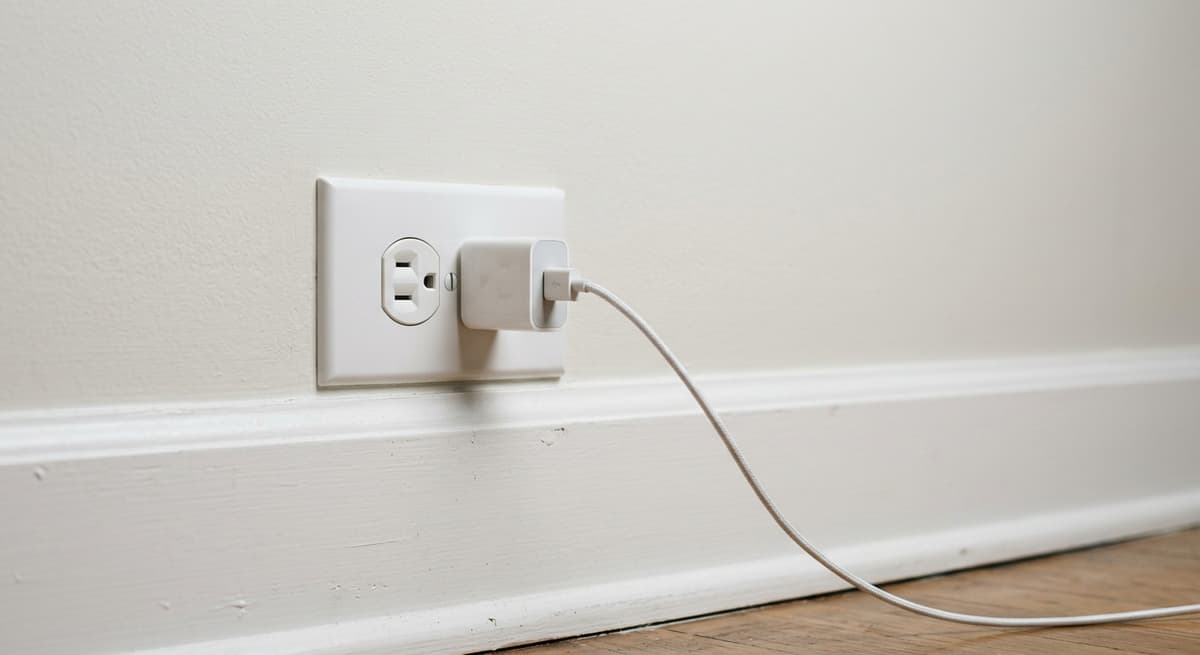
Check outlets, power strips, USB chargers, lamps, and the backs of appliances for hardware that does not belong. Look at your router and anything plugged into it. Flag any object you cannot account for and get a second opinion rather than pulling it apart.
Work with an electrician or a security professional if you are opening appliances or junction boxes. You can do real damage, and you can destroy evidence you may want later.
Check your Wi-Fi network
Many modern covert cameras and audio devices are just cheap IoT hardware, which means they join a network and appear in the client list like anything else.
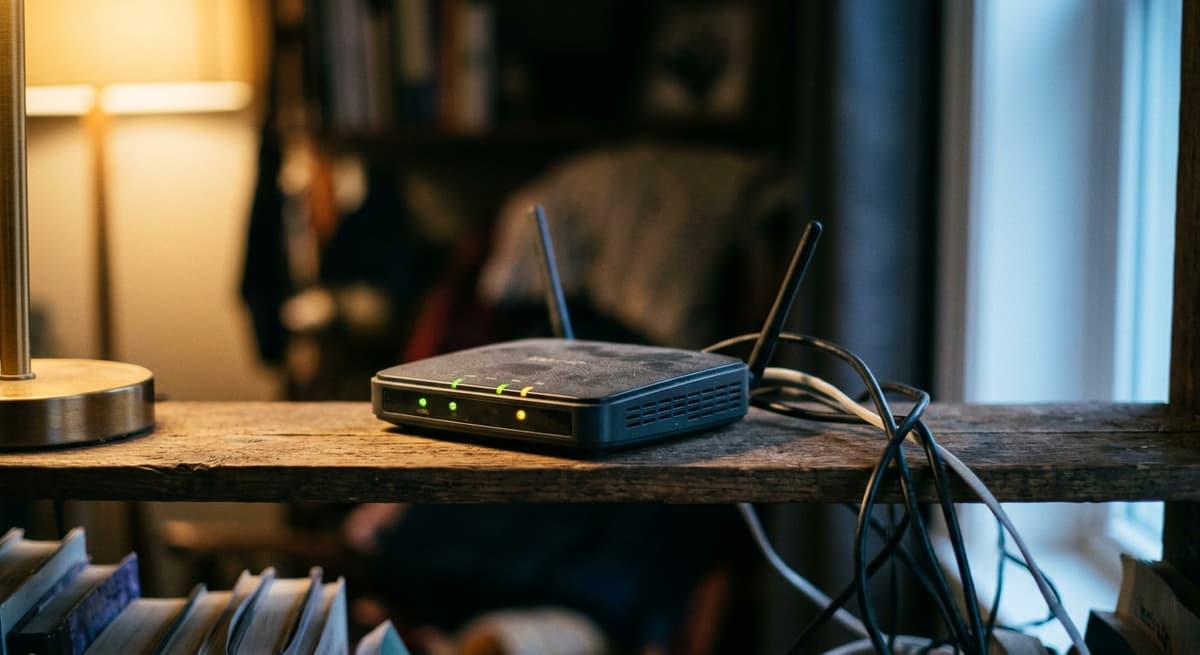
Open your router's admin page and read the list of connected devices. Anything you cannot name is worth investigating. Watch for generic manufacturer names and for devices that appear only at certain times.
This will not catch a device on its own cellular connection or one using a hidden access point, but it is free and it takes five minutes.
Is there an app to detect hidden cameras?
There are infrared and lens-scanner apps on both the Android and iOS stores. They work by helping you spot the reflective glint of a lens, and they are genuinely better than nothing in a hotel room or a rental.
Two limits matter. They find cameras, not microphones, and a phone camera's infrared filtering makes them far less reliable than a dedicated detector. Treat a clean phone scan as a good sign, not proof.
Where devices are usually hidden
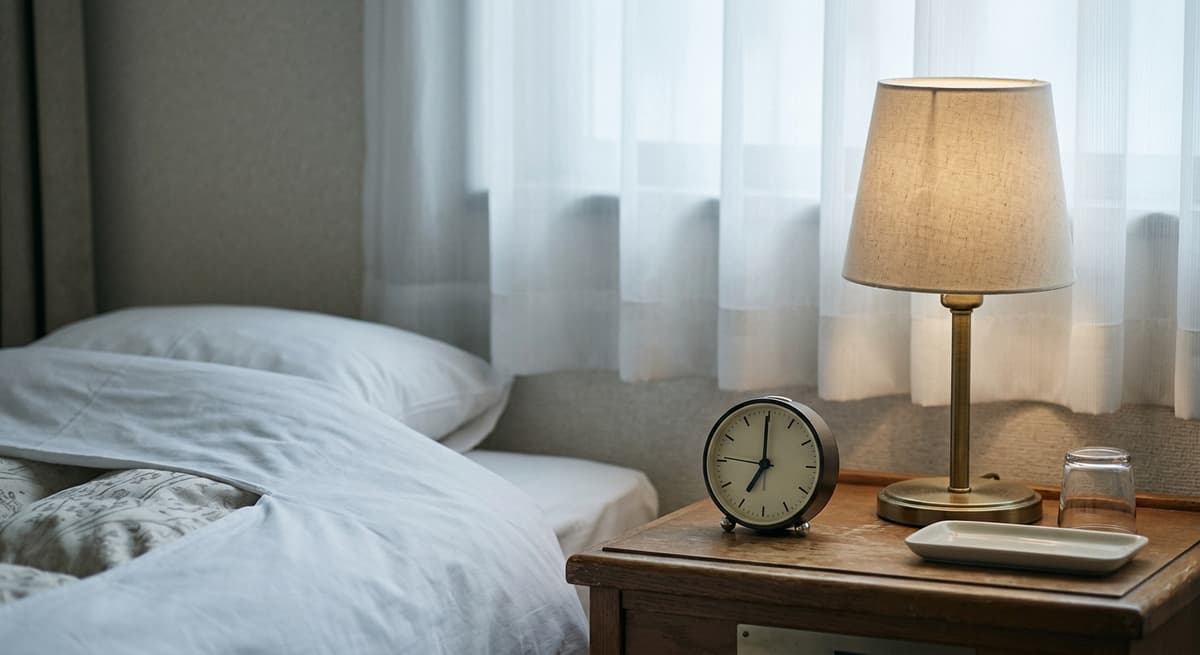
Attention naturally goes to the interesting objects, which is exactly why devices end up in the boring ones. Smoke detectors, alarm clocks, power strips, USB wall chargers, air purifiers, picture frames, artificial plants, and stuffed toys are all common.
In a bedroom or bathroom, check anything with a clear line of sight to the bed or shower, at roughly the height a person would want.
How to block listening devices
Detection tells you what is there. Blocking is about making whatever you missed useless.
Acoustic white noise generators, and why jammers are illegal
An acoustic white noise generator is a small speaker that emits static or masking sound near a microphone, so any recording captures noise instead of your voice. Because it works acoustically, through sound in the air, it is legal to buy and use in the United States.
Do not confuse that with a radio frequency jammer. Devices marketed to block cell signals, GPS, Wi-Fi, or wireless microphone transmissions work by broadcasting interference, and that is unlawful.
The FCC's position is unusually blunt on this point. Its consumer advisory states that "it is a violation of federal law to use devices that intentionally block, jam, or interfere with authorized radio communications such as cell phones, police radar, GPS, and Wi-Fi," and that "despite some marketers' claims, consumers cannot legally use cell and GPS jammers within the United States, nor can retailers lawfully sell them".
There is no personal-property exception, and the FCC says so in as many words. Its jammer enforcement page states that "there are no exemptions for use within a business, classroom, residence, or vehicle".
More than one provision does the work here. 47 U.S.C. Section 302a(b) prohibits manufacturing, importing, marketing, selling, or operating a signal jammer in the United States. 47 U.S.C. Section 333 separately prohibits willfully or maliciously interfering with the radio communications of any station licensed or authorized under the Act or operated by the US government.
The carve-outs that do exist, under Section 302a(c) and the FCC's own rule at 47 C.F.R. Section 2.807, cover carriers merely transporting such equipment, devices manufactured solely for export, electric utilities manufacturing or installing equipment for their own use, and use by the US government. None of them reaches a private household. The FCC adds that local law enforcement agencies have no independent authority to use jamming equipment either.
Penalties are not theoretical. The FCC states that using or marketing a jammer may bring substantial monetary penalties, seizure of the unlawful equipment, and criminal sanctions including imprisonment.
If a product description mentions blocking a signal, frequency, or transmission rather than simply adding sound, treat it as illegal and do not buy it.
Shut off the microphones you already own
The likeliest microphone in your home is one you paid for. Before hunting for exotic hardware, close the obvious doors.
- Review microphone permissions app by app on your phone and revoke everything that has no reason to listen.
- Turn off the wake word on smart speakers, or use the hardware mute switch, which on most models physically cuts the mic.
- Disable voice and audio activity in your Google, Apple, and Amazon account settings, and delete stored recordings.
- Move internet-connected appliances out of rooms where you have sensitive conversations.
If you want the detail on which of your own devices are listening and what they keep, we cover that in is my phone listening to me.
Is it legal to plant a listening device?
No, and this is where most coverage of this topic stops far too early. Bugging someone is not a single offense. It is usually at least two, and they stack.
Intercepting the conversation. The federal Wiretap Act makes it a crime to intentionally intercept any wire, oral, or electronic communication. A violation of 18 U.S.C. Section 2511 carries up to five years in prison. Our guide to the Federal Wiretap Act and ECPA walks through how it applies to recordings between private people.
Possessing the device. Separately, 18 U.S.C. Section 2512 makes it a federal offense to manufacture, assemble, possess, sell, or advertise a device whose design makes it primarily useful for surreptitious interception. That is also up to five years, and it does not require anyone to have actually listened to you. Owning the bug can be the crime.
States add their own layer. In New York, Penal Law Section 250.10 makes possession of eavesdropping devices a class A misdemeanor where the circumstances show intent to use them unlawfully. Other states treat the same conduct as a felony.
Consent rules also vary by state, and they decide whether a recording was lawful in the first place. Roughly a dozen states require every party to consent. See our breakdown of state recording laws and the current list of two-party consent states.
What to do if you find a listening device
The instinct is to rip it out. Resist it, because the device is simultaneously evidence in a criminal case and the foundation of a civil claim that can be worth real money.
Photograph it before you touch it. Take clear, wide photos showing the device in place and its position in the room, then close-ups of any markings or model numbers. Handling it can destroy fingerprints.
Do not confront the person you suspect. If someone with access to your home installed it, telling them you found it gives them a reason to remove it and a head start.
Call the police and file a report. Ask for the report number. A documented police report anchors everything that follows, including any protective order.
Then consider the civil side. 18 U.S.C. Section 2520 lets the person who was intercepted sue. A court may assess whichever of two measures is greater: your actual damages plus any profits the violator made, or statutory damages of whichever is greater, $100 for each day of violation or $10,000. Attorney fees and litigation costs can be awarded on top of either, and punitive damages in appropriate cases. The clock is two years from when you had a reasonable opportunity to discover the violation.
Some states are more generous still. California Penal Code Section 637.2 allows $5,000 per violation or three times actual damages, and expressly says a plaintiff does not need to have suffered actual damages to sue.
If you are weighing a lawsuit, our page on suing someone for recording you covers what those claims involve.
How to stop a neighbor's listening device
Neighbor cases are their own category, because the hardware is usually on their property and the intrusion crosses a wall.
Start by separating nuisance from surveillance. Thin walls, a shared HVAC duct, and ordinary sound transmission are not a listening device, and a detector sweep of your own rooms is the fastest way to rule that in or out.
If a device is in your home, it is a trespass and an interception, and the section above applies. If the hardware is on their side of the wall and aimed at you, you are looking at an interception claim under Section 2511 rather than a trespass, and the recording itself is the violation.
Cameras follow different rules than microphones. A neighbor's camera pointed at your yard is often lawful; one pointed into your bedroom window generally is not. State rules differ, and we track them in surveillance camera laws by state.
Practical steps that help: document dates and times, add mass to the shared wall or run a sound masker near it, avoid sensitive conversations in the affected room, and keep a written log if you later need a protective order.
Hidden cameras in hotels, Airbnbs, and rentals
Short-term rentals are where most people actually go looking for hidden devices, and the rules changed recently in the guest's favor.
Airbnb banned indoor security cameras across its platform, effective 30 April 2024. The policy states that the company does "not allow hosts to have security cameras or recording devices that monitor indoor spaces in homes, even if these devices are turned off". Disclosure no longer makes an indoor camera acceptable. The one exception is narrow: certain homes in Japan holding a Hotel Business License may be required by law to keep a disclosed camera that monitors the interior entryway only, with no audio recording.
Outdoor cameras remain permitted if their location is disclosed in the listing. Noise decibel monitors are allowed indoors if the host discloses their presence, but never in bedrooms, bathrooms, or sleeping areas.
So a camera inside a listing is a platform violation you can report, and depending on where the property is, likely a criminal one too. Most states have specific statutes covering recording in places where a person has a reasonable expectation of privacy.
In a rental or hotel room, do a fast version of the sweep: scan for lenses with the lights off, check anything with a view of the bed or shower, look at the smoke detector and any clock or charger you did not bring, and read the Wi-Fi client list.
If you find one, do not remove it. Photograph it, leave the room, call the police from somewhere else, and report it to the platform with the report number.
Is Google, Alexa, or Siri always listening?
In the sense people usually mean, yes, a microphone is active and waiting for a wake word. In 2019, reporting confirmed that Apple contractors were listening to Siri recordings for "training".
Your phone is not the only candidate. In 2016, then director of national intelligence James Clapper told Congress that intelligence agencies might one day use internet-connected home devices for identification, surveillance, monitoring, and location tracking.
Anything with a microphone or a camera can become a listening device. That is not paranoia, it is the design.
Protecting yourself beyond the sweep
Hardware is only one channel. Search history, contact lists, shopping habits, and app permissions produce more usable information about most people than a microphone would.
- Use a messaging app with end-to-end encryption on by default, such as Signal. Telegram's ordinary chats are not end-to-end encrypted; only its opt-in Secret Chats are, so it is weaker unless you specifically enable that mode.
- Remember that SMS is not encrypted in transit and that law enforcement can lawfully obtain messages, social media, and email with proper legal process.
- Keep your home address and daily patterns off public social media. Repeated location posts tell anyone watching when your home is empty.
- Consider a VPN for private browsing. We explain how a VPN works and its legal implications separately.
Summary
- Detect before you block. RF sweep the room, follow the power, check the Wi-Fi client list, then inspect the objects a device hides inside.
- Understand what your detector cannot do. Passive recorders and powered-down devices do not show up.
- Block with acoustic white noise, never an RF or cell jammer, which federal law prohibits with no exemption for a residence.
- Close the easy doors first by revoking microphone permissions and muting smart speakers.
- If you find a device, photograph it, leave it in place, call the police, and get advice on a Section 2520 claim within two years.
Frequently Asked Questions
Do listening device detectors actually work?
Yes, within limits. An RF detector reliably finds devices that transmit, which covers most bugs planted in a home, because the person listening needs the audio to reach them. It will not find a device that only records to internal storage for later collection, or one that is powered off during your sweep. Buy a model that senses both radio frequency signals and magnetic fields, and treat a clean scan as good evidence rather than proof.
Are listening devices legal to own in the US?
Often not. Under 18 U.S.C. Section 2512 it is a federal offense to manufacture, possess, sell, or advertise a device primarily useful for surreptitious interception of communications, punishable by up to five years. States add their own rules. New York Penal Law Section 250.10 makes possession of eavesdropping devices a class A misdemeanor where circumstances show intent to use them unlawfully, and some states treat it as a felony. Ordinary recorders and baby monitors are not covered; devices designed to be covert are.
Is it illegal to block a listening device?
It depends entirely on how you block it. An acoustic white noise generator, which masks your voice with sound in the air, is legal. A radio frequency, cell, GPS, or Wi-Fi jammer is not. Federal law bars manufacturing, importing, marketing, selling, and operating jammers under 47 U.S.C. Section 302a, and 47 U.S.C. Section 333 separately bars willful or malicious interference with authorized radio communications. The FCC states there are no exemptions for use within a business, classroom, residence, or vehicle, and that penalties can include substantial monetary penalties, seizure of the equipment, and criminal sanctions including imprisonment.
What frequencies do hidden listening devices transmit on?
Covert audio transmitters work at radio frequencies in the VHF and UHF ranges, measured in megahertz rather than kilohertz, because an antenna small enough to conceal has to be short. Cheap analog bugs often sit in or near the commercial FM broadcast band, so some can be found with an ordinary FM radio tuned slowly across the dial. Digital and Wi-Fi based devices use higher bands instead. Before buying a detector, check the frequency range it publishes and be wary of any model that does not state one.
How do I know if there is a listening device in my house?
Signs include hearing faint static or tones on your phone line, unexplained battery drain, objects that have moved or appear new, and hardware plugged in that you cannot account for. None of these is conclusive on its own. The reliable method is a structured sweep: turn off your own transmitting devices, RF scan the room in a grid, follow every power source and cable, check your router's connected-device list, and do a lens-glint pass with the lights off.
Can my neighbor legally listen to me through the wall?
Overhearing you through a shared wall is not a crime. Using a device to intercept your conversations is, even if the hardware sits entirely on their property. That is an interception under 18 U.S.C. Section 2511 and can carry up to five years, plus a civil claim. Cameras are treated differently from microphones: a camera covering their own yard is usually lawful, while one aimed into your windows generally is not, and the rules vary by state.
What should I do if I find a hidden camera in my Airbnb?
Do not remove or unplug it. Photograph it in place, gather your belongings, leave the property, and call the police from somewhere else to file a report. Then report it to Airbnb with the police report number. Airbnb banned indoor cameras across its platform on 30 April 2024, whether disclosed or not and even when switched off, so an indoor camera is a policy violation regardless of what the listing said, and it may also be a state crime. The lone exception is a disclosed entryway-only camera that certain licensed homes in Japan must have by law.
How much can I sue for if someone bugged my home?
Under 18 U.S.C. Section 2520 a court may award whichever measure is greater: your actual damages plus any profits the violator made, or statutory damages of the greater of $100 for each day of violation or $10,000. Attorney fees and litigation costs may be awarded on top, and punitive damages in appropriate cases. The action must be brought within two years of when you first had a reasonable opportunity to discover the violation. Some states are more generous: California Penal Code Section 637.2 allows $5,000 per violation or three times actual damages, and does not require the plaintiff to prove actual damages at all.
Updates
Corrected the frequency range for covert audio transmitters, which had been stated in kilohertz when these devices actually transmit in the VHF and UHF megahertz ranges, and added guidance on checking a detector's published frequency coverage. Also corrected which federal provisions ban signal jammers, separating 47 U.S.C. 302a from 47 U.S.C. 333 and citing the FCC's statement that there are no exemptions for use in a residence. Also corrected how federal civil damages for illegal interception work under 18 U.S.C. 2520: a court may award the greater of actual damages plus the violator's profits or statutory damages, not both together, with attorney fees and costs available on top. Listed all four statutory exceptions to the federal jammer ban under 47 U.S.C. 302a(c), none of which applies to private use, and narrowed the description of Airbnb's indoor-camera ban to note the policy's disclosed entryway-camera exception for certain licensed homes in Japan and the disclosure requirement for noise monitors.
Independently fact-checked against the cited primary sources
Substantially expanded and retargeted from blocking to detection, which is what readers actually search for. Added a full room-sweep method, an explanation of what an RF listening device detector can and cannot find, Wi-Fi client-list checks, and common hiding places. Added three new legal sections built on primary sources: that planting a bug is two separate federal offenses (interception under 18 U.S.C. 2511 and possession of the device under 18 U.S.C. 2512, each up to five years), what to do if you find a device including the civil claim under 18 U.S.C. 2520 (greater of $10,000 or $100 per day, plus fees, two-year limitations period) and California Penal Code 637.2, and a section on a neighbour's listening device. Added coverage of hidden cameras in short-term rentals, including Airbnb's worldwide ban on all indoor cameras effective 30 April 2024. Strengthened the jammer warning with the FCC's consumer advisory language confirming there is no exception for use inside your own home. Added a seven-question FAQ. Fixed a title that had been truncated mid-word since the original WordPress migration, and replaced a meta description that ended in a broken ellipsis.
Reviewed and corrected for accuracy: clarified that acoustic white noise generators are legal but RF and cell-signal jammers are a federal crime under 47 U.S.C. Section 333, enforced by the FCC, and rewrote the jammer section so it does not read as a purchase recommendation for an illegal device. Fixed the year of DNI James Clapper's Internet of Things testimony (2016, not 2015) and added a source. Removed several dead Amazon affiliate short-links and a stale hacking-tool product link, replacing them with generic, non-promotional descriptions. Repaired multiple bullet lists that had lost their line breaks during the original WordPress migration. Added a working internal link to our VPN guide and fixed a broken one in the summary list. Corrected outdated messaging-app advice to recommend Signal over Telegram's non-default encryption.
The Law Behind This Article
This article rests on the statutory provisions below, held in our own legal record and retrieved from the official source. Tap a section to read the operative text.
California Penal Code
§ 637.2In forcecited in 20 of our articles
(a) Any person who has been injured by a violation of this chapter may bring an action against the person who committed the violation for the greater of the following amounts: (1) Five thousand dollars ($5,000) per violation. (2) Three times the amount of actual damages, if any, sustained by the plaintiff. (b) Any person may, in accordance with Chapter 3 (commencing with Section 525) of Title 7 of Part 2 of the Code of Civil Procedure, bring an action to enjoin and restrain any violation of this chapter, and may in the same action seek damages as provided by subdivision (a). (c) It is not a necessary prerequisite to an action pursuant to this section that the plaintiff has suffered, or be threatened with, actual damages. (d) This section shall not be construed to affect Title 4 (commencing with Section 3425.1) of Part 1 of Division 4 of the Civil Code.
Official text (excerpt) · last checked 2026-07-28 · Read the full text in our law library · Verify at leginfo.legislature.ca.gov
Cited in 103 court opinions in our collectionLatest citing opinion in our collection: 2026
In the courts (editorial summary, independently checked):Ribas v. Clark (1985) held the section 637.2 award accrues at the moment of the Privacy Act violation, so the Civil Code section 47 litigation privilege does not bar it, though damages flowing solely from privileged testimony fail. Kimmel v. Goland (1990) applied that reasoning to recordings made in anticipation of litigation.
Opinions citing this section in our collection:
- Rubin v. Green (California Supreme Court 1993, 4 Cal. 4th 1187)“…asion of privacy and related torts as well as damages under Penal Code section 637.2, granting persons injured by eavesdropp…”
- Ribas v. Clark (California Supreme Court 1985, 38 Cal. 3d 355)✓A wife asked a third party to listen on an extension phone while she called her husband, and that listener later testified about it; the court held the judicial privilege barred damages from the testimony but not Section 637.2's fixed award, which accrues at the violation.
- Kimmel v. Goland (California Supreme Court 1990, 51 Cal. 3d 202)✓Mobilehome residents secretly taped calls with park management to gather evidence for a planned lawsuit; the court held the litigation privilege did not bar management's Section 637.2 claim, because the injury came from the recording itself and not from any publication.
Identified automatically from the court opinions citing this section — not a ranking of which case controls.
New York Penal Law
§ 250.10Possession of eavesdropping devicesIn forcecited in 5 of our articles
Possession of eavesdropping devices. A person is guilty of possession of eavesdropping devices when, under circumstances evincing an intent to use or to permit the same to be used in violation of section 250.05, he possesses any instrument, device or equipment designed for, adapted to or commonly used in wiretapping or mechanical overhearing of a conversation. Possession of eavesdropping devices is a class A misdemeanor.
Official text (excerpt) · last checked 2026-07-29 · Read the full text in our law library · Verify at legislation.nysenate.gov
Cited in 1 court opinions in our collectionLatest citing opinion in our collection: 2022
Opinions citing this section in our collection:
- The People v. Marc Mitchell (New York Court of Appeals 2022)“…ther person” (Bartlett Commission, Staff Notes on Proposed Penal Law § 250.10, at 387-390 [1964]). It is inconceivab…”
Identified automatically from the court opinions citing this section — not a ranking of which case controls.
United States Code Title 18
§ 2511Interception and disclosure of wire, oral, or electronic communications prohibitedIn forcecited in 422 of our articles
Except as otherwise specifically provided in this chapter any person who— intentionally intercepts, endeavors to intercept, or procures any other person to intercept or endeavor to intercept, any wire, oral, or electronic communication; intentionally uses, endeavors to use, or procures any other person to use or endeavor to use any electronic, mechanical, or other device to intercept any oral communication when— such device is affixed to, or otherwise transmits a signal through, a wire, cable, or other like connection used in wire communication; or such device transmits communications by radio, or interferes with the transmission of such communication; or such person knows, or has reason to know, that such device or any component thereof has been sent through the mail or transported in interstate or foreign commerce; or such use or endeavor to use (A) takes place on the premises of any business or other commercial establishment the operations of which affect interstate or foreign commerce; or (B) obtains or is for the purpose of obtaining information relating to the operations of any business or other commercial establishment the operations of which affect interstate or foreign…
Official text (excerpt) · last checked 2026-09-17 · Read the full text in our law library · Verify at uscode.house.gov
Cited in 2,045 court opinions in our collectionLatest citing opinion in our collection: 2026
In the courts (editorial summary, independently checked):Griggs-Ryan v. Smith (1990) applied the Section 2511(2)(d) prior-consent exception, treating a tenant repeatedly told that all incoming calls were taped as having impliedly consented. United States v. United States District Court (1972) read the then-current Section 2511(3) as conferring no presidential surveillance power.
Opinions citing this section in our collection:
- Mitchell v. Forsyth (Supreme Court of the United States 1985, 472 U.S. 511)✓The Attorney General authorized a warrantless 1970 national security wiretap that caught the plaintiff's calls; the Court held the since-repealed Section 2511(3) disclaimer left the tap lawful under Title III, and that Mitchell had qualified immunity.
- United States v. United States District Court for the Eastern District of Michigan (Supreme Court of the United States 1972, 407 U.S. 297)✓The Attorney General approved warrantless wiretaps on members of a domestic group accused of bombing a CIA office; the Court read Section 2511(3) as a congressional disclaimer conferring no surveillance power, then held the Fourth Amendment required prior judicial approval.
- Forsyth v. Barr (Court of Appeals for the Fifth Circuit 1994, 19 F.3d 1527)✓Dallas police used, in an internal affairs probe of an officer, calls private parties allegedly intercepted illegally; assuming that was unlawful, the Fifth Circuit held Section 2517(1) and (2) allowed the disclosure and use, defeating the Section 2511(1)(c) and (d) claims.
Identified automatically from the court opinions citing this section — not a ranking of which case controls.
§ 2512Manufacture, distribution, possession, and advertising of wire, oral, or electronic communication intercepting devices prohibitedIn forcecited in 2 of our articles
Except as otherwise specifically provided in this chapter, any person who intentionally— sends through the mail, or sends or carries in interstate or foreign commerce, any electronic, mechanical, or other device, knowing or having reason to know that the design of such device renders it primarily useful for the purpose of the surreptitious interception of wire, oral, or electronic communications; manufactures, assembles, possesses, or sells any electronic, mechanical, or other device, knowing or having reason to know that the design of such device renders it primarily useful for the purpose of the surreptitious interception of wire, oral, or electronic communications, and that such device or any component thereof has been or will be sent through the mail or transported in interstate or foreign commerce; or places in any newspaper, magazine, handbill, or other publication or disseminates by electronic means any advertisement of— any electronic, mechanical, or other device knowing or having reason to know that the design of such device renders it primarily useful for the purpose of the surreptitious interception of wire, oral, or electronic communications; or any other electronic,…
Official text (excerpt) · last checked 2026-07-28 · Read the full text in our law library · Verify at uscode.house.gov
Cited in 177 court opinions in our collectionLatest citing opinion in our collection: 2024
Opinions citing this section in our collection:
- DIRECTV, Inc. v. Robson (Court of Appeals for the Fifth Circuit 2005, 420 F.3d 532)“…DTV voluntarily dismissed its claims for violation of 18 U.S.C. § 2512 and state civil conversion law. 9…”
- United States v. Walter Pritchard (Court of Appeals for the Seventh Circuit 1984, 745 F.2d 1112)“…terception of wire and oral communications in violation of 18 U.S.C. § 2512 (l)(b). The district judge sentenced ap…”
- United States v. Terry Christensen (Court of Appeals for the Ninth Circuit 2016, 828 F.3d 763)“…2511 (l)(a), (d)); and Possession of a wiretapping device ( 18 U.S.C. § 2512 (l)(b)). Arneson: RICO ( 18 U.S.C. §…”
Identified automatically from the court opinions citing this section — not a ranking of which case controls.
§ 2520Recovery of civil damages authorizedIn forcecited in 115 of our articles
Except as provided in section 2511(2)(a)(ii), any person whose wire, oral, or electronic communication is intercepted, disclosed, or intentionally used in violation of this chapter may in a civil action recover from the person or entity, other than the United States, which engaged in that violation such relief as may be appropriate. In an action under this section, appropriate relief includes— such preliminary and other equitable or declaratory relief as may be appropriate; damages under subsection (c) and punitive damages in appropriate cases; and a reasonable attorney’s fee and other litigation costs reasonably incurred.
Official text (excerpt) · last checked 2026-07-28 · Read the full text in our law library · Verify at uscode.house.gov
Cited in 860 court opinions in our collectionLatest citing opinion in our collection: 2026
In the courts (editorial summary, independently checked):Walker v. Darby (1990) held a 2520 plaintiff need not prove the contents of intercepted conversations, only interception and a justified expectation against it. Bartnicki v. Vopper (2001) barred 2520 damages against defendants who took no part in the interception, obtained the tape lawfully, and disclosed a matter of public concern.
Opinions citing this section in our collection:
- Jessie Walker v. Thomas E. Darby, Hugh L. Robinson, Jr., and Kenneth Day (Court of Appeals for the Eleventh Circuit 1990, 911 F.2d 1573)✓A postal letter carrier said three supervisors wired an intercom near his workstation to listen in. Reversing summary judgment, the Eleventh Circuit held a section 2520 plaintiff can show interception without proving the contents of specific conversations.
- Gelbard v. United States (Supreme Court of the United States 1972, 408 U.S. 41)“…disclosure, or use is entitled to recover civil damages, 18 U. S. C. § 2520 . Title III also bars the use as eviden…”
- DirecTV, Inc. v. Hoa Huynh (Court of Appeals for the Ninth Circuit 2007, 503 F.3d 847)“…7 U.S.C. § 605 (e)(4), or alternatively, for violations of 18 U.S.C. § 2520 (a), or alternatively, for violations o…”
Identified automatically from the court opinions citing this section — not a ranking of which case controls.
United States Code Title 47
§ 302aDevices which interfere with radio receptionIn force
The Commission may, consistent with the public interest, convenience, and necessity, make reasonable regulations (1) governing the interference potential of devices which in their operation are capable of emitting radio frequency energy by radiation, conduction, or other means in sufficient degree to cause harmful interference to radio communications; and (2) establishing minimum performance standards for home electronic equipment and systems to reduce their susceptibility to interference from radio frequency energy. Such regulations shall be applicable to the manufacture, import, sale, offer for sale, or shipment of such devices and home electronic equipment and systems, and to the use of such devices. No person shall manufacture, import, sell, offer for sale, or ship devices or home electronic equipment and systems, or use devices, which fail to comply with regulations promulgated pursuant to this section.
Official text (excerpt) · last checked 2026-07-28 · Read the full text in our law library · Verify at uscode.house.gov
Cited in 26 court opinions in our collectionLatest citing opinion in our collection: 2024
Opinions citing this section in our collection:
- Transportation Intelligence, Inc. v. Federal Communications Commission (Court of Appeals for the D.C. Circuit 2003, 336 F.3d 1058)“…3 cause harmful interference to radio communications.’’ 47 U.S.C. § 302a(a). Acting pursuant to that authority,…”
- Computer Systems of America, Inc. v. Data General Corp. (District Court, D. Massachusetts 1989, 738 F. Supp. 27)“…ion, the defendants are correct. In 1968 Congress enacted 47 U.S.C. § 302a, which authorized the Federal Communica…”
- Radar Solutions, Ltd. v. United States Federal Communications Commission (District Court, W.D. Texas 2009, 628 F. Supp. 2d 714)“…eting of its Rocky Mountain Spirit II radar jammer violated 47 U.S.C. § 302a 2 and 47 C.F.R. § 2.803 .…”
Identified automatically from the court opinions citing this section — not a ranking of which case controls.
§ 333Willful or malicious interferenceIn force
No person shall willfully or maliciously interfere with or cause interference to any radio communications of any station licensed or authorized by or under this chapter or operated by the United States Government.
Official text (excerpt) · last checked 2026-07-28 · Read the full text in our law library · Verify at uscode.house.gov
Cited in 10 court opinions in our collectionLatest citing opinion in our collection: 2026
Opinions citing this section in our collection:
- Robert Johnson v. American Towers, LLC (Court of Appeals for the Fourth Circuit 2015, 781 F.3d 693)“…s without authorization from the FCC. 47 U.S.C. § 333. (“No person shall willfully or maliciou…”
- United States v. Gerritsen (Court of Appeals for the Ninth Circuit 2009)“…e with a licensed or authorized radio communica- tion under 47 U.S.C. § 333; and (3) three counts of transmit- ting…”
- United States v. Baxter (District Court, D. Maine 2012, 841 F. Supp. 2d 378)“…unications or signal.” 47 C.F.R. § 97.101 (d); see also 47 U.S.C. § 333 . The forfeiture amount for intentional…”
Identified automatically from the court opinions citing this section — not a ranking of which case controls.
Search our full record of US law — 2.1 million sections, every state + federal →
Sources and References
- 18 U.S.C. Section 2511: intentional interception of wire, oral, or electronic communications, punishable by up to five years(law.cornell.edu).gov
- 18 U.S.C. Section 2512: manufacture, possession, sale, or advertising of surreptitious interception devices(law.cornell.edu).gov
- 18 U.S.C. Section 2520: civil remedy, damages of whichever is greater, actual damages plus the violator's profits or statutory damages (greater of $100 per day or $10,000), plus attorney fees and costs, two-year limitations period(law.cornell.edu).gov
- FCC Enforcement Advisory DA 11-250 (2011): consumers cannot lawfully use cell or GPS jammers anywhere in the United States(docs.fcc.gov).gov
- FCC: Jammer Enforcement - operating, marketing, or selling jamming equipment is prohibited, with no exemptions for use within a business, classroom, residence, or vehicle(fcc.gov).gov
- 47 U.S.C. Section 302a: prohibition on manufacturing, importing, marketing, selling, or operating unauthorized devices, with subsection (c) exceptions for carriers transporting such devices, equipment made solely for export, electric utilities' own-use equipment, and use by the US government(law.cornell.edu).gov
- 47 U.S.C. Section 333: no person shall willfully or maliciously interfere with the radio communications of any licensed or authorized station or of the US government(law.cornell.edu).gov
- New York Penal Law Section 250.10: possession of eavesdropping devices, a class A misdemeanor(nysenate.gov).gov
- California Penal Code Section 637.2: $5,000 per violation or treble actual damages, no actual damages required(leginfo.legislature.ca.gov).gov
- Airbnb: restrictions on security cameras and other devices in homes, indoor cameras banned platform-wide effective 30 April 2024, with a narrow disclosed entryway-camera exception for certain licensed homes in Japan(airbnb.com)
- Forbes: Apple contractors listened to Siri voice recordings for "training" (2019)(forbes.com)
- TechCrunch: DNI James Clapper's 2016 testimony on Internet of Things surveillance potential(techcrunch.com)
- RecordingLaw.com: What Is a VPN? How It Works and the Legal Risks of Using One