Kentucky Hit and Run Laws: Penalties and What to Do

Last verified: March 2026. This guide reflects current Kentucky law under KRS 189.580, KRS 189.990, and related statutes.
Overview of Kentucky Hit and Run Laws
Kentucky law takes leaving the scene of an accident seriously. Under KRS 189.580, any driver involved in a collision must stop immediately, provide identifying information, and assist anyone who is injured.
Failing to follow these requirements can lead to criminal charges ranging from a misdemeanor to a felony, depending on whether the accident caused only property damage or resulted in bodily injury or death.
This guide breaks down exactly what Kentucky law requires after an accident, the penalties for leaving the scene, how insurance works in hit-and-run situations, and the steps you should take to protect yourself legally.
What Kentucky Law Requires After an Accident
KRS 189.580 spells out the duties every driver must fulfill after being involved in a collision. These duties apply whether the accident involves another vehicle, a pedestrian, or stationary property.

Stop Immediately
You must stop your vehicle at the scene of the accident or as close to the scene as safely possible. Driving away, even briefly, can trigger hit-and-run charges.
Provide Your Information
Kentucky law requires you to give the other party (or an investigating officer) the following:
- Your full name and address
- The registration number of your vehicle
- Your driver's license, if requested
Render Reasonable Assistance
If anyone is injured, you have a legal obligation to provide reasonable assistance. This may include:
- Calling 911 or emergency services
- Providing basic first aid if you are trained to do so
- Arranging transportation to a medical facility for the injured person
Remain at the Scene
You must stay until you have fulfilled all of the above duties. Leaving before completing these steps constitutes a hit-and-run offense.
Report the Accident
Under KRS 189.635, if the accident results in property damage of $500 or more and law enforcement does not investigate at the scene, you must file a written crash report with the Kentucky State Police within 10 days.
Penalties for Hit and Run in Kentucky
The penalties for leaving the scene depend on the severity of the accident. Kentucky classifies hit-and-run offenses under KRS 189.990, which sets out the penalty structure for traffic violations.
Criminal Penalties by Offense Level
| Offense Type | Classification | Jail or Prison | Maximum Fine |
|---|---|---|---|
| Property damage only | Class A Misdemeanor | Up to 12 months in county jail | $500 |
| Serious physical injury or death | Class D Felony | 1 to 5 years in state prison | $10,000 |
| Failure to report accident (KRS 189.635) | Violation | N/A | Fine |
Additional Consequences Beyond Criminal Penalties
A hit-and-run conviction carries consequences that extend well beyond fines and jail time:
- License suspension or revocation. The Kentucky Transportation Cabinet can suspend or revoke your driving privileges after a hit-and-run conviction. Reinstatement requires a $40 fee and may involve additional conditions.
- Points on your driving record. Kentucky uses a point system administered by the Kentucky Transportation Cabinet. Accumulating 12 points within two years triggers an automatic license suspension.
- Increased insurance premiums. A hit-and-run conviction is a major red flag for insurers and will almost certainly raise your rates substantially.
- Civil liability. The accident victim can file a separate civil lawsuit to recover compensation for medical bills, property damage, lost wages, and pain and suffering.
- Employment consequences. A felony conviction for hit and run can affect employment opportunities, professional licensing, and housing applications.
Property Damage Hit and Run
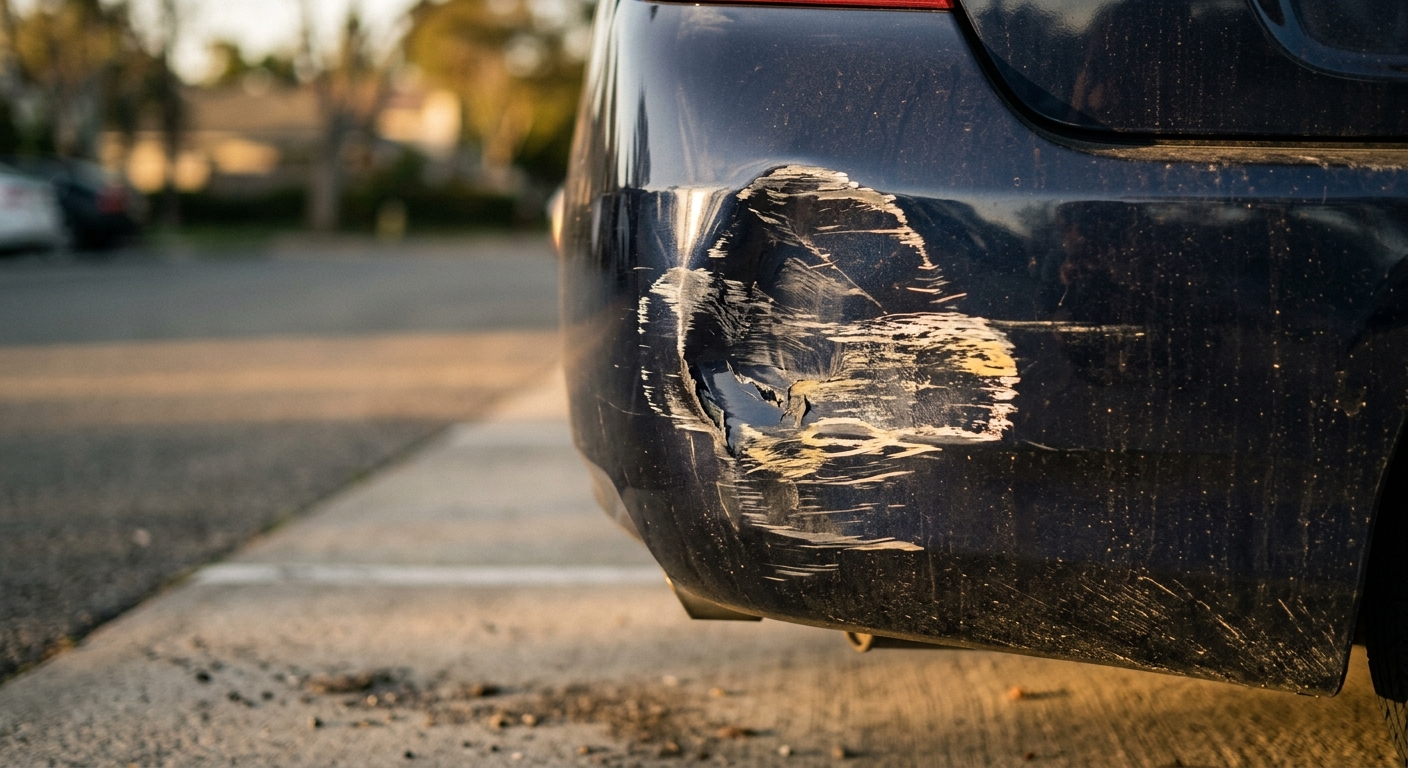
Leaving the scene of an accident that causes only property damage is a Class A misdemeanor. This covers situations such as:
- Striking a parked vehicle
- Damaging fences, mailboxes, guardrails, or other structures
- Any collision where no one suffers bodily injury
What to Do If You Hit an Unattended Vehicle
KRS 189.580(2) addresses the specific situation where you strike an unattended vehicle or other property and cannot locate the owner. You must take one of the following steps:
- Locate and notify the owner or operator of the damaged vehicle or property, providing your name, address, and vehicle registration number.
- Leave a written notice securely attached in a visible location on the damaged vehicle or property that includes your name, address, and vehicle registration number.
- File a report with the local police department.
Simply driving away without completing at least one of these steps counts as a hit-and-run offense.
Moving Vehicles After a Property-Damage Accident
Kentucky law addresses when vehicles should be moved after a collision. If the accident occurs on an interstate highway, parkway, or their on/off ramps and involves only property damage (no injuries), drivers must move their vehicles off the roadway while remaining near the accident scene. Peace officers may also move vehicles without the owner's consent and are not liable for any resulting damage.
Hit and Run Involving Injury or Death
When an accident results in serious physical injury or death and the driver leaves the scene, the offense becomes a Class D felony. This is a significant escalation from the misdemeanor charge for property damage alone.
Felony Penalties
- 1 to 5 years in a Kentucky state prison
- Fines up to $10,000
- Potential license revocation
- A permanent felony record
The requirement to render reasonable assistance is especially important in these cases. If someone is visibly injured, you must take steps to help, whether that means calling 911, providing first aid, or arranging transportation to a hospital.
Failing to stop and help an injured person can result in the most severe penalties Kentucky law allows for hit-and-run offenses.
Kentucky Crash Statistics
Understanding the scope of traffic accidents in Kentucky helps put hit-and-run laws in context.
2024 Data
According to an announcement from Governor Beshear's office, Kentucky recorded 707 traffic fatalities in 2024, a decrease of 107 compared to 2023. This marked the lowest number of highway fatalities in the state over the previous 10 years. Of those 707 fatalities, 47% of vehicle occupants killed were not wearing a seat belt, and 19% of fatal crashes involved alcohol.
2023 Data
According to the Kentucky State Police Crash Facts Report and IIHS data, Kentucky experienced 814 traffic deaths in 767 fatal collisions in 2023. Key breakdowns include:
| Category | Deaths | Percentage |
|---|---|---|
| Car occupants | 252 | 31% |
| Pickup and SUV occupants | 269 | 33% |
| Motorcyclists | 106 | 13% |
| Pedestrians | 121 | 15% |
| Bicyclists | 16 | 2% |
Kentucky's traffic fatality rate of 18.0 per 100,000 population was well above the national average of 12.2, with 61% of fatal crashes occurring on rural roads.
How Insurance Works After a Hit and Run in Kentucky
Kentucky's insurance system has unique features that directly affect how hit-and-run claims are handled.
Kentucky's Choice No-Fault System
Kentucky is one of a small number of states that operates as a "choice no-fault" insurance state under KRS 304.39. By default, every driver carries Personal Injury Protection (PIP) coverage, which pays up to $10,000 per person per accident for medical expenses, lost wages, and related out-of-pocket costs, regardless of who caused the collision.
However, Kentucky drivers have the option to reject PIP coverage entirely by filing a written form with the Kentucky Department of Insurance. Opting out restores your full right to sue the at-fault driver directly.
Minimum Insurance Requirements
Kentucky law requires all drivers to carry at least:
- $25,000 per person for bodily injury liability
- $50,000 per accident for bodily injury liability
- $25,000 per accident for property damage liability
Uninsured Motorist (UM) Coverage and Hit-and-Run Claims
Uninsured motorist coverage is particularly relevant in hit-and-run cases because the at-fault driver often cannot be identified. Kentucky insurers must offer UM coverage, and it applies unless you reject it in writing.
There is an important limitation: many Kentucky UM policies include a "physical contact" requirement for hit-and-run claims involving unidentified vehicles. This means your vehicle must have made actual physical contact with the fleeing vehicle for UM coverage to apply. This requirement exists to prevent fraudulent "phantom vehicle" claims.
Proving Negligence in an At-Fault Claim
If you pursue a claim against the hit-and-run driver (assuming they are identified), you must prove:
- The driver owed you a duty of care
- The driver breached that duty through negligent or reckless behavior
- The breach directly caused your injuries or property damage
Comparative fault: Kentucky follows a pure comparative fault rule. Your compensation is reduced by your percentage of fault, but you can still recover damages even if you were partially responsible for the accident.
Statute of Limitations for Accident Claims
Kentucky has strict filing deadlines that vary depending on the type of claim:
| Claim Type | Time Limit | Statute |
|---|---|---|
| Personal injury | 1 year from the date of injury | KRS 413.140 |
| Motor vehicle personal injury (with PIP) | 2 years from last PIP payment, or 4 years from accident (whichever is earlier) | KRS 304.39-230 |
| Wrongful death | 1 year from appointment of personal representative (max 2 years from death) | KRS 413.180 |
| Personal property damage | 2 years | KRS 413.125 |
| Real property damage | 5 years | KRS 413.120 |
The motor vehicle exception is significant. If you have PIP coverage and are receiving benefits, your filing deadline extends to two years from the date of your last PIP payment, but no more than four years from the date of the accident.
Possible Defenses to Hit and Run Charges
Kentucky courts recognize several defenses that may apply in hit-and-run cases:
- Lack of knowledge. You genuinely did not know an accident occurred. This can apply in minor fender-benders or situations where road conditions masked the impact.
- Involuntary departure. You were unconscious, incapacitated, or physically removed from the scene by someone else.
- Safety concerns. You reasonably feared for your physical safety at the scene and left to find a safe location before reporting the accident.
- Compliance. You fulfilled all legal requirements (stopped, gave information, offered assistance) before leaving.
- Refusal by the other party. The other driver or property owner refused to accept your information.
- Mistaken identity. Someone else was driving your vehicle at the time. While this can defeat criminal charges (which require proving you were the driver), you may still face civil liability as the vehicle owner.
Steps to Take If You Are in an Accident in Kentucky
Following these steps helps you comply with KRS 189.580 and protects your legal rights:
- Stop immediately. Pull over safely as close to the accident scene as possible.
- Check for injuries. Assess whether anyone needs medical attention and call 911 if there are injuries.
- Exchange information. Provide your name, address, vehicle registration, and driver's license to the other parties.
- Document the scene. Take photos of vehicle damage, road conditions, traffic signs, and any visible injuries.
- Contact law enforcement. Even for minor accidents, having a police report strengthens your position.
- Notify your insurance company. Report the accident promptly to begin the claims process.
- File a crash report if required. If damage exceeds $500 and police did not investigate, file with the Kentucky State Police within 10 days.
- Seek medical attention. Some injuries are not immediately apparent. Getting checked promptly creates a medical record linking your injuries to the accident.
More Kentucky Laws
Sources and References
- KRS 189.580: Duty in case of accident(apps.legislature.ky.gov).gov
- KRS 189.990: Penalties for traffic violations(apps.legislature.ky.gov).gov
- KRS 189.635: Vehicle accident reports(apps.legislature.ky.gov).gov
- KRS 413.140: Actions to be brought within one year(apps.legislature.ky.gov).gov
- KRS 304.39: Motor Vehicle Reparations Act (No-Fault)(apps.legislature.ky.gov).gov
- Kentucky Department of Insurance: No Fault Rejection/Verification (PIP)(insurance.ky.gov).gov
- Governor Beshear Announces Decline in Highway Fatalities in 2024(kentucky.gov).gov
- Kentucky Crash Facts 2023 Report(kentuckystatepolice.ky.gov).gov
- IIHS Fatality Facts 2023: State by State(iihs.org)
- Kentucky DRIVE: License Reinstatement(drive.ky.gov).gov
- Kentucky Office of Highway Safety: Daily Fatality Summary(transportation.ky.gov).gov