
New York
New York E-Scooter Laws: Sidewalk, Helmet & Age Rules (2026)
Independently fact-checked against primary sources (last audited July 23, 2026). · Law checked current as of August 8, 2026. · 4 primary sources cited on this page. How we verify our legal content
This article is general information about New York e-scooter law and is not legal advice. If you were cited or injured, a New York-licensed attorney or the New York State Senate's own statute text at nysenate.gov can give you a current, situation-specific answer. Information last verified on 23 July 2026.
Are e-scooters legal in New York?
Yes. New York created a dedicated e-scooter category with Vehicle & Traffic Law Article 34-D, sections 1280 through 1289, which governs both privately owned scooters and shared rental programs statewide. This is not a moped or bicycle statute stretched to cover scooters; it is its own chapter, with its own definition, age rule, equipment requirements, and penalty structure. For how New York compares to other states, see the e-scooter laws hub.
One persistent piece of misinformation is worth correcting directly: some online sources state that New York's minimum riding age is 18. That figure does not match the enacted statute. VAT section 1282 sets the minimum age at 16, and the 18-year figure appears to trace back to an unenacted bill draft rather than current law.
What counts as an e-scooter in New York
VAT section 114-e defines an "electric scooter" as a device with handlebars and a floorboard or seat, powered by an electric motor and, optionally, human power, that weighs less than 100 pounds and cannot exceed 20 mph on a paved level surface when running solely on its motor. A device that is heavier or faster than this would not qualify for Article 34-D's scooter framework and could be treated as a different class of vehicle instead.
A labeling requirement has applied since June 1, 2022: manufacturers and sellers must affix a label stating the device's maximum speed, passenger capacity, and motor wattage.
Where you can ride
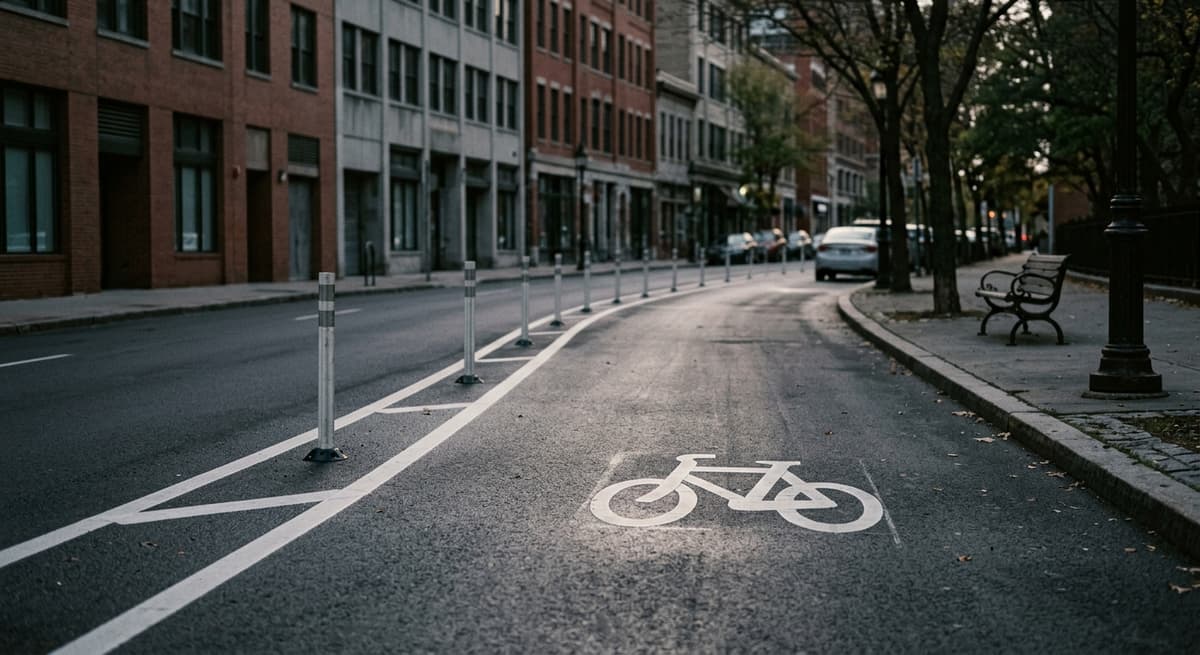
On the roadway, an electric scooter's operating speed is capped at 15 mph, and section 1282 generally limits scooters to highways with a posted speed limit of 30 mph or less, unless a local law permits otherwise. Riders must stay in a bike or skate lane where one exists, or ride as close as practicable to the right-hand curb, and must ride single file on a roadway at all times under section 1284(2). Riding two or more abreast is allowed only on a shoulder, a bicycle or in-line skate lane, or a path intended for that use, where sufficient space is available, and even there riders must return to single file when passing.
Sidewalk riding is prohibited statewide unless a locality has specifically authorized it. Sidewalk parking is narrower than it is usually described: section 1282(7)(b) permits it only for a scooter owned by a natural person who is engaged in personal use, and only where the parked scooter does not interfere with the free passage of pedestrians. The locality has to provide a method for identifying a privately owned scooter. That carve-out does not extend to shared rental scooters.
Localities have real authority here. Under section 1281(2)(a), cities, towns, and villages may further regulate the time, place, and manner of scooter operation, including maximum speed, required protective headgear, and readily visible reflective clothing, and may limit or prohibit scooters in specified areas or ban them entirely where adequate signage is posted at the boundary. Authorizing a shared scooter system comes from a different provision, section 1282(10), which also bars such a system from selling or commercially distributing trip data, personal information, or recorded images and limits disclosure to the person the data is about or a lawful court order. In Nassau, Suffolk, and Westchester counties specifically, a municipality generally needs county-level authorization before it can adopt its own operational regulations, though a standalone local ban on scooters is exempt from that county pre-approval step.
Rider rules
License and registration: none required. Article 34-D does not require a driver's license, registration, or insurance to operate a private electric scooter.
Age: 16. Section 1282 states plainly that no person under 16 may operate or ride as a passenger on an electric scooter.
Helmet: required only for riders age 16 or 17, under section 1286. A rider in that age band who is caught without a helmet faces a civil fine of up to $50, and the statute specifies that not wearing one is not evidence of contributory negligence in an injury lawsuit. Riders 18 and older have no state-level helmet requirement.
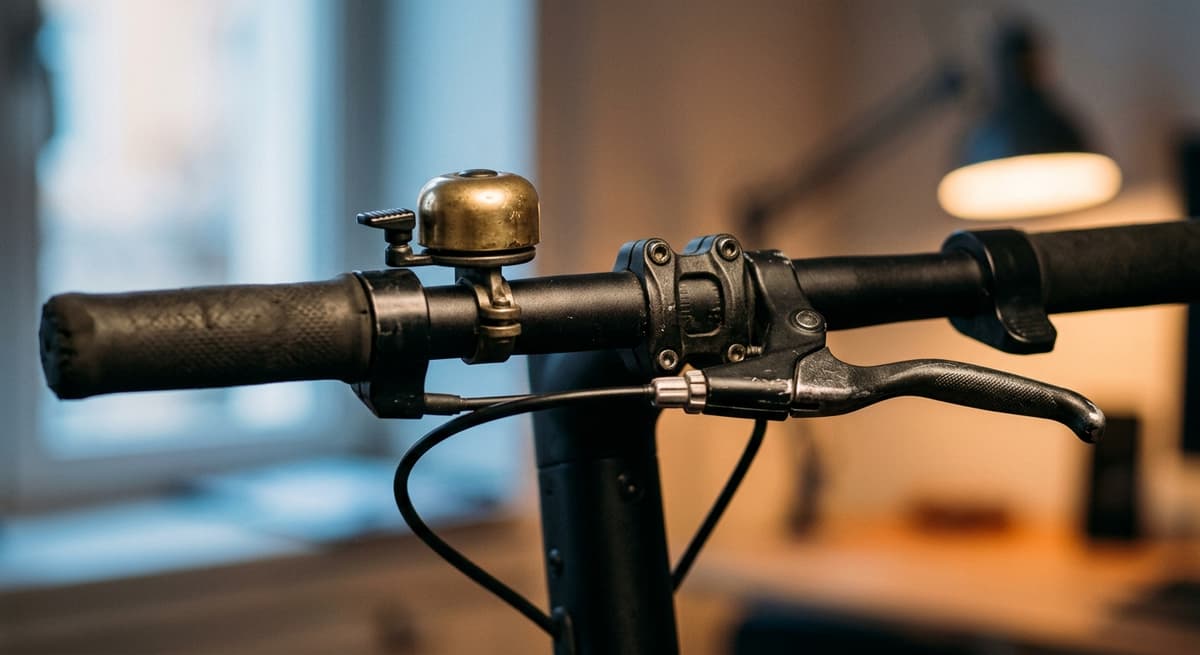
Equipment: a front white lamp visible from 500 feet, a rear red light visible from 300 feet, both required between a half hour after sunset and a half hour before sunrise; an audible signal such as a bell (sirens and whistles are not allowed); and an operative brake, under section 1285.
Other duties: riders get the same rights and responsibilities as bicyclists on the roadway; a rider may not attach the scooter or themselves to a moving vehicle (the "clinging" ban in section 1283); and a rider 18 or older who causes physical injury to someone must stop and provide their name and address under section 1287, with the same duty applying under section 1288 where the injury is serious physical injury.
Penalties
Most Article 34-D operating violations, riding too fast or riding on a sidewalk where it is not authorized, are civil infractions carrying a fine of up to $50 rather than moving-violation penalties, under section 1282(11). That subdivision does not list the rule restricting scooters to streets posted 30 mph or lower; no confirmed penalty specific to that violation was found in this research. The helmet violation for 16- and 17-year-olds carries the same up-to-$50 civil fine structure.
Article 34-D is not entirely civil, though, and leaving the scene is graded by how badly someone was hurt. Section 1287 covers physical injury: leaving the scene of an incident involving an electric scooter without reporting in the second degree, which subdivision 2 of that section classifies as a violation. Section 1288 covers serious physical injury as defined in the penal law, and subdivision 2 of that section makes the first-degree version a class B misdemeanor, a criminal charge rather than an infraction.
Impaired riding has its own statute, and it is not the DWI law. Section 125 expressly excludes electric scooters from the definition of "motor vehicle," and section 1192, the general DWI provision, reaches only a person who operates a motor vehicle, so a standard DWI charge does not apply to a scooter rider. Section 1289 is the provision that does. Riding while ability impaired by alcohol is a traffic infraction punishable by a fine of up to $300, up to 15 days in jail, or both; a prior conviction under that subdivision within the preceding five years raises the exposure to $750 and 30 days, and two or more priors within ten years make the offense a misdemeanor carrying up to $1,000 and 180 days. Riding while intoxicated, at .08 or above, or while impaired by drugs is a misdemeanor punishable by up to $500 and up to a year, and a prior conviction within ten years makes it a class E felony. One important limit sits in section 1289(9): no part of that section may be enforced except in conjunction with a crash involving a scooter operator. For how New York handles impaired operation of a motor vehicle, which is a separate charge under a separate statute, see New York DUI laws.
Enforcement in practice
No statewide e-scooter citation statistics were documented in the research behind this article. Enforcement patterns do not change what the statute requires, and how strictly a given precinct or municipality enforces these rules on a given day is not a form of permission to ignore the age, roadway, sidewalk, or helmet rules described above.
New York City e-scooter rules
Privately owned e-scooters are reported to have become legal to operate in New York City in November 2020, layered on top of the statewide Article 34-D framework described above; readers should treat the exact effective date as a general guide rather than a court-verified fact, and check current NYC Department of Transportation guidance for anything time-sensitive.
NYC's shared (rental) e-scooter program, currently operated through Bird, Lime, and Veo, is limited to the East Bronx and Eastern Queens. It does not currently extend to Manhattan, Brooklyn, or Staten Island. What began as a pilot has since been extended into a longer-term program, with an expansion into more of Eastern Queens announced in 2024. City program materials have reported the shared program's minimum age as 18, a higher bar than the statewide 16-year minimum for private scooters, along with a 15 mph speed cap and geofenced parking zones within the service area. Because these NYC-specific figures come from city program materials rather than a fetched statute, confirm current boundaries and rules directly with NYC DOT before relying on them for a specific trip or purchase.
If you are hit by a vehicle while riding an e-scooter in New York, or a scooter rider is involved in a collision with you, the general fault and insurance framework in New York car accident laws applies to scooter riders as road users in most respects. If you were hurt, have a New York personal injury lawyer explain in a free consultation how that fault and insurance framework applies to your injuries (attorney advertising).
Frequently Asked Questions
Can I ride an e-scooter on the sidewalk in New York?
No, not statewide. VAT Article 34-D bans sidewalk riding unless a locality has specifically authorized it. Sidewalk parking under section 1282(7)(b) is limited to a privately owned scooter in personal use, and only where it does not interfere with pedestrians; it does not cover shared rental scooters.
Do I need a license or registration for an e-scooter in New York?
No. Article 34-D does not require a driver's license, registration, or insurance to operate a private electric scooter.
What is the minimum age to ride an e-scooter in New York?
16. VAT section 1282 sets the minimum age at 16, not 18, despite some online sources citing 18.
Do I have to wear a helmet on an e-scooter in New York?
Only if you are 16 or 17. Section 1286 requires a helmet for that age band, with a civil fine up to $50 for non-compliance. Riders 18 and older have no state helmet mandate.
How fast can an e-scooter go in New York?
The device itself must be incapable of exceeding 20 mph under section 114-e, and roadway operating speed is capped at 15 mph under section 1282.
What's the fine for an e-scooter violation in New York?
Most operating violations, like speeding or sidewalk riding, are civil infractions carrying a fine of up to $50 under section 1282(11). That subdivision does not cover the rule restricting scooters to streets posted 30 mph or lower, so no confirmed penalty applies to that specific violation.
Is New York City different from the rest of the state?
NYC layers its own rules on top of the state framework. Its shared scooter program is limited to the East Bronx and Eastern Queens, with a reported minimum rider age of 18 and a 15 mph speed cap, higher and stricter than the statewide 16-year private-scooter minimum.
Where can I ride a shared e-scooter in NYC?
Currently only in the East Bronx and Eastern Queens service area; the program does not cover Manhattan, Brooklyn, or Staten Island.
Updates
Corrected the statutory attributions on this page: shared-scooter authorization and trip-data limits come from VAT 1282(10) rather than 1281, Article 34-D runs through section 1289, impaired riding is charged under VAT 1289 rather than the motor-vehicle DWI statute, sidewalk parking is limited to privately owned scooters in personal use, single-file riding is required on any roadway, and leaving the scene of a serious-injury crash is a class B misdemeanor under VAT 1288.
Corrected the VTL § 1282(11) civil-fine claim: the up-to-$50 civil fine covers subdivisions 1, 2, 3, 4, 6, and 7 (speeding, sidewalk riding, and similar violations), not the rule in subdivision 5 restricting scooters to streets posted 30 mph or lower, which the article had wrongly folded into the same $50 fine.
Governing law re-checked for recent changes
Independently fact-checked against the cited primary sources
The Law Behind This Article
This article rests on the statutory provisions below, held in our own legal record and retrieved from the official source. Tap a section to read the operative text.
New York Vehicle and Traffic Law
§ 1282Operating electric scootersIn force
Operating electric scooters. 1. No electric scooter shall be used to carry more than one person at one time. No person operating an electric scooter shall carry any person as a passenger in a pack fastened to the operator or fastened to the electric scooter. The failure of any person to comply with the provisions of this subdivision shall not constitute contributory negligence or assumption of risk, and shall not in any way bar, preclude or foreclose an action for personal injury or wrongful death by or on behalf of such person, nor in any way diminish or reduce the damages recoverable in any such action. 2. No person operating an electric scooter shall carry any package, bundle or article which prevents the operator from keeping at least one hand upon the handle bars or which obstructs his or her vision in any direction. 3. Every person operating an electric scooter shall yield the right of way to pedestrians. 4. No person less than sixteen years of age shall operate or ride as a passenger upon an electric scooter, and no person sixteen years of age or older shall allow any person less than sixteen years of age to operate or ride as a passenger upon such scooter. 5.
Official text (excerpt) · last checked 2026-09-07 · Read the full text in our law library · Verify at legislation.nysenate.gov
Cited in 1 court opinions in our collectionLatest citing opinion in our collection: 2026
Opinions citing this section in our collection:
- Neuman (District Court, E.D. New York 2026)“…[s]” can also own e-scooters (see ECF No. 33 at 10 (citing Vehicle and Traffic Law § 1282(7)(b))). The plaintiff has pled no fac…”
Identified automatically from the court opinions citing this section — not a ranking of which case controls.
§ 1286Operators to wear protective headgearIn force
Operators to wear protective headgear. 1. No person sixteen or seventeen years of age shall ride upon, propel or otherwise operate an electric scooter unless such person is wearing a helmet meeting standards established by the commissioner pursuant to the provisions of subdivision two-a of section twelve hundred thirty-eight of this title. As used in this subdivision, wearing a helmet means having a properly fitting helmet fixed securely on the head of such wearer with the helmet straps securely fastened. 2. Any person who violates the provisions of subdivision one of this section shall pay a civil fine not to exceed fifty dollars. 3.
Official text (excerpt) · last checked 2026-07-29 · Read the full text in our law library · Verify at legislation.nysenate.gov
§ 1281Traffic laws apply to persons operating electric scooters; local lawsIn force
Traffic laws apply to persons operating electric scooters; local laws. 1. Every person riding an electric scooter upon a roadway shall be granted all of the rights and shall be subject to all of the duties applicable to the driver of a vehicle and the rider of a bicycle by this title, except as to special regulations in this article and except as to those provisions of this title which by their nature can have no application. 2. (a) Except as provided in paragraphs (b) and (c) of this subdivision, the governing body of any city, town or village may, by local law or ordinance, further regulate the time, place and manner of the operation of electric scooters, including, but not limited to, maximum speed, requiring the use of protective headgear, and the wearing of readily visible reflective clothing or material by operators of electric scooters, and may limit, prohibit the use thereof in specified areas, or prohibit entirely the use of electric scooters within such city, town, or village, provided that adequate signage is visibly posted outside the boundaries of such prohibited areas.
Official text (excerpt) · last checked 2026-07-29 · Read the full text in our law library · Verify at legislation.nysenate.gov
§ 1284Riding on roadways, shoulders, and lanes reserved for non-motorized vehicles and devicesIn force
Riding on roadways, shoulders, and lanes reserved for non-motorized vehicles and devices. 1. Upon all roadways, any electric scooter shall be operated either on a usable bicycle or in-line skate lane or, if a usable bicycle or in-line skate lane has not been provided, near the right-hand curb or edge of the roadway or upon a usable right-hand shoulder in such a manner as to prevent undue interference with the flow of traffic except when preparing for a left turn or when reasonably necessary to avoid conditions that would make it unsafe to continue along near the right-hand curb or edge. Conditions to be taken into consideration include, but are not limited to, fixed or moving objects, vehicles, bicycles, in-line skates, pedestrians, animals, surface hazards or traffic lanes too narrow for a person operating an electric scooter and a vehicle to travel safely side-by-side within the lane. 2. Persons operating electric scooters upon a roadway shall ride single file.
Official text (excerpt) · last checked 2026-07-29 · Read the full text in our law library · Verify at legislation.nysenate.gov
Cited in 1 court opinions in our collectionLatest citing opinion in our collection: 2000
Opinions citing this section in our collection:
- Baynes v. American Red Cross (District Court, N.D. New York 2000, 111 F. Supp. 2d 127)“…rsection, but by a bicyclist operating in violation of both Vehicle and Traffic Law § 1284(a) and (c) and the City of Schenectady…”
Identified automatically from the court opinions citing this section — not a ranking of which case controls.
§ 1285Lamps and other equipmentIn force
Lamps and other equipment. 1. Every electric scooter when in use during the period from one-half hour after sunset to one-half hour before sunrise shall be equipped with a lamp on the front which shall emit a white light visible during hours of darkness from a distance of at least five hundred feet to the front and with a red light visible to the rear for three hundred feet. At least one such light shall be visible for two hundred feet from each side. 2. No person shall operate an electric scooter unless such scooter is equipped with a bell or other device capable of giving a signal audible for a distance of at least one hundred feet, except that an electric scooter shall not be equipped with nor shall any person use upon an electric scooter any siren or whistle. 3. Every electric scooter shall be equipped with a brake that enables the operator to bring the electric scooter to a controlled stop.
Official text (excerpt) · last checked 2026-07-29 · Read the full text in our law library · Verify at legislation.nysenate.gov
§ 1283Clinging to vehiclesIn force
Clinging to vehicles. 1. No person operating an electric scooter shall attach such scooter, or himself or herself, to any vehicle being operated upon a roadway. 2. No vehicle operator shall knowingly permit any person to attach any electric scooter, or himself or herself, to such operator's vehicle in violation of subdivision one of this section.
Official text (excerpt) · last checked 2026-07-29 · Read the full text in our law library · Verify at legislation.nysenate.gov
§ 1287Leaving the scene of an incident involving an electric scooter without reporting in the second degreeIn force
Leaving the scene of an incident involving an electric scooter without reporting in the second degree. 1. Any person age eighteen years or older operating an electric scooter who, knowing or having cause to know, that physical injury, as defined in subdivision nine of section 10.00 of the penal law, has been caused to another person, due to the operation of such electric scooter by such person, shall, before leaving the place where such physical injury occurred, stop, and provide his or her name and residence, including street and street number, to the injured party, if practical, and also to a police officer, or in the event that no police officer is in the vicinity of the place of said injury, then such person shall report such incident as soon as physically able to the nearest police station or judicial officer. 2. Leaving the scene of an incident involving an electric scooter without reporting in the second degree is a violation.
Official text (excerpt) · last checked 2026-07-29 · Read the full text in our law library · Verify at legislation.nysenate.gov
§ 1288Leaving the scene of an incident involving an electric scooter without reporting in the first degreeIn force
Leaving the scene of an incident involving an electric scooter without reporting in the first degree. 1. Any person age eighteen years or older operating an electric scooter who, knowing or having cause to know, that serious physical injury, as defined in subdivision ten of section 10.00 of the penal law, has been caused to another person, due to the operation of such electric scooter by such person, shall, before leaving the place where such serious physical injury occurred, stop, and provide his or her name and residence, including street and street number, to the injured party, if practical, and also to a police officer, or in the event that no police officer is in the vicinity of the place of said injury, then such person shall report said incident as soon as physically able to the nearest police station or judicial officer. 2. Leaving the scene of an incident involving an electric scooter without reporting in the first degree is a class B misdemeanor.
Official text (excerpt) · last checked 2026-07-29 · Read the full text in our law library · Verify at legislation.nysenate.gov
§ 114-eElectric scooterIn force
Electric scooter. Every device weighing less than one hundred pounds that (a) has handlebars, a floorboard or a seat that can be stood or sat upon by the operator, and an electric motor, (b) can be powered by the electric motor and/or human power, and (c) has a maximum speed of no more than twenty miles per hour on a paved level surface when powered solely by the electric motor.
Official text (excerpt) · last checked 2026-07-29 · Read the full text in our law library · Verify at legislation.nysenate.gov
§ 1280Effect of regulationsIn force
Effect of regulations. 1. The parent of any child and the guardian of any ward shall not authorize or knowingly permit any such child or ward to violate any of the provisions of this article. 2. These regulations applicable to electric scooters shall apply whenever an electric scooter is operated upon any highway, upon private roads open to public motor vehicle traffic and upon any path set aside for the exclusive use of bicycles, in-line skates, electric scooters, or all.
Official text (excerpt) · last checked 2026-07-29 · Read the full text in our law library · Verify at legislation.nysenate.gov
§ 1192Operating a motor vehicle while under the influence of alcohol or drugsIn forcecited in 2 of our articles
Operating a motor vehicle while under the influence of alcohol or drugs. 1. Driving while ability impaired. No person shall operate a motor vehicle while the person's ability to operate such motor vehicle is impaired by the consumption of alcohol. 2. Driving while intoxicated; per se. No person shall operate a motor vehicle while such person has .08 of one per centum or more by weight of alcohol in the person's blood as shown by chemical analysis of such person's blood, breath, urine or saliva, made pursuant to the provisions of section eleven hundred ninety-four of this article. 2-a. Aggravated driving while intoxicated. (a) Per se. No person shall operate a motor vehicle while such person has .18 of one per centum or more by weight of alcohol in such person's blood as shown by chemical analysis of such person's blood, breath, urine or saliva made pursuant to the provisions of section eleven hundred ninety-four of this article. (b) With a child. No person shall operate a motor vehicle in violation of subdivision two, three, four or four-a of this section while a child who is fifteen years of age or less is a passenger in such motor vehicle. 3. Driving while intoxicated.
Official text (excerpt) · last checked 2026-09-05 · Read the full text in our law library · Verify at legislation.nysenate.gov
Cited in 2,047 court opinions in our collectionLatest citing opinion in our collection: 2026
Opinions citing this section in our collection:
- People v. Mertz (New York Court of Appeals 1986, 68 N.Y.2d 136)“…conviction, the majority holds that in a prosecution under Vehicle and Traffic Law § 1192 (2) the results of a breathalyzer test…”
- People v. Hilker (Appellate Division of the Supreme Court of the State of New York 1987, 133 A.D.2d 986)“…ehicle while under the influence of alcohol, a misdemeanor (Vehicle and Traffic Law § 1192 [2]). After a jury trial, following a d…”
- People v. Fratangelo (New York Court of Appeals 2014, 23 N.Y.3d 506)“…th names can be confusing. The “per se” crime is defined by Vehicle and Traffic Law § 1192 (2) as driving while the driver “has .0…”
Identified automatically from the court opinions citing this section — not a ranking of which case controls.
Also relied on in: New York DWI Laws: Penalties, BAC Limit & License (2026)
§ 125Motor vehiclesIn force
Motor vehicles. Every vehicle operated or driven upon a public highway which is propelled by any power other than muscular power, except (a) electrically-driven mobility assistance devices operated or driven by a person with a disability, (a-1) electric personal assistive mobility devices operated outside a city with a population of one million or more, (b) vehicles which run only upon rails or tracks, (c) snowmobiles as defined in article forty-seven of this chapter, (d) all terrain vehicles as defined in article forty-eight-B of this chapter, (e) bicycles with electric assist as defined in section one hundred two-c of this article, and (f) electric scooters as defined in section one hundred fourteen-e of this article. For the purposes of title four of this chapter, the term motor vehicle shall exclude fire and police vehicles other than ambulances.
Official text (excerpt) · last checked 2026-07-29 · Read the full text in our law library · Verify at legislation.nysenate.gov
Cited in 41 court opinions in our collectionLatest citing opinion in our collection: 2025
Opinions citing this section in our collection:
- State Farm Mutual Automobile Insurance v. Fitzgerald (New York Court of Appeals 2015, 25 N.Y.3d 799)“…g that term (see id. at 168). In that Court’s view, since Vehicle and Traffic Law § 125 sets forth the general definition of a…”
- Nationwide Mutual Insurance v. Riccadulli (Appellate Division of the Supreme Court of the State of New York 1992, 183 A.D.2d 111)“…ned in the policy. Nor was it a motor vehicle as defined in Vehicle and Traffic Law § 125. Therefore, since an ATV was neither an…”
- Martinez v. Hitachi Construction Machinery Co. (New York Supreme Court 2006, 15 Misc. 3d 244)“…iff claims the excavator was a motor vehicle under New York Vehicle and Traffic Law § 125, and, as the vehicle owner, Sanzo Enter…”
Identified automatically from the court opinions citing this section — not a ranking of which case controls.
§ 1289Operation of an electric scooter while under the influence of alcohol or drugsIn force
Operation of an electric scooter while under the influence of alcohol or drugs. 1. Offenses; criminal penalties. (a) Operating an electric scooter while ability impaired. No person shall operate an electric scooter while the person's ability to operate such electric scooter is impaired by the consumption of alcohol. (i) A violation of this paragraph shall be a traffic infraction and shall be punishable by a fine of not more than three hundred dollars, or by imprisonment in a penitentiary or county jail for not more than fifteen days, or by both such fine and imprisonment. (ii) A person who operates an electric scooter in violation of this paragraph after having been convicted of a violation of any paragraph of this subdivision within the preceding five years shall be punished by a fine of not more than seven hundred fifty dollars, or by imprisonment of not more than thirty days in a penitentiary or county jail or by both such fine and imprisonment.
Official text (excerpt) · last checked 2026-07-29 · Read the full text in our law library · Verify at legislation.nysenate.gov
Search our full record of US law — 2.1 million sections, every state + federal →
Sources and References
- NY Vehicle & Traffic Law section 114-e, electric scooter definition(nysenate.gov).gov
- NY Vehicle & Traffic Law section 1282, operating rules: age, speed, sidewalk ban(nysenate.gov).gov
- NY Vehicle & Traffic Law section 1286, helmet requirement ages 16-17(nysenate.gov).gov
- NY Vehicle & Traffic Law section 1281, local regulatory authority(nysenate.gov).gov
- NYC DOT, East Bronx/Eastern Queens e-scooter share program overview(nycdotprojects.info)
- NY Vehicle & Traffic Law section 1284, roadway position and single-file riding(nysenate.gov)
- NY Vehicle & Traffic Law section 1287, leaving the scene of an e-scooter incident in the second degree(nysenate.gov)
- NY Vehicle & Traffic Law section 1288, leaving the scene involving serious physical injury, class B misdemeanor(nysenate.gov)
- NY Vehicle & Traffic Law section 1289, operating an electric scooter while under the influence(nysenate.gov)
- NY Vehicle & Traffic Law section 125, motor vehicle definition excluding electric scooters(nysenate.gov)
- NY Vehicle & Traffic Law section 1192, driving while intoxicated, applies to motor vehicles(nysenate.gov)
Paid attorney referral. RecordingLaw may receive compensation when you use an attorney-help link. RecordingLaw is not a law firm. Submitting a request does not guarantee that an attorney will accept your case and does not create an attorney-client relationship.