
Alabama
Alabama Recording Laws (2026): One-Party Consent Rules
Independently fact-checked against primary sources (last audited August 15, 2026). · Reviewed by the RecordingLaw editorial team. · Law checked current as of August 15, 2026. · 24 primary sources cited on this page. How we verify our legal content
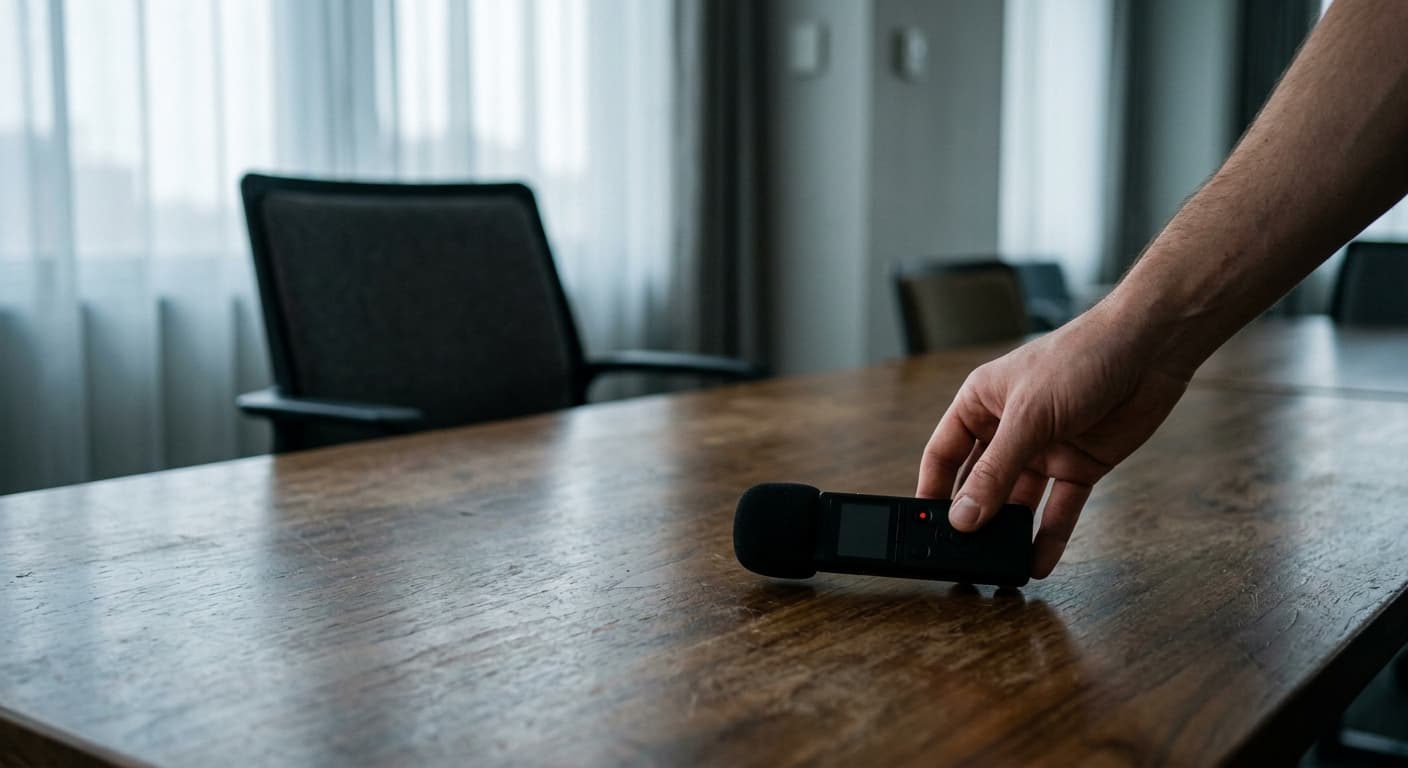
Alabama is a one-party consent state for audio recording under Ala. Code 13A-11-31. Any participant in a private conversation, or anyone with the prior consent of at least one party, may record without notifying anyone else. Recording a conversation to which you are not a party and have no party's consent is criminal eavesdropping, a Class A misdemeanor, and the civil remedy runs through federal ECPA or, for wire and electronic interception, Ala. Code 20-2B-12, rather than through Title 13A itself.
Alabama recording law at a glance
| Question | Answer |
|---|---|
| Consent rule | One-party consent |
| Controlling statute | Ala. Code 13A-11-30 to 13A-11-33 (eavesdropping and surveillance); Ala. Code Title 20 Chapter 2B (wire and electronic interception) |
| When recording is illegal | No party to the communication consents |
| Criminal penalty (audio) | Class A misdemeanor: up to 1 year jail and $6,000 fine |
| Civil remedy | Ala. Code 20-2B-12 for wire and electronic interception, plus federal ECPA 18 U.S.C. section 2520 (Title 13A itself creates no civil action) |
| Hidden cameras (sexual motive) | Class C felony under Ala. Code 13A-11-32.1 |
| Recording police | First Amendment right recognized by 11th Circuit (Smith v. City of Cumming) |
For detailed treatment of each scenario, see the Alabama recording laws in depth section below.
Recording in-person conversations in Alabama
Under Ala. Code 13A-11-30(1), "eavesdrop" means to overhear, record, amplify, or transmit any part of the private communication of others without the consent of at least one person engaged in the communication. The phrase "of others" combined with the at-least-one-party-consent carve-out is what makes Alabama a one-party jurisdiction.
The phrase "private communication" appears within the eavesdrop definition but is not a separately numbered subsection of 13A-11-30. As used in the statute, a private communication is any oral or wire communication uttered by a person exhibiting an expectation that it is not subject to interception, under circumstances justifying that expectation. The eavesdrop definition does not extend to electronic communications. Those are reached instead by a separate Alabama chapter, Title 20 Chapter 2B, the Agent Billy Clardy III Act, and by federal ECPA. Title 20 Chapter 2B is aimed at interception devices and wiretap authority rather than at participants: Ala. Code 20-2B-1(b)(8) defines an "electronic, mechanical, or other device" as apparatus primarily designed or used for the nonconsensual interception of wire or electronic communications, Ala. Code 20-2B-12(b)(5) carves out anyone who is a party to the communication or who has one party's prior consent (absent a criminal, tortious, or otherwise injurious purpose), and Ala. Code 20-2B-14 excepts a service subscriber and members of the subscriber's household. A participant recording their own call on their own phone therefore stays outside that chapter as well.
If you are a participant, you can record. You do not need to give notice, play a beep tone, or obtain anyone else's agreement. The pre-Title 13A precedent supporting this is Alonzo v. State, 283 Ala. 607, 219 So. 2d 858 (Ala. 1969), which held that one party's recording of a conversation does not invade a constitutionally protected right of privacy.
A "private place" under 13A-11-30(2) is defined as a location where a person may reasonably expect to be safe from casual or hostile intrusion or surveillance, but it excludes places to which the public or a substantial group of the public has access. That public-access carve-out means conversations in shopping malls, parks, sidewalks, and other publicly accessible spaces carry less expectation of privacy.

Recording phone calls in Alabama
The one-party consent rule applies identically to landline calls, mobile calls, and VoIP services such as Zoom, Microsoft Teams, and Google Meet. You do not need to tell the other party, play a beep tone, or obtain consent for purely intra-Alabama calls.
Federal law sets the same floor. 18 U.S.C. section 2511(2)(d) permits one-party recording unless the interception is for the purpose of committing a criminal or tortious act.
The interstate trap is real. Federal ECPA does not preempt stricter state law, and the more protective state's rule typically applies from that state's end. The all-party consent states bordering or commonly called from Alabama are Florida (Fla. Stat. section 934.03), which requires all-party consent for confidential communications. The safe practice on any call with a Florida participant is to ask first. Our recording consent checker lets you pick the states on the call and see which consent rule applies.
For a full cross-state breakdown, see the one-party consent states and two-party consent states directories. The Alabama phone call recording laws sub-page covers VoIP, business-line recording, and multi-party conference calls in more detail.
Hidden cameras, doorbells, and nanny cams
Alabama has no separate "hidden camera" statute. The relevant criminal hooks are the surveillance trio at 13A-11-32, 13A-11-32.1, and 13A-11-33.
A Ring doorbell or storefront camera recording a public-access entryway is generally lawful. The 13A-11-30(2) definition of "private place" excludes spaces to which the public or a substantial group of the public has access, so a porch camera pointed at a public sidewalk or a dashcam recording a public roadway falls outside the trespass-based 13A-11-32 framework entirely.
Audio captured by a smart camera inside the home is on a different track. Conversations among guests or contractors qualify as "private communication" within the meaning of the eavesdrop definition at 13A-11-30(1) when those speakers exhibit a confidentiality expectation. The homeowner's participation supplies one-party consent only while the homeowner is actually present and a party to the conversation. Audio capture of conversations among others in the home while the owner is absent can fall within 13A-11-31.
A camera placed in a bedroom, bathroom, or changing area for sexual gratification triggers the Class C felony under 13A-11-32.1, even when the placer is the lawful homeowner. Trespass is not an element of 13A-11-32.1. Installing any eavesdropping device in a private place without permission of the owner and any tenant or guest is a separate Class C felony under 13A-11-33, regardless of whether any conversation is ever captured.
The 2023 FTC settlement with Ring required a $5.8 million consumer-redress payment and ongoing privacy-program obligations based on findings of employee and contractor access to customer video without adequate consent or safeguards. Details at ftc.gov.
See the Alabama security camera laws and Alabama voyeurism laws sub-pages for more detail.
Penalties for illegal recording in Alabama
Alabama's recording penalty structure is a four-tier ladder, differentiated by audio versus video, trespass, and motive.
| Offense | Statute | Class | Maximum penalty |
|---|---|---|---|
| Criminal eavesdropping | 13A-11-31 | Class A misdemeanor | 1 year jail, $6,000 fine |
| Criminal surveillance (trespass) | 13A-11-32 | Class B misdemeanor | 6 months jail, $3,000 fine |
| Aggravated criminal surveillance | 13A-11-32.1 | Class C felony | 1 yr 1 day to 10 yrs prison, $15,000 fine |
| Installing eavesdropping device | 13A-11-33 | Class C felony | 1 yr 1 day to 10 yrs prison, $15,000 fine |
| Divulging illegally obtained information | 13A-11-35 | Class B misdemeanor | 6 months jail, $3,000 fine |
The sentencing ranges come from Title 13A Chapter 5: Class A misdemeanor at 13A-5-7(a)(1) and 13A-5-12(a)(1); Class C felony at 13A-5-6(a)(3) and 13A-5-11(a)(3). The Class C felony floor is "1 year and 1 day" rather than "1 year"; that single-day specificity matters for plea calculations.
The common misreading is treating 13A-11-32 and 13A-11-32.1 as variations of the same offense. They are separate statutes: 13A-11-32 requires trespass and covers any surveillance motive; 13A-11-32.1 requires neither trespass nor any particular place but does require a sexual gratification motive. A landlord who plants a camera in a tenant's bathroom faces 13A-11-32.1 even without any trespass.
Civil remedies. Alabama's eavesdropping chapter (Title 13A, Chapter 11, Article 2) creates no civil cause of action, but Alabama is not without a statutory civil remedy. Ala. Code 20-2B-12 gives an individual whose wire or electronic communication is intercepted, disclosed, or used in violation of Title 20 Chapter 2B a civil action against any person who intercepts, discloses, or uses it, or who procures another to do so, for actual damages, punitive damages, and reasonable attorney's fees and other litigation costs reasonably incurred. That action carries the same one-party-consent carve-out as the rest of the chapter at 20-2B-12(b)(4) and (b)(5), so it does not reach a participant's own recording, and good faith reliance on a court order is a complete defense under 20-2B-12(c). Beyond that statute, plaintiffs have several routes. The most commonly used is federal ECPA at 18 U.S.C. section 2520: actual damages or statutory damages of $100 per day of violation or $10,000 (whichever is greater), plus punitive damages, attorney fees, and equitable relief. The second route is the common-law tort of intrusion upon seclusion, which the Alabama Supreme Court adopted in the form of Restatement (Second) of Torts section 652B in Phillips v. Smalley Maintenance Servs., 435 So. 2d 705 (Ala. 1983). Public disclosure of private facts (where contents of an unlawful recording are then circulated) and the non-consensual intimate imagery statute at 13A-6-240 complete the picture.
Alabama's statutory civil action sets no minimum or liquidated damages figure, which contrasts with states that provide statutory civil floors: South Carolina ($25,000 minimum under S.C. Code 17-30-50), Tennessee ($10,000 under Tenn. Code Ann. section 39-13-603), and Iowa (civil hook under Iowa Code section 808B.3). Alabama plaintiffs relying on section 2520's $10,000 minimum are often in federal court.
Divulging is a separate offense, with a First Amendment limit. Ala. Code 13A-11-35 makes it a Class B misdemeanor to knowingly or recklessly divulge information obtained through illegal eavesdropping or surveillance. That prohibition cannot reach an innocent recipient's publication: in Bartnicki v. Vopper, 532 U.S. 514 (2001), the U.S. Supreme Court held the First Amendment protects a radio commentator who broadcast an illegally intercepted phone call, because he played no part in the interception, obtained the tape lawfully, and the conversation concerned a matter of public concern. The ruling shields the innocent discloser's publication; it does not reach the original interceptor's exposure under 13A-11-31.

Recording the police in Alabama
Alabama is in the Eleventh Circuit, which has a binding published decision recognizing the right to record police. Smith v. City of Cumming, 212 F.3d 1332 (11th Cir. 2000), grounded the right in the First Amendment information-gathering interest in what public officials do on public property. The right exists subject to reasonable time, manner, and place restrictions.
Two later Eleventh Circuit decisions address Smith. Toole v. City of Atlanta, 798 F. App'x 381 (11th Cir. 2019), cited Smith approvingly and denied qualified immunity to an officer who arrested a protester for filming police activity, but is unpublished (Federal Appendix) and persuasive only. Crocker v. Beatty, 995 F.3d 1232 (11th Cir. 2021), is the most recent published Eleventh Circuit decision on point: the court granted qualified immunity to a deputy who seized a photographer's phone at an interstate accident scene, holding that Smith's language did not clearly establish the right in that specific context. The majority opinion found that Smith provided insufficient notice to officers of the right's exact contours outside its own facts, so this case narrowed the practical reach of Smith rather than reaffirming it wholesale.
Recording your own traffic stop is outside Ala. Code 13A-11-31 because you are a party to that conversation. Alabama has no buffer-zone or minimum-distance statute. Practical guidance: stand at a safe distance, do not interfere with the officer's duties, and comply with lawful step-back orders.
Body-camera footage is not a default public record. Ala. Code sections 36-21-210 to 36-21-213 (enacted as Act 2023-507, HB 289, effective June 13, 2023) govern body-worn and dashboard camera footage. The framework expressly provides these recordings are not subject to the Open Records Act. A person whose image or voice appears in the recording may file a written request to view it; the agency may decline during an active investigation or where disclosure would compromise safety.
Recording extends beyond individual officer encounters to entire public bodies. The Alabama Open Meetings Act gives an independent statutory right: except during executive session, a meeting of a governmental body "may be openly recorded by any person in attendance by means of a tape recorder or any other means of sonic, photographic, or video reproduction," provided the recording does not disrupt the meeting. Ala. Code 36-25A-6. A governmental body may adopt reasonable rules to implement that right, but it cannot ban recording of an open meeting outright.
For more, see Alabama Laws on Recording Police.
Special topics in Alabama
Workplace recording
An Alabama employee can record any conversation they participate in without telling anyone. That covers one-on-one meetings with a manager, HR interviews, performance reviews, and disciplinary sessions. Alabama is also a right-to-work state under Ala. Code 25-7-30 et seq., but right-to-work status does not strip NLRB jurisdiction.
For NLRA-covered employers, the controlling Board test is Stericycle, Inc., 372 NLRB No. 113 (Aug. 2, 2023): a workplace rule is presumptively unlawful if a reasonable economically dependent employee could interpret it as chilling Section 7 protected activity. Blanket no-recording handbook clauses are vulnerable; narrowly tailored rules tied to confidentiality or trade-secret protection with carve-outs for Section 7 activity are defensible. NLRB GC 25-05 (Feb. 14, 2025) was a housekeeping rescission memo and did not reinstate Boeing or overrule Stericycle. NLRB GC 25-07 (June 25, 2025) treats undisclosed recording of an NLRA collective-bargaining session as a per se unfair-labor-practice violation; its reach is narrow in Alabama given low union density.
See Alabama Workplace Recording Laws for the full employee and employer analysis.
AI and deepfake statutes
Alabama enacted three AI-related statutes in the 2024 Regular Session, all effective October 1, 2024.
HB 172 (Act 2024-191), signed May 15, 2024, criminalizes distribution of materially deceptive synthetic media intended to influence an election within a specified pre-election window. First violation is a misdemeanor; subsequent violations are felonies. A clear-and-conspicuous disclaimer is an affirmative defense.
HB 161, signed April 24, 2024, amends Ala. Code 13A-6-240 to add non-consensual creation and synthetic-imagery scope to the non-consensual intimate imagery statute. First offense is a Class A misdemeanor; a subsequent conviction is a Class C felony.
HB 168 amends Title 13A Chapter 12 Article 4 to expressly cover AI-generated and computer-edited visual depictions of minors in sexually explicit conduct. Penalty tracks the underlying CSAM schedule.
Note: Alabama HB 84, SB 78, and the 2025 bills HB 164 and SB 24 are sometimes cited as deepfake legislation but are not enacted Alabama law.
Federal overlay
ECPA. 18 U.S.C. sections 2510 to 2522 set the one-party consent floor nationwide. Section 2511(2)(d) permits one-party recording absent a criminal or tortious purpose. Section 2520 is the civil cause of action Alabama plaintiffs most often rely on, since Title 13A provides no parallel remedy and the state-law action at Ala. Code 20-2B-12 is confined to violations of Title 20 Chapter 2B.
TAKE IT DOWN Act (Pub. L. No. 119-12). Signed May 19, 2025, this federal statute criminalizes knowing publication of non-consensual intimate imagery, including AI-generated forgeries of identifiable adults and minors. Covered platforms must remove flagged content within 48 hours of valid notice. Platform compliance effective May 19, 2026. The federal regime does not preempt Ala. Code 13A-6-240 or 13A-11-32.1.
FCC 24-24 (vacated). The 2023 FCC one-to-one TCPA consent rule was vacated by the Eleventh Circuit in Insurance Marketing Coalition Ltd. v. FCC, No. 24-10277 (11th Cir. Jan. 24, 2025), mandate April 30, 2025. Alabama's own federal circuit struck down this rule. The Eleventh Circuit vacated Part III.D of the 2023 Order, which had amended 47 C.F.R. section 64.1200(f)(9), and remanded for further proceedings.
FCC 24-17. FCC Declaratory Ruling 24-17 (Feb. 8, 2024) holds AI-generated voices in robocalls are "artificial or prerecorded voice" under TCPA. An Alabama consumer who receives an AI-voice scam call may record it as a participant under one-party consent and assert a private TCPA action.
HIPAA. A patient recording their own encounter with an Alabama provider does not violate HIPAA (HIPAA binds the covered entity, not the patient) and is lawful under one-party consent since the patient is a party. A provider recording patient encounters must comply with HIPAA authorization rules for any disclosure. See Alabama Medical Recording Laws.
47 C.F.R. section 64.501 (removed). The historic carrier beep-tone rule was removed effective November 20, 2017. Pre-2018 commentary citing it as requiring a disclosure tone is stale.
Recent legal developments
- October 1, 2024: Three AI statutes take effect: HB 172 (Act 2024-191, election deepfakes), HB 161 (synthetic NCII added to Ala. Code 13A-6-240), HB 168 (AI-generated CSAM added to Title 13A Chapter 12 Article 4).
- August 2, 2023: NLRB adopts Stericycle test for workplace recording rules, replacing Boeing categorical framework.
- June 13, 2023: Act 2023-507 takes effect; body-worn and dashboard camera footage in Alabama is not a default public record under Ala. Code 36-21-210 to 36-21-213.
- May 19, 2025: TAKE IT DOWN Act (Pub. L. No. 119-12) signed; platform 48-hour removal compliance deadline was May 19, 2026.
- January 24, 2025: Eleventh Circuit vacates FCC One-to-One Consent Rule in IMC v. FCC; mandate April 30, 2025.
- June 25, 2025: NLRB GC 25-07 issues guidance treating undisclosed recording of collective-bargaining sessions as a per se unfair labor practice.
Alabama recording laws in depth
By type of recording
- Alabama Audio Recording Laws: Consent Rules and Penalties
- Alabama Phone Call Recording Laws: What You Need to Know
- Alabama Video Recording Laws: What Is Legal and What Is Not
- Alabama Dashcam Laws: Legality, Mounting Rules, and Evidence Use
- Alabama Voyeurism Laws: Hidden Cameras, Penalties, and Victim Rights
By place or relationship
- Alabama Workplace Recording Laws: Employee and Employer Rights
- Alabama Laws on Recording Police: Your Rights and Limits
- Alabama Laws on Recording in Public: What You Can and Cannot Film
- Alabama School Recording Laws: Rules for Students, Parents, and Teachers
- Alabama Security Camera Laws: Rules for Homes and Businesses
- Alabama Medical Recording Laws: Patient Rights and HIPAA Rules
- Alabama Landlord-Tenant Recording Laws: Rights for Renters and Property Owners
More Alabama laws
- Alabama Alimony Laws
- Alabama At-Will Employment Laws
- Alabama Child Custody Laws
- Alabama Data Privacy Laws
- Alabama Expungement Laws
This article is general legal information, not legal advice. Recording laws change and apply differently to each situation. For advice about your situation, consult a licensed Alabama attorney.
More Alabama Laws
- Alabama AI Meeting Recording Laws
- Alabama Dashcam Laws
- Alabama Data Privacy Laws
- Alabama Deepfake Laws
- Alabama Employee Monitoring Laws
- Alabama GPS Tracking Laws
- Alabama Police Bodycam Laws
- Alabama Smart Glasses Recording Laws
Frequently Asked Questions
Is Alabama a one-party or two-party consent state?
Alabama is a one-party consent state under Ala. Code 13A-11-30 and 13A-11-31. A participant in a private communication, or anyone with prior consent of at least one party, may lawfully record. Alabama is not a two-party or all-party consent state.
Can I record a phone call in Alabama without telling the other person?
Yes, if you are a participant in the call. Alabama one-party consent applies equally to landline, mobile, and VoIP calls. The trap is interstate calls: if the other party is in a stricter all-party consent state such as Florida, that state's law governs from their end and you should ask first.
Is secretly recording someone a felony in Alabama?
It depends on the conduct. Audio interception of others with no party consent is criminal eavesdropping, a Class A misdemeanor. Secret video surveillance for sexual gratification in a place of reasonable expectation of privacy is aggravated criminal surveillance under Ala. Code 13A-11-32.1, a Class C felony (1 year and 1 day to 10 years prison). Installing an eavesdropping device in a private place is also a Class C felony under 13A-11-33.
What can I sue for if I was secretly recorded in Alabama?
Alabama's Title 13A eavesdropping article creates no civil cause of action, but Ala. Code 20-2B-12 does for a wire or electronic communication intercepted, disclosed, or used in violation of Title 20 Chapter 2B: actual damages, punitive damages, and reasonable attorney's fees and litigation costs. That action does not reach a recording made by a party to the communication. Plaintiffs also file under federal ECPA section 2520 (actual damages or statutory damages of $100 per day or $10,000, whichever is greater, plus punitive damages and attorney fees) and add a state-law intrusion-upon-seclusion count under Phillips v. Smalley Maintenance Servs., 435 So. 2d 705 (Ala. 1983). Common-law public disclosure of private facts is also available where recording contents are circulated.
Are Ring doorbells and nanny cams legal in Alabama?
A Ring or similar camera pointed at a public-access front door or street is generally lawful: the Ala. Code 13A-11-30(2) definition of 'private place' excludes spaces to which the public or a substantial group of the public has access. A camera placed in a private bedroom or bathroom for sexual gratification is a Class C felony under 13A-11-32.1. Audio capture by a camera inside the home when the homeowner is absent and not a party to the conversation can also implicate criminal eavesdropping under 13A-11-31.
Can I record my boss or an HR meeting in Alabama?
Yes under Alabama criminal law. As a one-party consent state, you may record any meeting you participate in. Your employer may still have a no-recording policy, and violating that policy can lead to discipline even though the recording itself is legal. NLRA-covered employers must also draft no-recording rules narrowly under the Stericycle test; a blanket ban that chills Section 7 protected activity may itself be unlawful.
Can I record the police during a traffic stop in Alabama?
Yes. The Eleventh Circuit's binding decision in Smith v. City of Cumming, 212 F.3d 1332 (11th Cir. 2000), recognizes a First Amendment right to record on-duty police in public, subject to reasonable time, place, and manner limits. Recording your own traffic stop is also outside Ala. Code 13A-11-31 because you are a party to the conversation. Stand at a reasonable distance, do not interfere with the officer, and comply with lawful step-back orders.
What AI and deepfake recording laws has Alabama passed?
Alabama enacted three AI statutes in 2024, all effective October 1, 2024. HB 172 (Act 2024-191) criminalizes materially deceptive synthetic media intended to influence an election. HB 161 amends Ala. Code 13A-6-240 to add non-consensual creation and synthetic-imagery scope to the NCII statute. HB 168 adds AI-generated CSAM to the CSAM article of the criminal code. The federal TAKE IT DOWN Act (Pub. L. No. 119-12, signed May 19, 2025) adds a federal platform notice-and-removal layer on top of state law.
Updates
Corrected the case authority for Alabama's intrusion-upon-seclusion tort to Phillips v. Smalley Maintenance Services, which adopted Restatement section 652B (Butler v. Town of Argo decided only a false-light claim), and restated the Eleventh Circuit's IMC v. FCC ruling as the vacatur and remand the court actually ordered.
Corrected the civil-remedy analysis: Alabama does have a statutory civil cause of action for unlawful interception of wire and electronic communications under Ala. Code 20-2B-12, and added Alabama's separate wire and electronic interception chapter, Title 20 Chapter 2B (the Agent Billy Clardy III Act), which the page had omitted.
Independently fact-checked against the cited primary sources; governing law re-checked for recent changes
Governing law re-checked for recent changes
Reviewed and approved by an editor
Restructured page: added AEO lede, at-a-glance table, and per-section H2 layout following the recording-redo template. Condensed special-topics subsections (workplace, AI/deepfake, federal overlay) to tight paragraphs while preserving all verified statute citations. Added Alabama recording laws in-depth index linking all 12 subpages. Refreshed FAQSection to 8 questions (phone calls, Ring/nanny cams, police, employer meetings, deepfakes). Confirmed all primary-source citations against ALISON, NLRB, CourtListener, and federal register anchors. Preserved all load-bearing facts from the 2026-05-10 audit.
Refreshed Alabama hub. Anchored the four-tier penalty ladder (Ala. Code 13A-11-31 Class A misdemeanor, 13A-11-32 Class B misdemeanor with trespass, 13A-11-32.1 Class C felony for sexual gratification in a place of reasonable expectation of privacy, 13A-11-33 Class C felony for installing an eavesdropping device) plus the 13A-11-35 divulging tier. Documented the Alabama-specific finding that Title 13A Chapter 11 Article 2 contains no statutory civil cause of action; routed plaintiffs to federal ECPA at 18 U.S.C. section 2520 and common-law intrusion upon seclusion under Butler v. Town of Argo, 871 So. 2d 1 (Ala. 2003), with Phillips v. Smalley Maintenance Servs., 435 So. 2d 705 (Ala. 1983) as supporting authority. Added the 2024 Alabama deepfake trilogy: HB 172 (Act 2024-191, election deepfakes, signed by Governor Ivey May 15, 2024), HB 161 (amends Ala. Code 13A-6-240 for synthetic non-consensual intimate imagery, signed April 24, 2024), and HB 168 (CSAM AI, amends Title 13A Chapter 12 Article 4), all effective October 1, 2024. Removed prior references to HB 84 and SB 78 (not enacted Alabama legislation). Corrected the body-camera citation to Ala. Code sections 36-21-210 to 36-21-213, enacted as Alabama Act 2023-507 (HB 289, 2023RS), effective June 13, 2023; flagged that body-cam footage is not a default public record in Alabama. Added the Eleventh Circuit record-the-police chain: Smith v. City of Cumming, 212 F.3d 1332 (11th Cir. 2000) as binding published precedent, Toole v. City of Atlanta, 798 F. App'x 381 (11th Cir. 2019) as unpublished and persuasive only, and Crocker v. Beatty, 995 F.3d 1232 (11th Cir. 2021) as the most recent published reaffirmation with active-emergency narrowing. Surfaced the Eleventh Circuit synergy hook: Alabama's own federal circuit vacated FCC 24-24 in Insurance Marketing Coalition Ltd. v. FCC, mandate April 30, 2025. Reframed NLRB GC 25-05 of February 14, 2025 as a rescission-of-memoranda housekeeping memo (not a Boeing-era reinstatement); confirmed Stericycle, Inc., 372 NLRB No. 113 (Aug. 2, 2023) remains controlling. Added a Topic Index linking the 12 Alabama subtopic spokes (audio, dashcam, medical, phone calls, police, public recording, schools, security cameras, video, voyeurism, workplace, landlord-tenant). Added the federal TAKE IT DOWN Act platform compliance milestone effective May 19, 2026; noted 47 C.F.R. section 64.501 was removed effective November 20, 2017. Replaced commercial-codifier URLs with alison.legislature.state.al.us, judicial.alabama.gov, media.ca11.uscourts.gov, and uscode.house.gov.
Refreshed Alabama hub. Anchored the four-tier penalty ladder (Ala. Code 13A-11-31 Class A misdemeanor, 13A-11-32 Class B misdemeanor with trespass, 13A-11-32.1 Class C felony for sexual gratification in a place of reasonable expectation of privacy, 13A-11-33 Class C felony for installing an eavesdropping device) plus the 13A-11-35 divulging tier. Documented the Alabama-specific finding that Title 13A Chapter 11 Article 2 contains no statutory civil cause of action; routed plaintiffs to federal ECPA at 18 U.S.C. section 2520 and common-law intrusion upon seclusion under Phillips v. Smalley Maintenance Servs., 435 So. 2d 705 (Ala. 1983), which adopted Restatement (Second) of Torts section 652B. Added the 2024 Alabama deepfake trilogy: HB 172 (Act 2024-191, election deepfakes, signed by Governor Ivey May 15, 2024), HB 161 (amends Ala. Code 13A-6-240 for synthetic non-consensual intimate imagery, signed April 24, 2024), and HB 168 (CSAM AI, amends Title 13A Chapter 12 Article 4), all effective October 1, 2024. Removed prior references to HB 84 and SB 78 (not enacted Alabama legislation). Corrected the body-camera citation to Ala. Code sections 36-21-210 to 36-21-213, enacted as Alabama Act 2023-507 (HB 289, 2023RS), effective June 13, 2023; flagged that body-cam footage is not a default public record in Alabama. Added the Eleventh Circuit record-the-police chain: Smith v. City of Cumming, 212 F.3d 1332 (11th Cir. 2000) as binding published precedent, Toole v. City of Atlanta, 798 F. App'x 381 (11th Cir. 2019) as unpublished and persuasive only, and Crocker v. Beatty, 995 F.3d 1232 (11th Cir. 2021) as the most recent published reaffirmation with active-emergency narrowing. Surfaced the Eleventh Circuit synergy hook: Alabama's own federal circuit vacated FCC 24-24 in Insurance Marketing Coalition Ltd. v. FCC, mandate April 30, 2025. Reframed NLRB GC 25-05 of February 14, 2025 as a rescission-of-memoranda housekeeping memo (not a Boeing-era reinstatement); confirmed Stericycle, Inc., 372 NLRB No. 113 (Aug. 2, 2023) remains controlling. Added a Topic Index linking the 12 Alabama subtopic spokes. Replaced commercial-codifier URLs with alison.legislature.state.al.us, judicial.alabama.gov, media.ca11.uscourts.gov, and uscode.house.gov.
Added wearable recording device guidance covering AI voice recorders (Plaud) and smart glasses (Meta Ray-Bans) under Alabama one-party consent law.
The Law Behind This Article
This article rests on the statutory provisions below, held in our own legal record and retrieved from the official source. Tap a section to read the operative text.
Code of Alabama 1975, Title 13A: Criminal Code.
§ 13A-11-31Criminal Eavesdropping.In forcecited in 18 of our articles
(a) A person commits the crime of criminal eavesdropping if he intentionally uses any device to eavesdrop, whether or not he is present at the time. (b) Criminal eavesdropping is a Class A misdemeanor.
Official text (excerpt) · last checked 2026-09-23 · Read the full text in our law library · Verify at alison.legislature.state.al.us
Cited in 4 court opinions in our collectionLatest citing opinion in our collection: 2007
Opinions citing this section in our collection:
- Stinson v. Larson (Court of Civil Appeals of Alabama 2004, 893 So. 2d 462)“…rding of the minor child's telephone conversations violated Ala. Code 1975, § 13A-11-31 (a), which prohibits the use of any dev…”
- Lawson v. Shelby County Sheriff's Office (Court of Civil Appeals of Alabama 2007, 961 So. 2d 158)“…office but also state law prohibiting eavesdropping, see Ala.Code 1975, § 13A-11-31, 1 Chief Deputy Samaniego recommended…”
- Glazner v. Glazner (Court of Appeals for the Eleventh Circuit 2003, 347 F.3d 1212)“…ade wiretapping of the sort in which James engaged a crime. Ala.Code § 13A-11-31 (1994); O.C.G.A. § 16-11-62 (1999); Fl…”
Identified automatically from the court opinions citing this section — not a ranking of which case controls.
Also relied on in: Alabama Phone Call Recording Laws: What You Need to Know, Alabama Audio Recording Laws: Consent Rules and Penalties, Alabama Smart Glasses Recording Laws
§ 13A-11-30Definitions.In forcecited in 22 of our articles
The following definitions apply to this article: (1) EAVESDROP. To overhear, record, amplify or transmit any part of the private communication of others without the consent of at least one of the persons engaged in the communication, except as otherwise provided by law. (2) PRIVATE PLACE. A place where one may reasonably expect to be safe from casual or hostile intrusion or surveillance, but such term does not include a place to which the public or a substantial group of the public has access. (3) SURVEILLANCE. Secret observation of the activities of another person for the purpose of spying upon and invading the privacy of the person observed.
Official text (excerpt) · last checked 2026-07-29 · Read the full text in our law library · Verify at alison.legislature.state.al.us
Cited in 5 court opinions in our collectionLatest citing opinion in our collection: 2024
Opinions citing this section in our collection:
- Stinson v. Larson (Court of Civil Appeals of Alabama 2004, 893 So. 2d 462)“…ons Privacy Act of 1986, 18 U.S.C. §§ 2510 et seq., and Ala. Code 1975, §§ 13A-11-30 and 13A-11-31 (a). We note that the f…”
- Ages Group, LP v. Raytheon Aircraft Co., Inc. (District Court, M.D. Alabama 1998, 22 F. Supp. 2d 1310)“…f at least one of the persons engaged in the communication. Ala. Code § 13A-11-30 (1994). Alabama Code § 13A-11-32, prohi…”
- Bartnicki v. Vopper (Supreme Court of the United States 2001, 532 U.S. 514)“…[1] See 18 U. S. C. § 2511 (1) (1994 ed. and Supp. V); Ala. Code § 13A-11-30 et seq. (1994); Alaska Stat. Ann. §…”
Identified automatically from the court opinions citing this section — not a ranking of which case controls.
Also relied on in: One-Party Consent States: Complete 2026 Guide, Alabama Dashcam Laws: Legality, Mounting Rules, and Evidence Use, Alabama Landlord-Tenant Recording Laws: Rights for Renters and Property Owners
§ 13A-11-32Criminal Surveillance.In forcecited in 14 of our articles
(a) A person commits the crime of criminal surveillance if he intentionally engages in surveillance while trespassing in a private place. (b) Criminal surveillance is a Class B misdemeanor.
Official text (excerpt) · last checked 2026-08-31 · Read the full text in our law library · Verify at alison.legislature.state.al.us
Cited in 2 court opinions in our collectionLatest citing opinion in our collection: 2026
Opinions citing this section in our collection:
- Ages Group, LP v. Raytheon Aircraft Co., Inc. (District Court, M.D. Alabama 1998, 22 F. Supp. 2d 1310)“…rvation from a public street” does not violate the statute. Ala.Code § 13A-11-32, Commentary. However, AGES argues that…”
- United States v. Watkins (Court of Appeals for the Tenth Circuit 2026)“…ohibit the conduct in this case are noted in bold. Ala. Code § 13A-11-32;1 Ala. Code § 13A-11-32.1;2 Ariz. Rev.…”
Identified automatically from the court opinions citing this section — not a ranking of which case controls.
Also relied on in: Alabama Voyeurism Laws: Hidden Cameras, Penalties, and Victim Rights, Alabama Workplace Recording Laws: Employee and Employer Rights, Alabama Video Recording Laws: What Is Legal and What Is Not
§ 13A-11-32.1Aggravated Criminal Surveillance.In forcecited in 13 of our articles
(a) A person commits the crime of aggravated criminal surveillance if he or she intentionally engages in surveillance of an individual in any place where the individual being observed has a reasonable expectation of privacy, without the prior express or implied consent of the individual being observed, for the purpose of sexual gratification. (b) Aggravated criminal surveillance is a Class C felony. (c) The statute of limitations begins at the time of discovery of the surveillance.
Official text (excerpt) · last checked 2026-07-29 · Read the full text in our law library · Verify at alison.legislature.state.al.us
Cited in 1 court opinions in our collectionLatest citing opinion in our collection: 2026
Opinions citing this section in our collection:
- United States v. Watkins (Court of Appeals for the Tenth Circuit 2026)“…is case are noted in bold. Ala. Code § 13A-11-32;1 Ala. Code § 13A-11-32.1;2 Ariz. Rev. Stat. Ann. § 13- 1424;2 Ar…”
Identified automatically from the court opinions citing this section — not a ranking of which case controls.
Also relied on in: Alabama School Recording Laws: Rules for Students, Parents, and Teachers, Alabama Security Camera Laws: Rules for Homes and Businesses, Alabama Ring Doorbell Laws: What You Need to Know in 2026
§ 13A-11-33Installing Eavesdropping Device.In forcecited in 11 of our articles
(a) A person commits the crime of installing an eavesdropping device if he intentionally installs or places a device in a private place with knowledge it is to be used for eavesdropping and without permission of the owner and any lessee or tenant or guest for hire of the private place. (b) Installing an eavesdropping device in a private place is prima facie evidence of knowledge that the device is to be used for eavesdropping. (c) Installing an eavesdropping device is a Class C felony.
Official text (excerpt) · last checked 2026-07-29 · Read the full text in our law library · Verify at alison.legislature.state.al.us
Cited in 1 court opinions in our collectionLatest citing opinion in our collection: 2003
Opinions citing this section in our collection:
- Glazner v. Glazner (Court of Appeals for the Eleventh Circuit 2003, 347 F.3d 1212)“…te the problems inherent in such an approach. For example, Ala. Code § 13A-11-33 provides: A person commits the…”
Identified automatically from the court opinions citing this section — not a ranking of which case controls.
Also relied on in: Alabama Surveillance Camera Laws (2026 Guide), Alabama AI Meeting Recording Laws (2026), Alabama Nursing Home Camera Laws: No Statute, What Applies
§ 13A-11-35Divulging Illegally-Obtained Information.In forcecited in 5 of our articles
(a) A person commits the crime of divulging illegally-obtained information if he knowingly or recklessly uses or divulges information obtained through criminal eavesdropping or criminal surveillance. (b) Divulging illegally-obtained information is a Class B misdemeanor.
Official text (excerpt) · last checked 2026-07-29 · Read the full text in our law library · Verify at alison.legislature.state.al.us
Also relied on in: South Dakota Recording Laws (2026): One-Party Consent Rules
§ 13A-6-240Distributing a Private Image; Creating a Private Image.In forcecited in 11 of our articles
(a)(1) A person commits the crime of distributing a private image if he or she knowingly posts, emails, texts, transmits, or otherwise distributes a private image when the depicted individual has not consented in writing to the transmission and the depicted individual had a reasonable expectation of privacy against transmission of the private image. (2) A person commits the crime of creating a private image if he or she knowingly creates, records, or alters a private image when the depicted individual has not consented to the creation, recording, or alteration and the depicted individual had a reasonable expectation of privacy against the creation, recording, or alteration of the private image. (b)(1) For purposes of this section, “private image” means a photograph, digital image, video, film, or other recording of an individual who is identifiable from the recording itself or from the circumstances of its transmission and who is engaged in any act of sexually explicit conduct, as defined in Section 13A-12-190. (2) The term includes both of the following: a. A recording that has been edited, altered, or otherwise manipulated from its original form. b.
Official text (excerpt) · last checked 2026-07-29 · Read the full text in our law library · Verify at alison.legislature.state.al.us
Cited in 2 court opinions in our collectionLatest citing opinion in our collection: 2024
Opinions citing this section in our collection:
- Z.P. v. Bryant (District Court, N.D. Alabama 2024)“…f privacy against transmission of the private image.” Ala. Code § 13A-6-240(a)(1), (b)(1). Mr. Bryant contends that…”
- Xia v. Morris (United States Bankruptcy Court, N.D. Alabama 2024)“…possibly criminal under Alabama’s revenge porn statute at Ala. Code § 13A-6-240), the court further concludes that Mor…”
Identified automatically from the court opinions citing this section — not a ranking of which case controls.
Also relied on in: Alabama Sexting Laws: Legal Consequences and Penalties, Alabama Deepfake Laws: AI Images, Voice Cloning & Penalties (2026), Deepfake & AI Voice Cloning Laws by State (2026)
Code of Alabama 1975, Title 36: Public Officers and Employees.
§ 36-21-210Defintions.In forcecited in 3 of our articles
As used in this article, the following terms have the following meanings: (1) BODY-WORN CAMERA. An operational video or digital camera or other electronic device, including a microphone or other mechanism to capture audio, affixed to the uniform or person of law enforcement agency personnel and positioned in a way that allows the camera or device to capture interactions between law enforcement agency personnel and others. (2) CUSTODIAL LAW ENFORCEMENT AGENCY. The law enforcement agency that owns or leases or whose personnel operates the equipment that created the recording at the time the recording was made. If another law enforcement agency takes over the investigation of the recorded incident, that agency becomes the custodial law enforcement agency for the purposes of this article. (3) DASHBOARD CAMERA. A device or system installed or used in a law enforcement agency vehicle that electronically records images or audio of interactions between law enforcement agency personnel and others. This term does not include a body-worn camera. (4) DISCLOSE or DISCLOSURE.
Official text (excerpt) · last checked 2026-07-29 · Read the full text in our law library · Verify at alison.legislature.state.al.us
Also relied on in: Alabama Police Body Camera Laws (2026): Access & Rules, How to Get a Police Report in Alabama (2026): Crash & Incident Reports
Code of Alabama 1975, Title 20: Food, Drugs and Cosmetics.
§ 20-2B-1Short Title; Definitions.In force
(a) This chapter shall be known and may be cited as the Agent Billy Clardy III Act. (b) For the purposes of this chapter, the following terms have the following meanings: (1) AGENCY. Alabama State Law Enforcement Agency. (2) AGGRIEVED INDIVIDUAL. An individual who was a party to an intercepted wire or electronic communication or an individual against whom the interception was directed. (3) ATTORNEY GENERAL. The Attorney General of the State of Alabama or his or her designee. (4) COMMUNICATION COMMON CARRIER. The term as defined in 47 U.S.C. § 153(11). (5) COMMUNICATIONS SERVICE PROVIDER. A provider of communications service as defined in Section 37-2A-2. (6) CONTENTS. When used with respect to a wire or electronic communication, any information concerning the identity of the parties to the communication or the existence, substance, purport, or meaning of that communication. (7) ELECTRONIC COMMUNICATION.
Official text (excerpt) · last checked 2026-07-29 · Read the full text in our law library · Verify at alison.legislature.state.al.us
§ 20-2B-12Civil Cause of Action for Violations of Article.In force
(a) An individual whose wire or electronic communication is intercepted, disclosed, or used in violation of this chapter shall have a civil cause of action against any person that intercepts, discloses, or uses, or procures another person to intercept, disclose, or use, the communication, and may recover from the person or persons that engaged in the violation any of the following: (1) Actual damages. (2) Punitive damages. (3) Reasonable attorney’s fees and other litigation costs reasonably incurred. (b) This section does not apply to any of the following individuals if acting in a reasonable manner pursuant to this chapter: (1) An operator of a switchboard, or an officer, employee, or agent of a communication common carrier or a communications service provider whose facilities are used in the transmission of a wire communication, who intercepts a communication, or who discloses or uses an intercepted communication in the normal course of employment while engaged in an activity that is a necessary incident to the rendition of service or to the protection of the rights or property of the carrier of the communication.
Official text (excerpt) · last checked 2026-07-29 · Read the full text in our law library · Verify at alison.legislature.state.al.us
§ 20-2B-13Violations of Article.In force
Any individual who knowingly and intentionally possesses, installs, operates, or monitors an electronic, mechanical, or other device in violation of this chapter shall be guilty of a Class C felony.
Official text (excerpt) · last checked 2026-07-29 · Read the full text in our law library · Verify at alison.legislature.state.al.us
§ 20-2B-14Exceptions.In force
(a) This chapter does not apply to an individual who is a subscriber to a service operated by a communication common carrier or communications service provider and who intercepts a communication on a telephone or similarly used device to which he or she subscribes. (b) This chapter does not apply to individuals who are members of the household of the subscriber who intercepts communications on a telephone or similarly used device in the home of the subscriber.
Official text (excerpt) · last checked 2026-07-29 · Read the full text in our law library · Verify at alison.legislature.state.al.us
Code of Alabama 1975, Title 25: Industrial Relations and Labor.
§ 25-7-30Declaration of Policy.In forcecited in 2 of our articles
It is hereby declared to be the public policy of Alabama that the right of persons to work shall not be denied or abridged on account of membership or nonmembership in any labor union or labor organization.
Official text (excerpt) · last checked 2026-07-29 · Read the full text in our law library · Verify at alison.legislature.state.al.us
Cited in 1 court opinions in our collectionLatest citing opinion in our collection: 2000
Opinions citing this section in our collection:
- Cremeens v. City of Montgomery (Supreme Court of Alabama 2000, 779 So. 2d 1190)“…terminated Cremeens without cause and in clear violation of Ala. Code 1975, §§ 25-7-30 , -31, -33, and -35. Cremeens further a…”
Identified automatically from the court opinions citing this section — not a ranking of which case controls.
Also relied on in: Alabama At-Will Employment Laws: Exceptions and Your Rights
Iowa Code, Chapter 808B: INTERCEPTION OF COMMUNICATIONS
§ 808B.3Court order for interception by special agents.In force
The attorney general shall authorize and prepare any application for an order authorizing the interception of wire, oral, or electronic communications. The attorney general may apply to any district court of this state, or request that the county attorney in the district where application is to be made deliver the application of the attorney general, for an order authorizing the interception of wire, oral, or electronic communications, and the court may grant, subject to this chapter, an order authorizing the interception of wire, oral, or electronic communications by special state agents having responsibility for the investigation of the offense as to which application is made, when the interception may provide or has provided evidence of the following: 1. A felony offense involving dealing in controlled substances, as defined in section 124.101. 2. A forcible felony as defined in section 702.11. 3. A felony offense involving ongoing criminal conduct in violation of chapter 706A. 4. A felony offense involving money laundering in violation of chapter 706B. 5.
Official text (excerpt) · last checked 2026-07-29 · Read the full text in our law library · Verify at legis.iowa.gov
South Carolina Code of Laws, Title 17: CRIMINAL PROCEDURES
§ 17-30-50Penalty for violating Sections 17-30-20 through 17-30-45In forcecited in 11 of our articles
(A) Except as provided in subsection (B), whoever violates the provisions of Sections 17-30-20 through 17-30-45, upon conviction, must be imprisoned not more than five years or fined not more than five thousand dollars, or both. (B) If the offense is a first offense under this chapter and is not for any unlawful purpose or for purposes of direct or indirect commercial advantage or private commercial gain, and the wire or electronic communication with respect to which the offense under this chapter was committed is a radio communication that is not scrambled, encrypted, or transmitted using modulation techniques the essential parameters of which have been withheld from the public with the intention of preserving the privacy of the communication, then: (1) if the communication is not the radio portion of a cellular telephone communication, a cordless telephone communication that is transmitted between the cordless telephone handset and the base unit, a public land mobile radio service communication, or a paging service communication, and the conduct is not that described in Section 17-30-35(7), the person committing the offense is guilty of a misdemeanor and, upon conviction, must…
Official text (excerpt) · last checked 2026-07-29 · Read the full text in our law library · Verify at scstatehouse.gov
Also relied on in: South Carolina Smart Glasses Recording Laws 2026, South Carolina Audio Recording Laws: One-Party Consent Rules and Penalties (2026), South Carolina Phone Call Recording Laws: Consent Rules for Calls (2026)
Search our full record of US law — 2.1 million sections, every state + federal →
Sources and References
- Ala. Code 13A-11-30 (Definitions)(alison.legislature.state.al.us).gov
- Ala. Code 13A-11-31 (Criminal eavesdropping, Class A misdemeanor)(alison.legislature.state.al.us).gov
- Ala. Code 13A-11-32 (Criminal surveillance, Class B misdemeanor)(alison.legislature.state.al.us).gov
- Ala. Code 13A-11-32.1 (Aggravated criminal surveillance, Class C felony)(alison.legislature.state.al.us).gov
- Ala. Code 13A-11-33 (Installing eavesdropping device, Class C felony)(alison.legislature.state.al.us).gov
- Ala. Code 13A-11-35 (Divulging illegally obtained information)(alison.legislature.state.al.us).gov
- Ala. Code 13A-6-240 (Non-consensual intimate imagery, as amended 2024)(alison.legislature.state.al.us).gov
- Alabama HB 172 of 2024RS (Act 2024-191, election deepfakes)(alison.legislature.state.al.us).gov
- Alabama HB 168 of 2024RS (AI-generated CSAM)(alison.legislature.state.al.us).gov
- Ala. Code 36-21-210 (Body-worn and dashboard camera recordings)(alison.legislature.state.al.us).gov
- Alabama Act 2023-507 (HB 289, body-cam framework)(alison.legislature.state.al.us).gov
- Smith v. City of Cumming, 212 F.3d 1332 (11th Cir. 2000)(courtlistener.com)
- Crocker v. Beatty, 995 F.3d 1232 (11th Cir. 2021)(courtlistener.com)
- Toole v. City of Atlanta, 798 F. App'x 381 (11th Cir. 2019) (unpublished)(media.ca11.uscourts.gov).gov
- Insurance Marketing Coalition Ltd. v. FCC, No. 24-10277 (11th Cir. 2025)(media.ca11.uscourts.gov).gov
- Federal Wiretap Chapter (18 U.S.C. sections 2510 to 2522)(uscode.house.gov).gov
- TAKE IT DOWN Act (Pub. L. No. 119-12)(congress.gov).gov
- FCC Declaratory Ruling 24-17 (AI voice in robocalls)(docs.fcc.gov).gov
- FCC Removes One-to-One Consent Rule(fcc.gov).gov
- FCC Removal of 47 C.F.R. section 64.501 (2017 R&O)(federalregister.gov).gov
- Stericycle, Inc., 372 NLRB No. 113 (Aug. 2, 2023)(nlrb.gov).gov
- NLRB GC 25-05 (Rescission of certain General Counsel memoranda, Feb. 14, 2025)(nlrb.gov).gov
- NLRB GC 25-07 (Surreptitious recording of bargaining sessions, June 25, 2025)(nlrb.gov).gov
- FTC v. Ring LLC settlement (2023)(ftc.gov).gov
- HIPAA Privacy Rule (45 C.F.R. Part 164)(ecfr.gov).gov
- Alabama Judicial System (case-law access)(judicial.alabama.gov).gov
- Ala. Code 20-2B-12 (Civil cause of action for violations of article; one-party-consent carve-out)(alison.legislature.state.al.us)
- Ala. Code 20-2B-13 (Violations of article, Class C felony)(alison.legislature.state.al.us)
- Ala. Code 20-2B-1 (Agent Billy Clardy III Act, short title and definitions)(alison.legislature.state.al.us)
- Ala. Code 20-2B-14 (Exceptions for carrier subscribers and household members)(alison.legislature.state.al.us)