How to Hide an Ankle Monitor
Independently fact-checked against primary sources (last audited August 5, 2026). · Law checked current as of August 9, 2026. · 3 primary sources cited on this page. How we verify our legal content
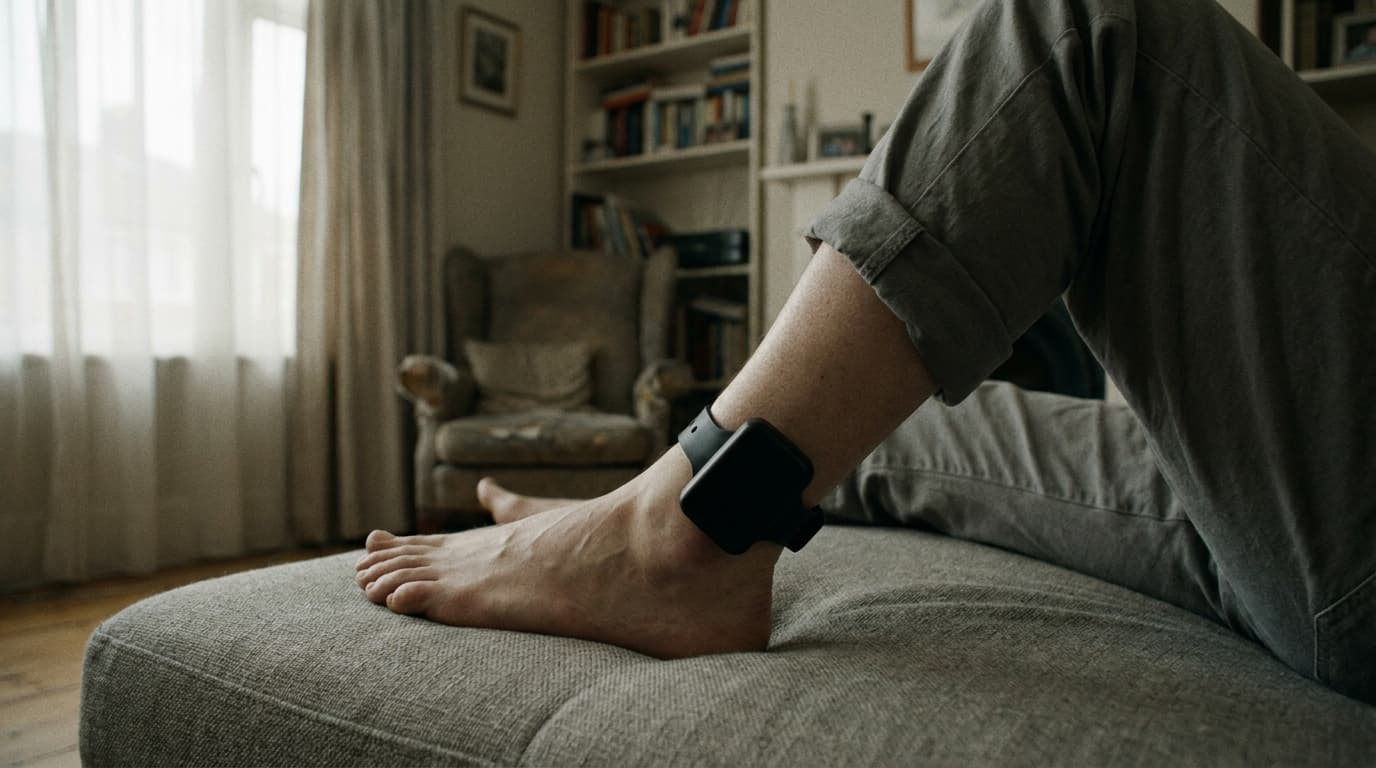
Wearing a court-ordered ankle monitor while on probation, parole, or pretrial release offers freedom that jail or prison would not, but it can be uncomfortable to constantly explain why you are wearing a GPS, RF, or SCRAM monitor in public. There are legal, cosmetic ways to make an ankle monitor less noticeable and more comfortable to wear.
It is worth separating two very different things before getting into specifics. Concealing an ankle monitor under clothing, or padding it for comfort, does not change what the device does, and it is not against the law. Removing it, disabling it, or deliberately blocking its GPS or alcohol-sensing signal is something else entirely. That is tampering, and while every monitoring program treats it as a serious violation, the legal mechanism differs from state to state.
In some states, tampering is charged as a brand-new crime on top of the original case. Florida makes it a felony to intentionally and without authority remove, destroy, alter, tamper with, damage, or act to circumvent the operation of a court-ordered monitoring device under Fla. Stat. § 843.23, and the degree tracks the underlying offense: a third-degree felony for someone facing a misdemeanor or third-degree felony, up to a first-degree felony for someone facing a first-degree, life, or capital felony. Texas added a comparable offense in 2023. Under Penal Code § 38.112, knowingly removing or disabling a tracking device, or conspiring or cooperating with someone else to do it, is a state jail felony, rising to a third-degree felony for a person in the super-intensive supervision program (SB 1004, 88th Legislature). That statute carves out removal by a health care provider for medical necessity.
Other states run the consequence through the supervision system rather than a new prosecution. In California, the statute covering GPS monitoring of parolees who must register as sex offenders under Section 290, Penal Code § 3010.10, directs the parole authority to revoke parole and require 180 days in county jail. It does not create a separate charge, and it does not speak to people monitored on probation or pretrial release, whose exposure in California turns on their own release conditions. So the practical takeaway holds everywhere, even though the statute you would be charged under does not: interfering with the device is far worse than the discomfort of a visible one. Rules vary by state and by program, so if you are ever unsure whether something crosses that line, check with your supervising officer or monitoring company before you try it.
Wearing Loose Pants
Luckily, over the past couple of years there has been a trend toward looser-fitting pants. Gone are the days of skin-tight, ankle-hugging jeans. That means you are not limited to sweatpants and bell bottoms. Try a thicker straight-leg denim (in style for both men and women) or an athletic sweatpant with an elastic band at the bottom.
With wide and baggy-leg pants currently in fashion, covering an ankle monitor usually is not difficult. The main thing to plan around is footwear. A wider-leg jean often needs a chunkier shoe to balance it, such as a thick trainer or workboot.
Pants for Hiding an Ankle Bracelet for Men
Men generally have fewer style constraints here. Slim-cut jeans are really the only pants worth avoiding. A straight-leg dress, cargo, or sweatpant should hide an ankle monitor for most occasions, but try items on before buying, since fit varies by device model. A high-ankle workboot can also help cover it from below.
Pants for Hiding an Ankle Bracelet for Women
Current style trends give women plenty of options, from bootcut jeans and sweatpants to a 90s-style wide-leg pant or a looser jogger. The main thing to avoid is anything skin-tight or cropped above the ankle.
Cover It Up With an Ankle Monitor Cover
Padded covers and sleeves made for ankle monitors are sold for comfort. They wrap around the device to reduce chafing and movement against the skin, and they can help even when they do not fully hide the monitor under clothing.
Check with your supervising officer or monitoring company before using one. Ankle monitors rely on sensors built into the strap and housing, and wrapping or covering the device, even for a legitimate comfort reason, can be read as interference and trigger a false tamper alert. Confirming that a specific cover is compatible with your device model first avoids that risk entirely.

Wear Work Boots
This works for both men and women, though it can take more searching for women's boots roomy enough to fit comfortably over the monitor. Try different combinations of pants and boots with the monitor in place before settling on one, since devices vary in size and shape.
If you are considering extra padding near the strap for comfort, ask your supervising officer first. Some monitoring programs are fine with it; others want nothing placed between the device and your skin so its sensors get a clean, consistent reading.
Wear It Obviously
People end up on an ankle monitor for a lot of different reasons, and offense severity is not really the deciding factor. Courts and agencies use them for people awaiting trial who have not been convicted of anything, for probation and parole conditions, for immigration proceedings, and as an alternative to jail time, according to the Electronic Frontier Foundation. (See our guide to the different types of ankle monitors for more on who wears which kind and why.)
So while it can feel like everyone is looking, wearing your ankle monitor visibly is not against any rule, and it does not tell anyone what you were charged with.
How to Keep Your Ankle Monitor Dry
Showering is generally permitted, and brief contact with rain or splashing during normal activity is generally fine, according to monitoring providers, though the rules for your specific device come from your monitoring company. What you should avoid is submerging the device, and just as importantly, wrapping it in plastic or a waterproof cover to try to keep it dry. Covering the device this way is often treated the same as tampering with it.
Submersion is restricted for two reasons. Prolonged submersion can damage a device that is only rated for brief water contact, and water also blocks the GPS or radio-frequency signal a monitor relies on, so losing that signal can trigger the same kind of alert as an actual violation. If you wear a transdermal alcohol monitor rather than a location tracker, the rules for your device may differ again, since those units read through the skin, so confirm them with your monitoring company instead of assuming the general guidance applies.
If you need to keep your monitor dry for something specific, like washing dishes or working outside in the rain, ask your monitoring company what is approved for your device first. Monitoring providers generally describe this hardware as water-resistant rather than waterproof, and that distinction is the difference between an uneventful shower and an alert to your supervising officer.
Updates
Governing law re-checked for recent changes
Corrected an overbroad statement that tampering with an ankle monitor is charged as a separate crime in every state. It is a separate felony in states like Florida and Texas, but California handles one category of violation through mandatory parole revocation and jail time instead. Added the Texas and California statutes as sources, clarified that California's Penal Code 3010.10 applies to parolees required to register as sex offenders, matched the water-exposure guidance to what monitoring providers actually state, and removed a water-and-tampering claim that could not be confirmed against the device manufacturer.
Independently fact-checked against the cited primary sources
Full content audit: rewrote the KeyTakeaways summary (the previous version had truncated, incomplete items), restored two links broken by the original WordPress migration and removed two untracked Amazon affiliate links, added a clear distinction between legal cosmetic concealment and illegal tampering with the device, and corrected the water-resistance section with sourced information on why submerging or covering the device can trigger a false tamper alert.
The Law Behind This Article
This article rests on the statutory provisions below, held in our own legal record and retrieved from the official source. Tap a section to read the operative text.
California Penal Code
§ 3010.10In force
(a) A person who is required to register as a sex offender pursuant to Section 290 as a condition of parole shall report to his or her parole officer within one working day following release from custody, or as instructed by a parole officer to have an electronic, global positioning system (GPS), or other monitoring device affixed to his or her person. (b) A person who is required to register as a sex offender pursuant to Section 290 shall not remove, disable, render inoperable, or knowingly circumvent the operation of, or permit another to remove, disable, render inoperable, or knowingly circumvent the operation of, an electronic, GPS, or other monitoring device affixed to his or her person as a condition of parole, when he or she knows that the device was affixed as a condition of parole.
Official text (excerpt) · last checked 2026-07-28 · Read the full text in our law library · Verify at leginfo.legislature.ca.gov
Cited in 8 court opinions in our collectionLatest citing opinion in our collection: 2025
Opinions citing this section in our collection:
- People v. Horace CA2/1 (California Court of Appeal 2015)“…ows that the device was affixed as a condition of parole.” (Pen. Code, § 3010.10, subd. (b).) Horace complied with Penal…”
- People v. Boyer CA4/2 (California Court of Appeal 2025)“…re not appropriate in this case due to the fact that under Penal Code 3010.10, that does require mandatory revocation…”
- People v. Sala CA4/1 (California Court of Appeal 2024)“…pervised using GPS technology under Penal Code section 290. Penal Code section 3010.10, subdivision (a), also required Sala to…”
Identified automatically from the court opinions citing this section — not a ranking of which case controls.
Florida Statutes
§ 843.23Tampering with an electronic monitoring device.In force
(1) As used in this section, the term “electronic monitoring device” includes any device that is used to track the location of a person. (2) It is unlawful for a person to intentionally and without authority:(a) Remove, destroy, alter, tamper with, damage, or affirmatively act to circumvent the operation of an electronic monitoring device that must be worn or used by that person or another person pursuant to a court order or pursuant to an order by the Florida Commission on Offender Review; or (b) Request, authorize, or solicit a person to remove, destroy, alter, tamper with, damage, or affirmatively act to circumvent the operation of an electronic monitoring device required to be worn or used pursuant to a court order or pursuant to an order by the Florida Commission on Offender Review. (3) Except as provided in subsection (4), a person who violates this section commits a:(a) Felony of the third degree, punishable as provided in s. 775.082, s. 775.083, or s. 775.084, if the person who must wear or use the electronic monitoring device is charged with or serving a sentence for a misdemeanor or a third degree felony. (b) Felony of the second degree, punishable as provided in s.
Official text (excerpt) · last checked 2026-07-28 · Read the full text in our law library · Verify at leg.state.fl.us
Cited in 1 court opinions in our collectionLatest citing opinion in our collection: 2025
Opinions citing this section in our collection:
- In Re: Amendments to Florida Rules of Criminal Procedure - 2025 Legislation (Supreme Court of Florida 2025)“…e pretrial release for a person who commits a violation of section 843.23, Florida Statutes, while the person is on pretrial relea…”
Identified automatically from the court opinions citing this section — not a ranking of which case controls.
Search our full record of US law — 2.1 million sections, every state + federal →
Sources and References
- Florida Statute 843.23: Tampering with an Electronic Monitoring Device (felony degree tied to the underlying offense, from third degree up to first degree)(flsenate.gov).gov
- Texas SB 1004, 88th Legislature (enrolled): adds Penal Code 38.112, making it a state jail felony to knowingly remove or disable a tracking device, a third-degree felony under super-intensive supervision, effective September 1, 2023(capitol.texas.gov).gov
- California Penal Code 3010.10: GPS monitoring conditions for parolees required to register as sex offenders under Section 290, with violations requiring parole revocation and 180 days in county jail rather than a separate charge under that section(leginfo.legislature.ca.gov).gov
- Electronic Frontier Foundation Street Level Surveillance: Electronic Monitoring (pretrial, probation, parole, immigration, and juvenile monitoring use cases)(sls.eff.org)
- A 2nd Chance Monitoring: Are Ankle Monitors Waterproof? What You Can and Cannot Do With Water(a2ndchancemonitoring.com)